

More and more modern cars now come equipped with built-in GPS tracking systems. At first glance, this may seem sufficient: why add a GPS tracker if your vehicle is already connected?
In reality, the question deserves a closer look. Not all tracking systems offer the same level of protection, especially when it comes to recovering a stolen vehicle.
So, is a built-in GPS tracker really enough? Or should you complement it with an independent tracking device?
What is a built-in GPS tracker for cars? #
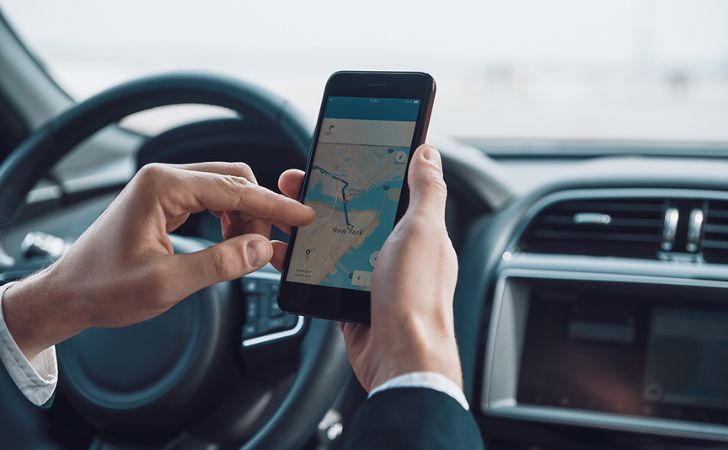
A built-in GPS tracker is a system installed directly by the car manufacturer. It is typically linked to connected services accessible through a mobile application.
These systems allow you to:
- locate your vehicle
- access certain data (routes, vehicle status)
- interact remotely (lock, alerts, etc.)
They are often included in the connectivity services offered by car brands.
Why do cars include GPS tracking today? #
Built-in systems primarily serve convenience.
They make it possible to:
- easily find your vehicle
- access connected features
- improve the overall user experience
In some cases, they also include security features such as location tracking in case of theft.
However, these features are not always designed as true anti-theft solutions.
Built-in GPS tracker: what are the limitations in case of theft? #
This is the key point.
A built-in GPS tracker has several limitations when it comes to recovering a stolen vehicle.
Dependency on the vehicle system #
The built-in GPS is connected to the vehicle’s electrical system. If power is cut (battery disconnected, vehicle disabled), it may stop working.
A system known by thieves #
Built-in systems are standardized. They are therefore easier for experienced thieves to identify and disable.
Limited accessibility #
Depending on the manufacturer, access to data may be:
- restricted
- paid
- or dependent on an active subscription
Variable responsiveness #
Not all systems offer:
- real-time alerts
- continuous precise tracking
👉 As a result, response time can be too slow in case of theft.
Should you add an additional GPS tracker? #
In many cases, yes.
An independent GPS tracker complements the built-in system by providing:
- its own battery
- increased discretion
- tracking independent from the vehicle
👉 It acts as an additional layer of security.
Built-in GPS vs standalone tracker: what’s the difference? #
The two systems serve different purposes.
Built-in GPS #
- designed for convenience and connected services
- dependent on the vehicle
- visible and known
Standalone GPS tracker #
- designed for security and anti-theft
- independent
- discreet and harder to detect
👉 They are complementary, not competing.
Where should you install a GPS tracker to maximize efficiency? #
Discretion is essential.
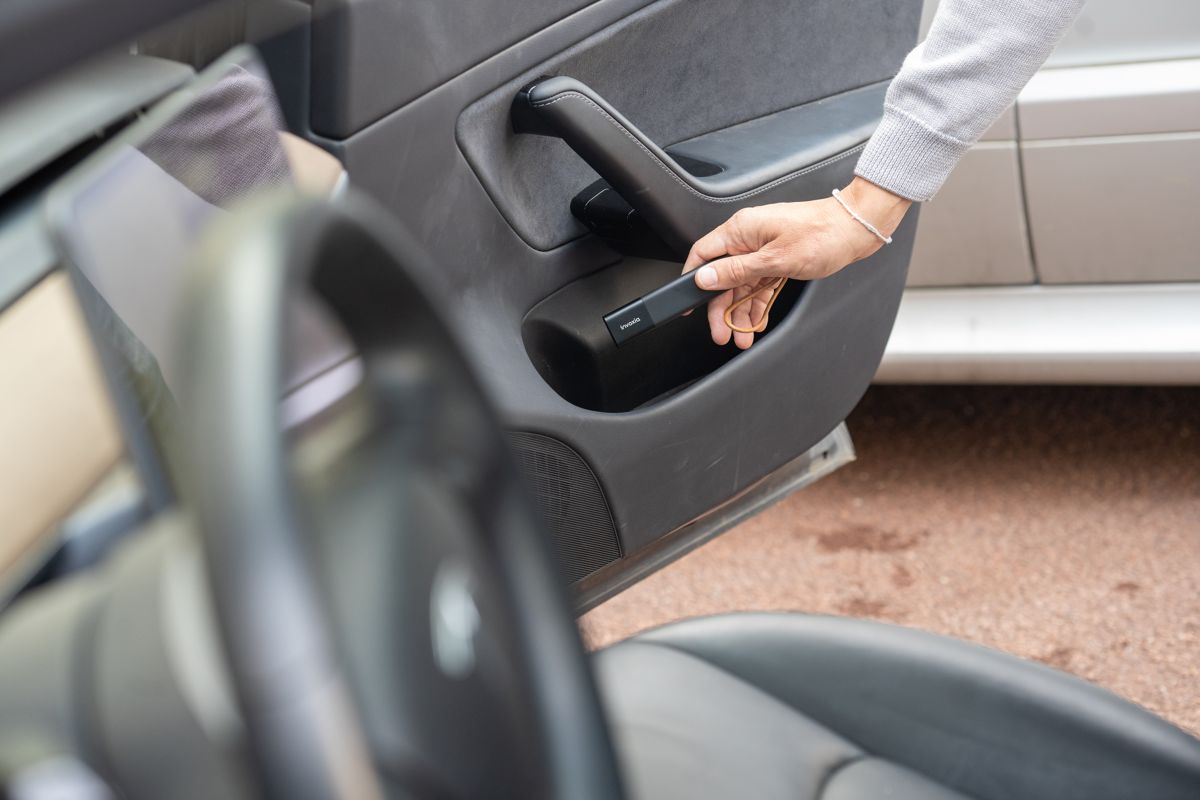
A well-hidden tracker is much harder to detect or disable. It should be placed in a non-visible and hard-to-reach location.
However, placing it too close to metal may block signal transmission due to the Faraday cage effect. Choose a discreet but effective location. Behind a headrest or under the passenger seat are excellent options.
Invoxia GPS tracker: a complementary solution #
An Invoxia GPS tracker is designed to address the limitations of built-in systems.
It offers:
- long battery life
- discreet installation
- real-time alerts
- precise location tracking
👉 It works independently from the vehicle, making it especially effective in case of theft.
Built-in GPS tracker for cars: key takeaways #
A built-in system may be sufficient for everyday use. But in terms of security, it has clear limitations.
Adding an independent GPS tracker allows you to:
- better secure your vehicle
- increase recovery chances
- avoid relying solely on the manufacturer’s system
👉 For optimal protection, both approaches are complementary.
FAQ – Built-in GPS tracker for cars #
Is a built-in GPS tracker enough in case of theft? #
Not always. It can be disabled or neutralized more easily than an independent tracker.
What is the difference between built-in GPS and a GPS tracker? #
Built-in GPS is linked to the vehicle and its connected services. A tracker is independent and specifically designed for security.
Can you add a GPS tracker to a modern car? #
Yes, and it is even recommended to enhance protection.
Is a GPS tracker legal? #
Yes, as long as it is used on your own vehicle.
Where should you hide a GPS tracker in a car? #
In a discreet, hard-to-reach place, away from metal surfaces to avoid signal interference caused by the Faraday cage effect.