

Accompanying an aging parent often means seeking a delicate balance: preserving their autonomy while ensuring their safety. We want to avoid risky situations without giving the impression of constant surveillance. This is precisely where a GPS tracker for seniors can help.
When chosen well, it neither replaces human presence, nor listening, nor medical support. But it can become a true safety net for outings, walks, daily commutes, or wandering situations related to cognitive disorders.
This guide is intended for family and professional caregivers: children, spouses, relatives, caregivers, or residence managers who want to watch over an elderly person with respect, discretion, and efficiency.
What is a GPS Tracker for Seniors? #
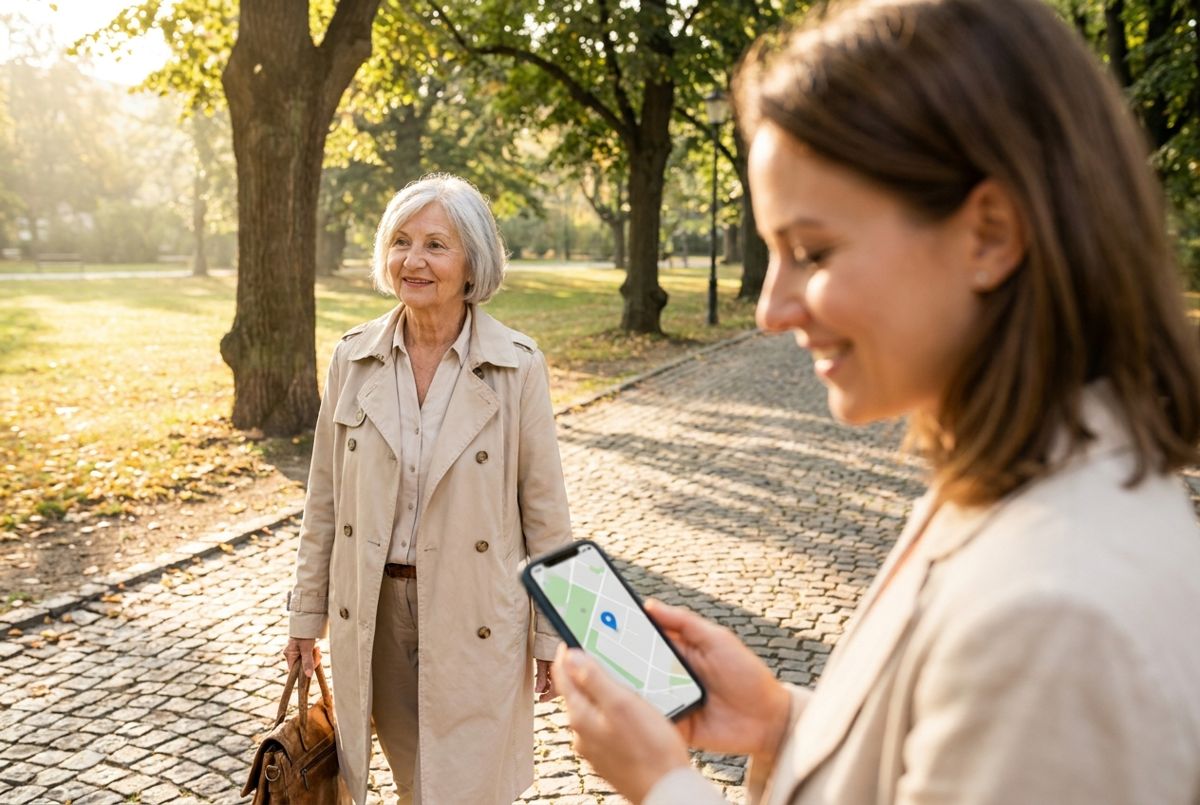
A GPS tracker for seniors is a small location device that allows an authorized relative to quickly find the position of an elderly person if needed. It can slip into a bag, a pocket, a coat lining, or attach to a keychain.
Unlike a smartwatch or smartphone, the senior GPS tracker is designed to be simple, discreet, and autonomous. The equipped person generally has nothing to do: alerts, maps, safety zones, and history are managed from the caregiver’s app.
Its role is not to continuously track every movement. It is a tool for prevention and reassurance, particularly useful in three cases:
- risks of wandering or disorientation;
- home care;
- daily commutes of an elderly person still autonomous.
Why Equip a Senior with a GPS Tracker? #
Wandering Related to Alzheimer’s or Cognitive Disorders #
This is the most critical use case. According to the Alzheimer’s Association, 6 out of 10 people living with Alzheimer’s disease or another form of dementia will experience at least one wandering episode. These episodes can repeat and become dangerous, even when the person is in a neighborhood they have known for a long time.
A disoriented elderly person may go out “to run an errand,” “to go home,” “to go to work,” or simply walk without finding their way. In these situations, every minute counts.
A GPS tracker allows you to:
- quickly locate the person from an app;
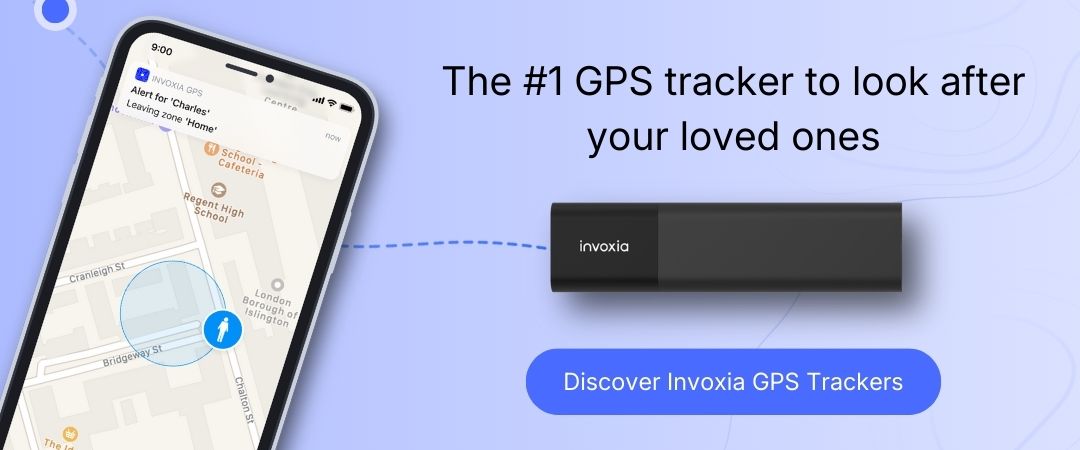
- receive an exit zone alert if they leave a defined perimeter;
- guide family or rescuers to the last known position;
- avoid wasting long minutes calling neighbors, shops, or relatives.
The GPS tracker does not eliminate the risk of wandering, but it significantly reduces the time needed to react.
Does a loved one tend to get disoriented during outings?
A discreet GPS tracker can help react faster in case of unusual distancing or zone exit.
See the GPS Tracker ClassicHome Care #
Most elderly people wish to stay at home as long as possible. In France, a study by DREES published in 2025 indicates that three-quarters of French people would prefer to stay at home in case of loss of autonomy.
For caregivers, this choice often comes with constant worry: What if something happens during their walk? What if they get lost going to the market? What if I can’t reach them?
A GPS tracker can transform this worry into reasonable vigilance:
- the senior keeps their habits without having to report;
- the caregiver can occasionally check that everything is fine;
- alerts automatically notify in case of leaving a defined zone;
- location remains available in case of unforeseen events.
In some cases, this type of solution can even prolong autonomy: instead of forbidding outings for fear of an incident, the family can maintain them with a more secure framework.
Daily Commutes #
Not all seniors equipped with a GPS tracker are in advanced loss of autonomy. Some still drive, take public transport, go for walks, attend activities, or live alone.
In these cases, the GPS tracker plays a simple role: being there if something happens.
It can be useful for:
- daily walks;
- bus, tram, or train rides;
- associative outings;
- medical appointments;
- vacations;
- car trips;
- elderly people who don’t always have their phone charged or with them.
The best tracker is the one that doesn’t change habits. It stays in the bag, pocket, or coat, and ideally is never used. But the day it is needed, it saves precious time.
Essential Criteria for Choosing a Senior GPS Tracker #
1. Long Battery Life #
This is the most important criterion. A senior GPS tracker that needs to be recharged every two or three days often ends up forgotten, discharged, or stored in a drawer.
For senior use, it’s better to choose a model with a battery life of several weeks to several months. Recharging can then become a simple ritual, managed by the caregiver: once a month, during a visit, a home visit, or a family appointment.
Good battery life is particularly important if:
- the senior lives alone;
- they easily forget to recharge their devices;
- they don’t use a smartphone;
- the tracker is placed in a bag or lining;
- several caregivers take turns.
2. A Discreet and Easy-to-Accept Format #
A device that is too visible, too medical, or too stigmatizing may be refused. And this refusal must be heard.
The ideal GPS tracker for an elderly person should be:
- compact;
- lightweight;
- discreet;
- easy to slip into an everyday object;
- non-stigmatizing;
- robust enough for daily use.
A keychain, card, or small box format is more easily forgotten than a device worn on the wrist. It can be placed in a handbag, an inner pocket, a coat, a pouch, or a keychain.
3. Reliable Zone Alerts #
Zone alerts, also called geofencing, are essential for wandering situations. They allow defining a safety perimeter: home, neighborhood, residence, nursing home, a relative’s house, vacation spot.
When the tracker leaves this zone, the caregiver receives a notification. They can then quickly check the situation without having to consult the app all day.
Examples of useful zones:
- home;
- usual street or neighborhood;
- senior residence;
- nursing home;
- vacation home;
- a relative’s home;
- perimeter around a walking spot.
This feature is often more useful than permanent tracking. It allows respecting privacy while being alerted only when something goes beyond the usual framework.
4. A Simple App for Caregivers #
The elderly person should not have to manage an app, an account, a button, or complex settings. All management should be possible from the caregiver’s phone.
A good app should allow:
- seeing the tracker’s position on a map;
- receiving important alerts;
- creating safety zones;
- checking recent positions;
- sharing access with other relatives if necessary;
- checking battery status.
Simplicity on the caregiver’s side is as important as discretion on the senior’s side. The clearer the tool, the more correctly it will be used.
5. Protection of Personal Data #
The location of a person is sensitive data. The CNIL reminds that geolocation directly affects privacy and makes specific recommendations for vulnerable people: if possible, obtain the consent of the person concerned, or that of their legal representatives or relatives when this is not possible.
Before choosing a solution, check:
- GDPR compliance;
- data hosting;
- privacy policy;
- people with access to the location;
- sharing settings;
- the possibility of limiting use to useful situations.
The good principle: location should serve to protect, not to monitor.
Which Invoxia Tracker to Choose for an Elderly Person? #
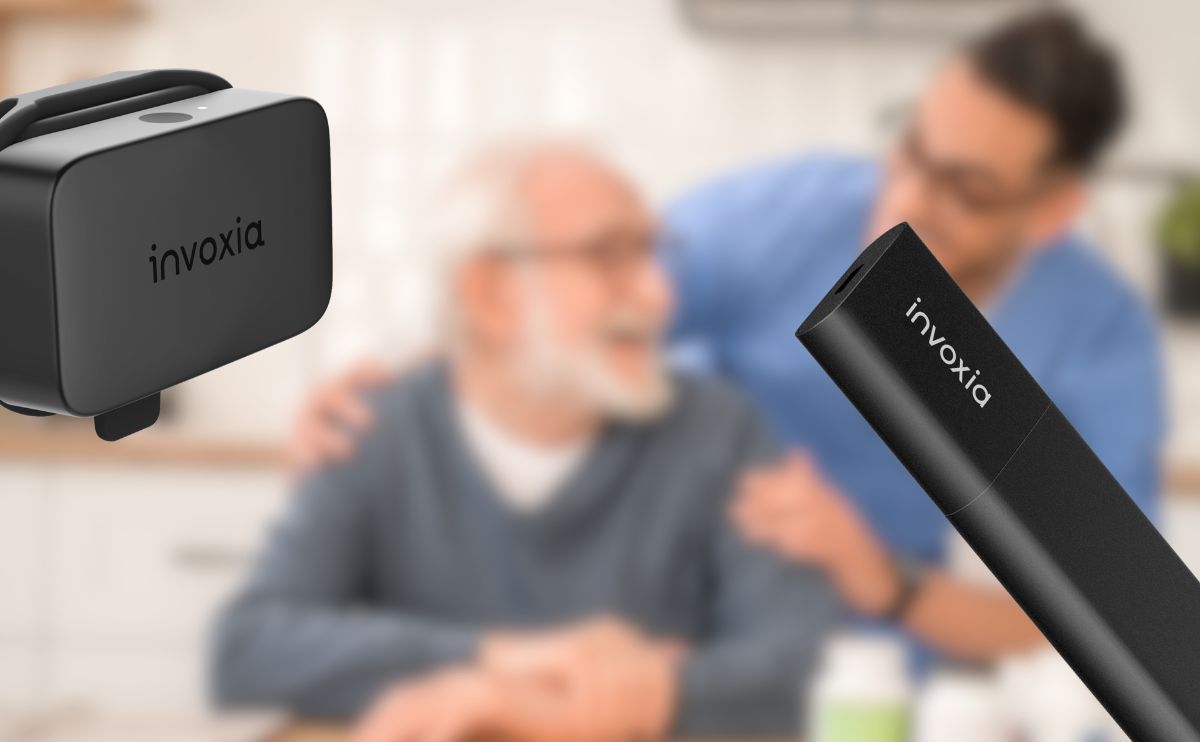
Invoxia offers two formats particularly suited to the needs of seniors and caregivers: the Mini Tracker and the GPS Tracker Classic.
| Criterion | Mini Tracker | GPS Tracker Classic |
|---|---|---|
| Format | Very compact, easy to attach to a keychain or slip into a pocket | Thin and lightweight, ideal in a bag, coat lining, or pouch |
| Battery Life | Up to several weeks | Up to 6 months |
| Zone Alerts | Yes | Yes |
| Caregiver App | Yes | Yes |
| Subscription | Included for the first years | Included for the first years |
| Recommended Use | Daily outings, keychain, light bag | Long-term tracking, less frequent recharging, discreet daily use |
In both cases, Invoxia trackers allow tracking location from a simple app, configuring zone alerts, and benefiting from a solution designed to minimize recharging constraints.
GPS Bracelet, GPS Watch, or Tracker: Which Format to Choose for a Senior? #
The senior GPS bracelet and the senior GPS watch are often the first solutions considered. They can be useful, especially when they include an SOS button or call functions. But they also have several limitations.
Advantages of a GPS Watch or Bracelet #
- worn directly on the person;
- sometimes equipped with an SOS button;
- may include call or health functions;
- visible to relatives and professionals.
Common Limitations #
- short battery life, often a few days;
- regular recharging difficult to maintain;
- sometimes medical or stigmatizing appearance;
- risk of being removed by the person;
- need to accept an object worn on the wrist;
- sometimes too complex interface.
Advantages of a Slip-in GPS Tracker #
The slip-in GPS tracker for a bag, pocket, or coat takes the opposite approach: it requires no new habits from the elderly person.
Its advantages:
- more discreet;
- less stigmatizing;
- longer battery life;
- no app to manage on the senior’s side;
- easier to integrate into everyday objects;
- better accepted over time by some families.
The best format depends on the situation. For a person who willingly accepts a watch and remembers to recharge it, a GPS watch may be suitable. For a person who refuses highly visible objects or easily forgets recharges, a discreet GPS tracker is often more appropriate.
Where to Place a GPS Tracker for Seniors? #
The placement of the tracker is essential. It must be both accessible for the caregiver, discreet for the equipped person, and stable enough not to be forgotten.
The most practical locations are:
- in the handbag;
- in an inner coat pocket;
- on a keychain;
- in a pouch used every day;
- in a jacket lining;
- in a small pocket sewn into a garment or bag.
The ideal is to choose an object that the person naturally takes with them on outings. If they always go out with their bag, the bag is the best location. If they always take their keys, the keychain may be more suitable.
💡 Caregiver Tip
Before choosing the location, observe the person's real habits: what they always take, what they sometimes forget, what they easily accept. A well-placed tracker is one that follows existing routines without complicating them.
Senior GPS Tracker and Consent: What to Respect #
Geolocating a person, even an elderly parent, touches on their privacy. The goal must always be clear: protect without controlling.
Three simple principles allow setting a healthy framework.
1. Seek Consent When Possible #
As long as the person is able to understand and decide, the approach should be explained with them:
- why the tracker is proposed;
- who can see the location;
- in which situations it will be consulted;
- how alerts work;
- where the tracker will be placed.
Dialogue is essential. The GPS tracker should be presented as a tool for autonomy, not as a sanction.
2. Involve Relatives in Case of Cognitive Disorders #
When informed consent is no longer possible, the decision must be made in the person’s interest, with their relatives, legal representatives if a protection measure exists, and ideally with the opinion of the attending physician or the team accompanying them.
The goal remains the same: preserve dignity, limit risks, and avoid more restrictive measures when possible.
3. Respect the Principle of Proportionality #
A senior GPS tracker should not become a tool for permanent surveillance. It is preferable to consult the location when there is a concrete reason:
- zone exit alert;
- unusual delay;
- concern;
- lack of response;
- emergency situation.
Well used, the GPS tracker does not reduce freedom. On the contrary, it can allow maintaining outings that would otherwise have been limited or forbidden.
In Which Cases is a Senior GPS Tracker Particularly Useful? #
A GPS tracker for an elderly person may be relevant if:
- your relative lives alone;
- they continue to go out regularly;
- they have already experienced a disorientation episode;
- they have memory disorders;
- they sometimes forget their phone;
- they don’t like being called too often;
- they refuse highly visible devices;
- they live at home despite progressive loss of autonomy;
- you want to secure trips without limiting outings.
It can also be useful temporarily: after hospitalization, during vacations, during a stay with a relative, or in a period when health status is evolving.
Mistakes to Avoid with a Senior GPS Tracker #
Choosing a Model with Too Little Battery Life #
A too short battery creates an additional mental load. For a caregiver, having to constantly check and recharge the device quickly becomes burdensome.
Not Explaining the Approach #
Even discreet, a GPS tracker should not be imposed without dialogue when the person can understand the situation. Acceptance is a key success factor.
Placing It in a Rarely Used Object #
A tracker left in a bag that the person never takes is useless. You must start from real habits, not assumed habits.
Multiplying Unnecessary Notifications #
Too many alerts create fatigue and end up being ignored. It’s better to configure a few relevant zones and truly useful notifications.
Confusing Protection with Control #
The GPS tracker should remain a safety tool. The goal is not to check every movement, but to be able to act quickly in case of an unusual situation.
In Summary: What is the Best GPS Tracker for Seniors? #
The best GPS tracker for seniors is the one that is forgotten in daily life but remains reliable when needed.
For senior use, prioritize:
- a battery life of several weeks to several months;
- a discreet and non-stigmatizing format;
- reliable zone alerts;
- a simple app for caregivers;
- no necessary manipulation for the equipped person;
- clear management of consent and privacy.
A good GPS tracker should not replace trust. It should reinforce it. Used with respect, it can help an elderly parent continue to go out, walk, see their relatives, and live at home more serenely.
FAQ — Senior GPS Tracker #
What is the best GPS tracker for an elderly person? #
The best GPS tracker for an elderly person is a discreet model, easy to use, and with long battery life. For a senior, it is preferable to choose a tracker that requires no daily manipulation, with zone alerts and an easy-to-manage app for the caregiver.
Does a senior GPS tracker work without a smartphone? #
Yes, some GPS trackers work without a smartphone on the senior’s side. The equipped person does not need to install an app or own a phone. Location, alerts, and settings are managed from the caregiver’s smartphone.
What battery life should be chosen for a senior GPS tracker? #
For an elderly person, it is recommended to choose a GPS tracker with a battery life of several weeks to several months. A too short battery life increases the risk that the device will be discharged when needed.
Where to put a GPS tracker on an elderly person? #
The GPS tracker can be placed in a handbag, an inner coat pocket, a pouch, a lining, or on a keychain. The best location is the one the person naturally keeps with them on outings.
Is a GPS bracelet better than a GPS tracker? #
Not always. A GPS bracelet or watch can be useful if the person accepts wearing it and recharging it regularly. But for seniors who refuse visible objects or forget recharges, a discreet GPS tracker to slip into a bag or coat may be more suitable.
Can a GPS tracker be used for a person with Alzheimer’s? #
Yes, a GPS tracker can be useful for a person with Alzheimer’s or cognitive disorders, especially in case of wandering risk. It allows locating the person more quickly and receiving an alert if they leave a defined zone. Its use must, however, respect dignity, privacy, and, when possible, the person’s consent.
Is it legal to geolocate an elderly parent? #
Geolocating an elderly parent touches on their privacy. When the person is capable of consenting, their agreement must be sought. In case of significant cognitive disorders, the decision must be made in their interest, with relatives, legal representatives if necessary, and ideally the professionals accompanying them.
Can a senior GPS tracker send an alert if the person leaves home? #
Yes, GPS trackers with a geofencing function allow creating a safety zone around the home or a usual place. If the tracker leaves this zone, the caregiver can receive a notification.
Is a subscription required for a senior GPS tracker? #
It depends on the models. Some GPS trackers require a subscription to access the network and location services. At Invoxia, the subscription is included for the first years on some models, allowing the tracker to be used without immediate monthly cost.
Does a senior GPS tracker replace a phone? #
No. A GPS tracker does not replace a phone, as it is not used to call or communicate with the person. It complements the phone by allowing finding a position when the senior does not have their mobile, does not answer, or no longer knows how to explain where they are.