

In recent years, the electric bike (E-Bike) has become the star of urban mobility. Silent, eco-friendly, and practical, it attracted millions of buyers each year. In 2024, more than 2 millions e-bikes were bought in Germany only.
But this popularity also attracts attention: for instance in France, the E-Bike now represents 24% of bike thefts, according to Velozen. In light of this figure, protecting your electric bike has become as important as choosing it.
Locks, marking, GPS tracker, insurance… here’s how to keep peace of mind, even in the city.
What is an electric bike? #
An E-Bike is primarily a classic bike equipped with an electric motor that assists pedaling, without ever replacing it. To be considered a simple bike (and not a moped), it must meet three criteria:
- a maximum power of 250 W;
- assistance cut off at 15.5 miles/h;
- a motor active only when the cyclist pedals.
These characteristics make all the difference: beyond these thresholds, the E-Bike becomes a speed bike subject to other obligations — registration, approved helmet, and mandatory insurance.
Why protecting your E-Bike is essential #
E-Bikes are prime targets for thieves, notably because of the value of their battery and motor. But theft is not the only threat: vandalism, bad weather, or even mishandling can also damage your bike.
The main risks #
| Risk | Description | Probability Level |
|---|---|---|
| Theft | Disappearance of the entire bike or the battery | 🔴 High |
| Vandalism | Damage to the frame, wheels, or battery | 🟠 Medium |
| Accidental shocks | Fall, transport, collision | 🟡 Medium |
| Weather conditions | Rain, humidity, frost, sea salt | 🟡 Medium |
| Hacking / sabotage | Neutralization of connectivity or motor | 🟢 Low |
A good protection device therefore combines mechanical prevention, connected technology, and suitable insurance.
Essential physical protections #
As with classic bikes and two-wheelers in general, there are well-known and recognized physical protections for their effectiveness.
1. Choosing the right lock #
An effective bike lock is the first barrier against theft. U-locks or thick chain locks are the most resistant. Favor products approved by SRA, ART, or Sold Secure.
Avoid cable locks, which are too easy to cut, and always secure the frame and a wheel to a fixed point.
Key points: #
- Always lock in a visible and well-lit place.
- Avoid removable objects: saddle, meter, bag.
- For long parking, double the security with a frame lock.
2. Bike marking #
Since 2021, all new bikes sold must carry a unique number. This marking, recorded in a national database, allows the bike to be identified in case of theft. It is easy to obtain: most authorized stores offer it for about ten euros.
3. Smart parking #
Even the best lock does not replace a good location:
- Favor secure lockers (in stations, parking lots, or co-ownerships). More and more bike rooms are being developed in major cities to meet the increase in the number of cyclists.
- Avoid isolated or poorly lit areas.
- Regularly change your attachment location to avoid creating a routine.
The key role of the GPS tracker #
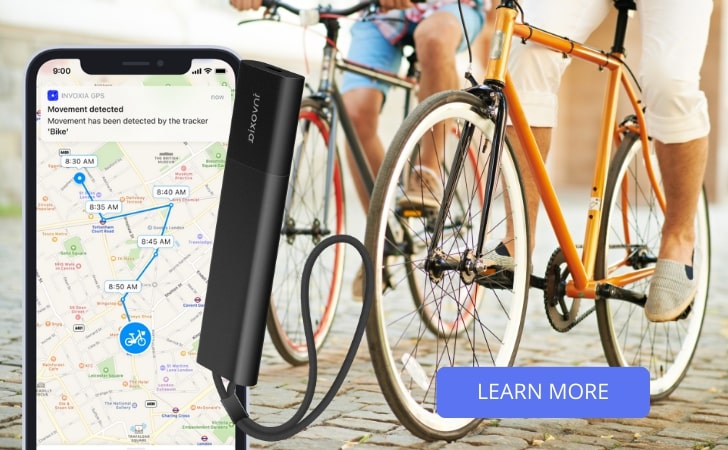
GPS trackers for electric bikes have become the secret weapon of cautious cyclists. Discreet, they slip into strategic places - but not in contact with metal - and transmit the live position of the bike via a mobile app.
The concrete advantages of a GPS tracker: #
- Immediate alert in case of suspicious movement.
- Location and position history to track routes (thanks to low-consumption networks).
- Long-lasting autonomy, from several weeks to several months.
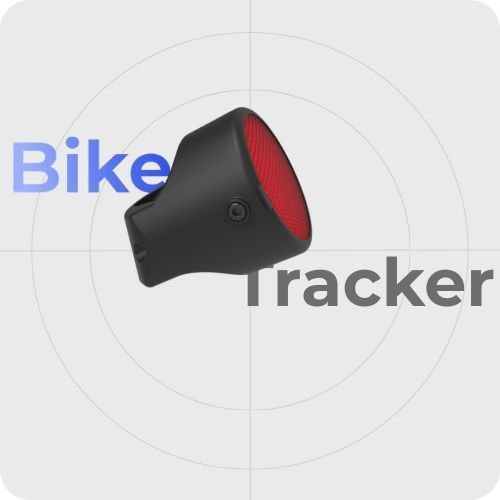
At Invoxia, GPS trackers are designed to offer active and discreet protection.
Our multi-network technology allows for quick recovery of a stolen bike, all discreetly thanks to its smart design. It’s the ideal solution for those who want connected security without constraints!
💡 Invoxia Tip: Combine a GPS tracker with a physical lock. One deters, the other locates. Together, they make theft much riskier.
Should you insure your electric bike? #
In France, insurance is not mandatory for a classic E-Bike (15.5 miles/h – 250 W). But given the value of the bikes, specific insurance is strongly recommended.
The most common guarantees: #
- Theft: reimbursement of the bike, often on the condition of using an approved lock;
- Breakage / accident: coverage of repairs after a fall or collision;
- Civil liability: coverage of damage caused to others;
- Assistance: repatriation of the bike or temporary replacement.
Some companies now offer tailor-made formulas for E-Bikes, including a discount if the bike is equipped with a GPS tracker. The link between insurance and technology is therefore increasingly close: the tracker is no longer a gadget, but an argument for paying less.
Mistakes to avoid #
Even experienced cyclists sometimes make simple oversights:
- Leaving the bike unlocked “for a few minutes” in front of a shop.
- Using a low-end or uncertified lock.
- Parking in the same places every day.
- Not registering the bike on the BicyCode file.
- Forgetting to activate notifications on their GPS tracker.
These mistakes are the first exploited by thieves: an unsupervised bike is a vulnerable bike.
Daily best practices to protect your bike #
Here is a simple checklist to follow:
✅ Lock the bike with an approved U-lock.
✅ Attach the frame + a wheel to a fixed point.
✅ Activate Invoxia GPS tracker alerts.
✅ Park in a visible or monitored location.
✅ Mark the bike with a unique number.
✅ Subscribe to suitable insurance.
✅ Note the serial number and keep the invoice.
By combining these actions, the risk of theft drops drastically.
Riding an electric bike is choosing freedom, speed, and ecology. But it’s also investing in a valuable object. By combining mechanical protection, connected technology, and insurance coverage, you secure your mobility in the long term.
Invoxia GPS trackers, compact and efficient, perfectly integrate into this approach. They offer you the peace of mind of always knowing where your bike is, even when you can’t see it.