

A motorcycle that is ridden little, or sits all winter, sees its battery slowly run down. A suitable charger avoids having to replace it early and being stuck on the first fine weekend. Here are the criteria for choosing a motorcycle battery charger, how to connect it and what to do before winter storage.
1. Check the battery technology #
This is the first criterion. MCN advises checking whether your bike has a lead-acid or a lithium battery: lead-acid, gel and AGM batteries can use “pretty much any mainstream maintenance charger”, whereas using a lead-acid charger on a lithium battery “has the potential to wreck it”. Louis adds that a lithium-ion battery needs a charger with a lithium-ion mode, as charging voltages above 14.6 V can damage it. If in doubt, check the owner’s manual or the label on the battery.
2. Choose the right amperage #
A simple rule of thumb: the charger’s output should not exceed one tenth of the battery’s capacity, according to Louis, whose example is a 6 Ah battery, which should get no more than 0.6 A.
3. Prefer a smart charger for winter #
Louis points out that microprocessor chargers suit AGM, gel and pure-lead batteries as well as conventional acid batteries, and that their maintenance mode sends small pulses of current at set intervals. MCN explains that, once connected, the charger tests the battery, then moves through charging and trickle stages, and that unless you see red lights it can usually stay connected until your next ride. For a bike that stays plugged in for a long time, a maintenance charger is therefore the more comfortable and safer choice.
4. Connect it and let it run #
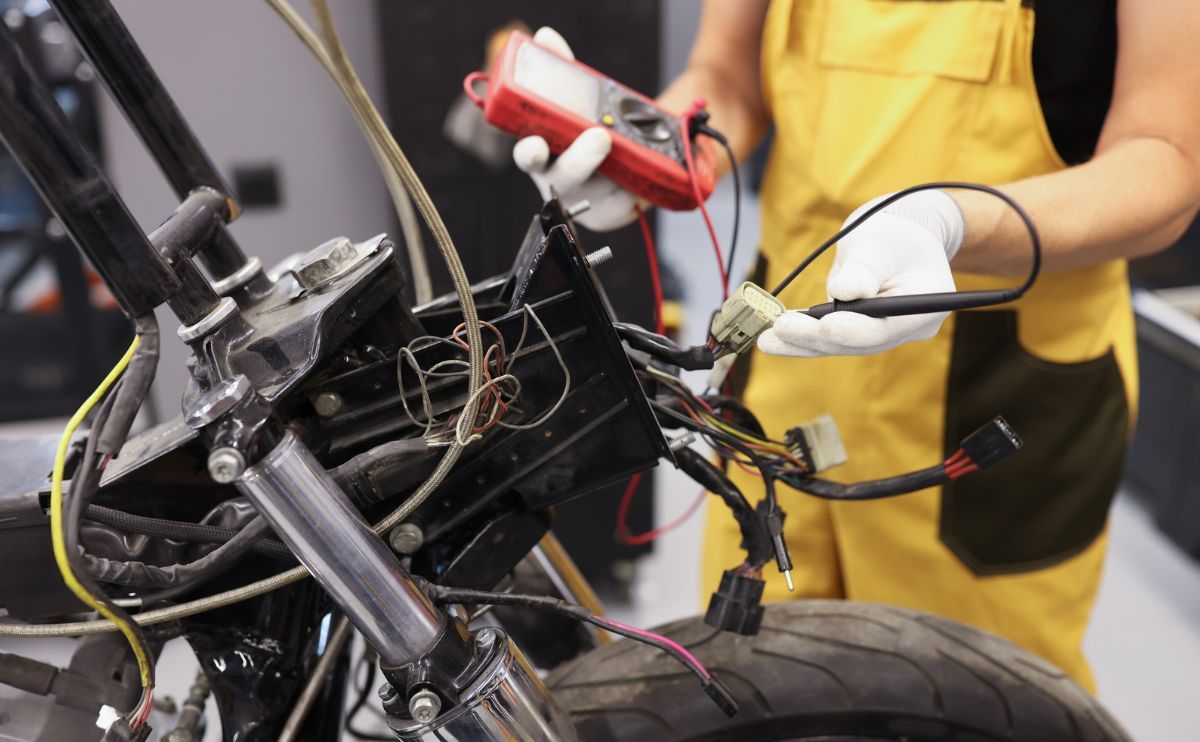
Follow the charger’s instructions to connect it to the battery. When you need to take the leads off or remove the battery, MCN is clear: “always undo the negative (black) terminal first”, and refit the positive first and the negative last. If the bike has a hidden load such as a clock or an alarm, Louis warns that the charger cannot switch to maintenance mode and the battery “will be overcharged”.
5. Prepare the battery before winter #
If you don’t have a power socket near the bike, MCN suggests removing the battery and taking it indoors to charge with a normal smart charger, which also makes it easier to keep an eye on its health. Solar chargers can be used outdoors, but they are not smart chargers and may struggle to recover a deeply discharged battery.
Louis also says that standard acid batteries must always be taken off the motorcycle, with the cell caps removed so the vapours can escape, while sealed batteries (gel, AGM, pure lead, lithium-ion) can be charged while installed. After one to three months unused, it warns, the battery will be flat. A lithium-ion battery does not need a maintenance charge as long as it is still two-thirds full.
And what about the bike’s GPS tracker over winter? #
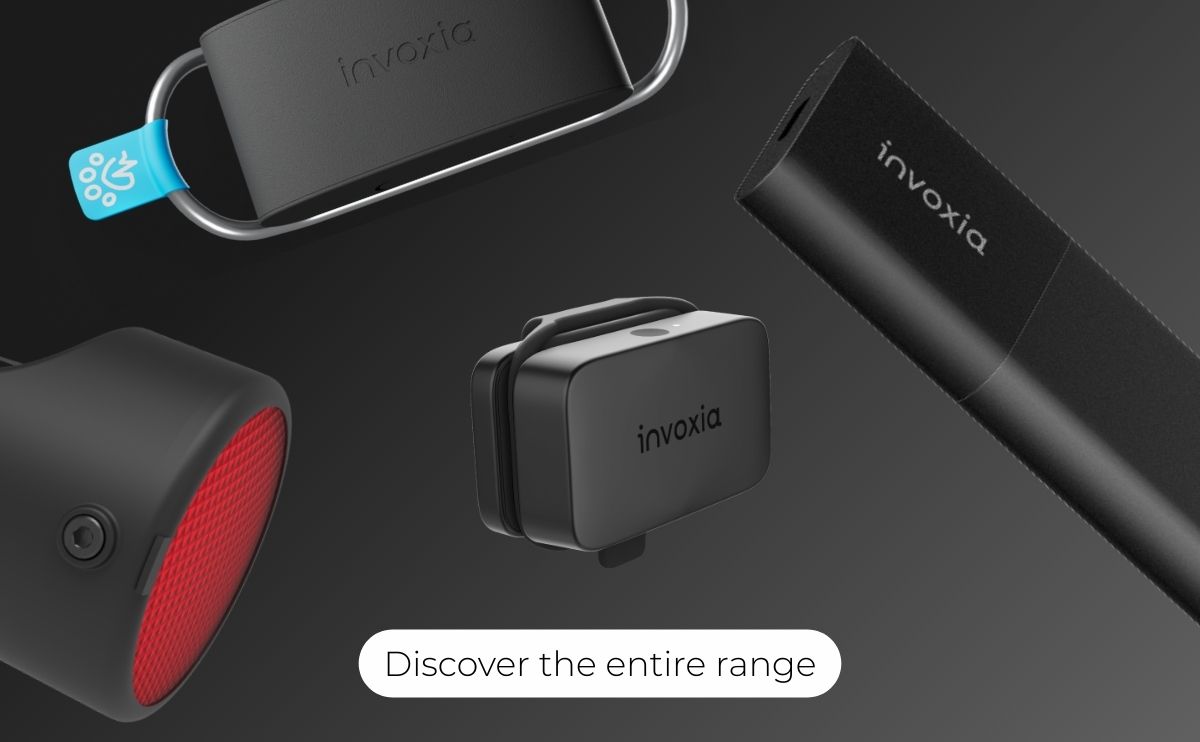
A motorcycle left parked for a long time is also more exposed: a long-life tracker lets you find it if it disappears, without relying on the bike’s battery. MCN notes that bikes fitted with alarms or trackers are more vulnerable to flat batteries. The GPS Tracker Classic has its own battery and offers 3 to 6 months of battery life depending on how often it locates (€99 with 1 year of subscription included, or €129 with 3 years, IP67), and the GPS Tracker Pro Max up to 6 months on one charge (€179 with 1 year included). For a motorcycle that sleeps for a long time, you can choose a long-battery-life motorcycle GPS tracker.
And if you are looking for an idea for a motorcyclist, you can also find gift ideas for motorcyclists.
FAQ: choosing a motorcycle battery charger #
Which charger should I choose for a motorcycle battery? #
One that is compatible with the battery technology (lead-acid, gel, AGM or lithium) and whose output is no more than about a tenth of its capacity in amp-hours. For a bike that sits over winter, a smart charger with a maintenance mode is the most practical.
Which charger for a lithium motorcycle battery? #
One with a lithium mode: MCN warns that a lead-acid charger on a lithium battery has the potential to wreck it, and Louis that voltages above 14.6 V can damage it. Look for “lithium” on the charger’s specification and in the battery’s manual.
Should I remove the negative terminal first? #
Yes: when disconnecting a battery, MCN says to always undo the negative (black) terminal first. When refitting, the positive goes on first and the negative last.
Can you charge a motorcycle battery with a car charger? #
Yes in most cases, but it usually takes an adapter to connect the charger to the battery terminals or to the bike’s connector. Check that the charger is compatible with the voltage and technology of the battery, and that its output doesn’t exceed what it can take: too high a current can damage it. If in doubt, choose a charger designed for motorcycles and read the instructions.
Should I take the battery off the bike for winter? #
It depends on the battery: Louis says standard acid batteries must always be taken off the motorcycle, whereas sealed batteries can be charged while installed. MCN suggests removing it and charging it indoors if there is no power socket near the bike.
Does a GPS tracker drain the motorcycle’s battery? #
It depends on the tracker: the GPS Tracker Classic and the GPS Tracker Pro Max have their own battery and don’t rely on the motorcycle’s. The Classic offers 3 to 6 months of battery life depending on how often it locates, the Pro Max up to 6 months on one charge.