

2G is being switched off in mainland France between March and December 2026. Orange has scheduled a complete shutdown for 20 October 2026, SFR and Bouygues Telecom start switching off from 15 November, and none of the four operators is expected to run 2G in mainland France after 15 December 2026. A GPS tracker whose SIM card only works on 2G will therefore no longer be able to send its position once the network is switched off in your area.
The good news: not every tracker is affected. Those that use 4G, LTE-M or a low-power network such as LoRa or Sigfox do not depend on 2G. Here are the dates to know, how to check your own tracker, and what to do if it is affected.
What are the 2G shutdown dates for each operator? #
Each operator is switching off 2G on its own schedule, area by area. As of 10 November 2026, here is where things stand for mainland France:
| Operator | 2G shutdown | 3G shutdown |
|---|---|---|
| Orange | In waves since 31 March 2026 (Biarritz, Anglet, Bayonne), then a nationwide rollout from 22 September to 20 October 2026. In “white zones” (areas with minimal mobile coverage), 2G ends between 1 and 15 December 2026. | 2028 |
| Free Mobile | No 2G network of its own: follows Orange’s schedule | No date announced (roaming on Orange’s 3G until 31 December 2028) |
| SFR | 15 November 2026 | End of 2028 |
| Bouygues Telecom | 15 November 2026 in Brest, Guipavas, Nancy and Vandœuvre-lès-Nancy, then 1 to 15 December 2026 in the rest of mainland France | End of 2029 |
The RED by SFR and B&You brands follow SFR and Bouygues Telecom respectively. For France’s overseas departments and regions, Orange publishes a separate schedule on its dedicated page.
4G and 5G are not affected: ARCEP, France’s telecoms regulator, states that networks will keep running on these technologies, and no operator has announced a shutdown date for them.
Why are GPS trackers affected? #
A GPS tracker works out its position from satellites, but it then has to send that position to your phone. Many older trackers do this with a SIM card on the 2G network, which used to be cheaper and less power-hungry. When the 2G network disappears, the tracker stays switched on but can no longer transmit anything.
At the end of June 2026, ARCEP counted around 0.62 million SIM cards in connected devices that only work on 2G, and 1.39 million in devices that work on 2G and 3G. GPS trackers are among the devices mentioned, alongside connected alarms, remote-care systems and payment terminals.
A device that supports both 2G and 3G should in principle be able to fall back on 3G, but only until that network is switched off, in 2028 or 2029 depending on the operator. That is only a stay of execution: the safest course is to ask the manufacturer whether the device will be compatible with 4G.
How can you tell whether your GPS tracker uses 2G? #
A few minutes are enough to check:
- Look up the network technology in the manual or on the product page: 2G, 3G, 4G, LTE-M, NB-IoT, LoRa or Sigfox.
- Find the SIM card, if your tracker has one: note the operator, then compare it with the schedule above to find the shutdown date in your area.
- Ask the manufacturer or the retailer: ask whether the model will still work after the 2G and 3G shutdowns, and whether an exchange option exists.
- Watch for position updates around the shutdown date: if the tracker stops reporting new positions, loss of network is a serious lead.
Don’t wait: the last areas are switched off between 1 and 15 December 2026, but yours may already have been.
Which tracker technologies don’t depend on 2G? #
Three families of trackers work without 2G:
- 4G and LTE-M. LTE-M is a 4G-based technology designed for connected devices that use very little power. It only works where an operator offers it.
- Low-power networks such as LoRa and Sigfox. They send small amounts of data over long distances, without a SIM card. To understand how they work, you can discover low-power networks such as LoRa and Sigfox.
- Bluetooth, which only locates through nearby devices and is no substitute for a GPS tracker when it comes to recovering a stolen vehicle.
What about Invoxia trackers? #
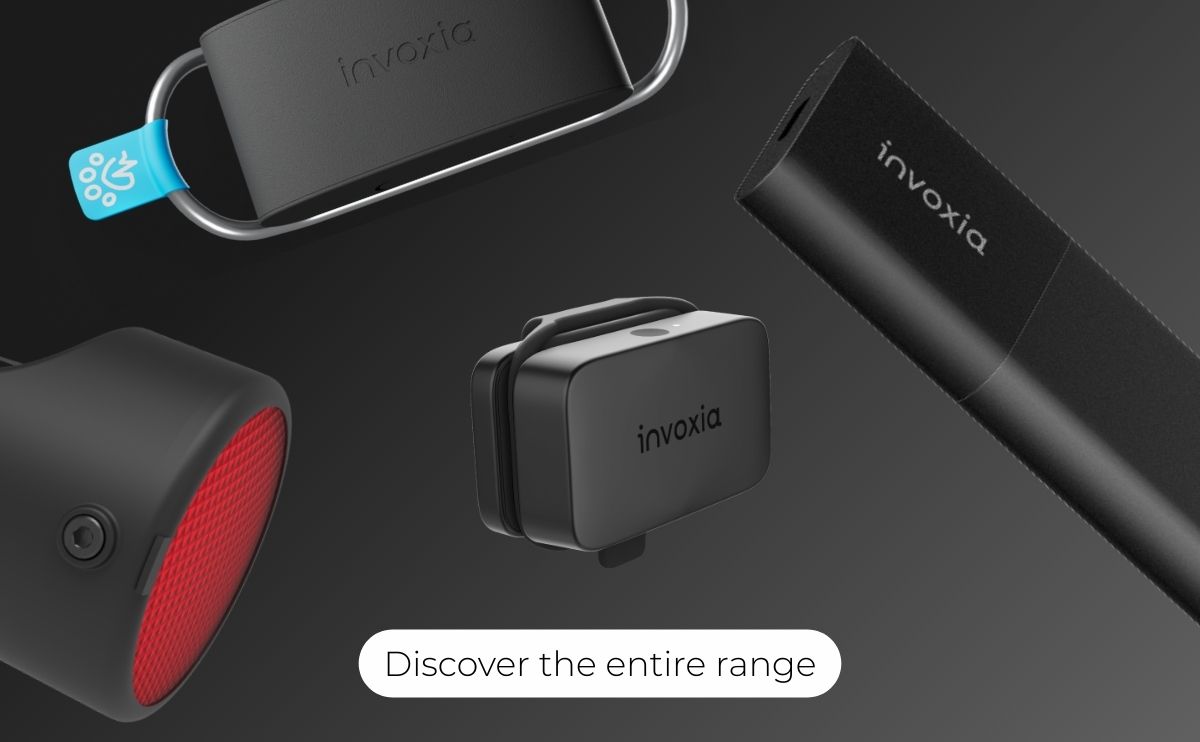
At Invoxia, the GPS Tracker Pro Max connects to the 4G LTE-M network, with a built-in SIM card: there is nothing to install, and it does not rely on 2G. Because LTE-M depends on mobile operators, coverage can vary from one area to another, including within France, and there is no detailed map of covered areas or white zones for the Pro Max. Before you rely on it in a remote area or abroad, check where the Pro Max works.
The GPS Tracker Classic does not use a SIM card: it runs on low-power connectivity, over LoRa in mainland France excluding Corsica. Depending on the country chosen at activation, it uses the Sigfox network abroad. So it does not rely on 2G either.
What should you do if your tracker stops working? #
If your model is limited to 2G, you have two options: ask the manufacturer whether it offers an exchange or an upgrade, or replace it with a 4G, LTE-M, LoRa or Sigfox model. Before you choose, look at the cost over several years, because the subscription weighs as much as the purchase price: you can compare the real cost of a GPS tracker with no subscription to see what you will really pay.
If you are torn between two models, you can also compare the PAJ GPS and the Invoxia on network, subscription and battery life.
A point of attention for parked vehicles #
A motorbike put away for the winter or a motorhome parked for several weeks are the cases where a network failure goes unnoticed: the tracker reports nothing, and you find out the day you need it. If you want to protect your motorhome from theft with a GPS tracker, check the device’s network compatibility before installing it, then test position reporting after each shutdown date.
FAQ: the end of 2G and GPS trackers #
Has 2G been switched off everywhere in France? #
Not everywhere yet, but the shutdown is spreading. Orange has scheduled a complete shutdown for 20 October 2026, except for white zones (1 to 15 December). SFR switches off on 15 November 2026 and Bouygues Telecom starts on 15 November in Brest and Nancy, then from 1 to 15 December in the rest of mainland France. None of the operators is expected to run 2G in mainland France after 15 December 2026.
Will my GPS tracker still work after the end of 2G? #
It depends on the network it uses. A tracker that only works on 2G will no longer transmit a position after the shutdown. A 4G, LTE-M, LoRa or Sigfox tracker does not depend on 2G. Check the network technology in the manual or ask the manufacturer.
How can I tell whether my tracker uses 2G? #
Check the manual or the product page, which states the network technology (2G, 3G, 4G, LTE-M, LoRa, Sigfox). If your tracker contains a SIM card, identify the card’s operator to find the shutdown date in your area. If in doubt, the manufacturer or the retailer can tell you.
Will 3G and 4G be switched off as well? #
3G will end later: in 2028 for Orange and SFR, at the end of 2029 for Bouygues Telecom. Free Mobile has not announced a date and uses Orange’s 3G through roaming until 31 December 2028. 4G and 5G will keep running: no operator has announced a shutdown date.
What is LTE-M? #
LTE-M is a 4G-based technology designed for connected devices that use little power, such as some battery-powered GPS trackers. It does not depend on 2G. Because only some operators offer it, coverage varies from one country and one area to another.
Is a tracker without a SIM card affected by the end of 2G? #
A tracker without a SIM card that uses a low-power network such as LoRa or Sigfox does not use the 2G mobile network. That is the case of the Invoxia GPS Tracker Classic. This type of network does have its own coverage, however: check it before you buy, especially for Corsica and for travel abroad.
What should I do if my GPS tracker no longer updates? #
First check that the battery is charged and that the subscription is active, then look up the network technology of your model. If the tracker is limited to 2G, contact the manufacturer to find out about exchange options, otherwise replace it with a 4G, LTE-M, LoRa or Sigfox model.