

A cargo bike is a serious investment — commonly $2,000 to $7,000, and sometimes considerably more for premium electric models — and it spends most of its time locked up outside: in front of a daycare, on a sidewalk, in an apartment courtyard. That combination makes it a prime target for thieves, yet very few owners fit theirs with a GPS tracker. Here’s why that’s a mistake, and how to equip your cargo bike properly.
Why are cargo bikes a favorite target for thieves? #
The cargo bike is no longer a niche category: the global electric cargo bike market was valued at roughly $1.2 billion in 2023 and is projected to reach $4.9 billion by 2030 (a 22.8% annual growth rate), driven largely by e-commerce and last-mile delivery use, with North America among the fastest-growing regions. This growing popularity mechanically makes cargo bikes a more visible target for stolen-bike resale networks, just like standard e-bikes.
Several factors reinforce this risk:
- High, easily identifiable value: entry-level non-electric models start around $1,000–$1,500, while premium electric models can run $5,000 or more — well above the price of a standard bike, making it a profitable target for a thief.
- Extended outdoor parking by design: unlike a leisure bike kept in a garage, a cargo bike is often used daily for school runs, daycare drop-offs or deliveries, and stays locked outside for several hours at a stretch, sometimes an entire workday.
- A size that makes a standard lock harder to use: the elongated frame (longtail, front-loader, tricycle) makes it harder to anchor at a single fixed point, and many owners settle for a single lock for lack of a better-suited solution.
- A coveted electric battery: on pedal-assist models, the battery alone can be worth several hundred dollars on the resale black market.
More broadly, bike theft is a serious problem in the US: according to 529 Garage’s national bike theft database, more than 2 million bikes are stolen there every year — roughly one every 30 seconds — with theft rates having doubled since the early 2000s and annual costs to communities estimated near $1 billion. Electric bikes and high-value models — the category most cargo bikes fall into — rank among the most sought-after targets for resale networks.
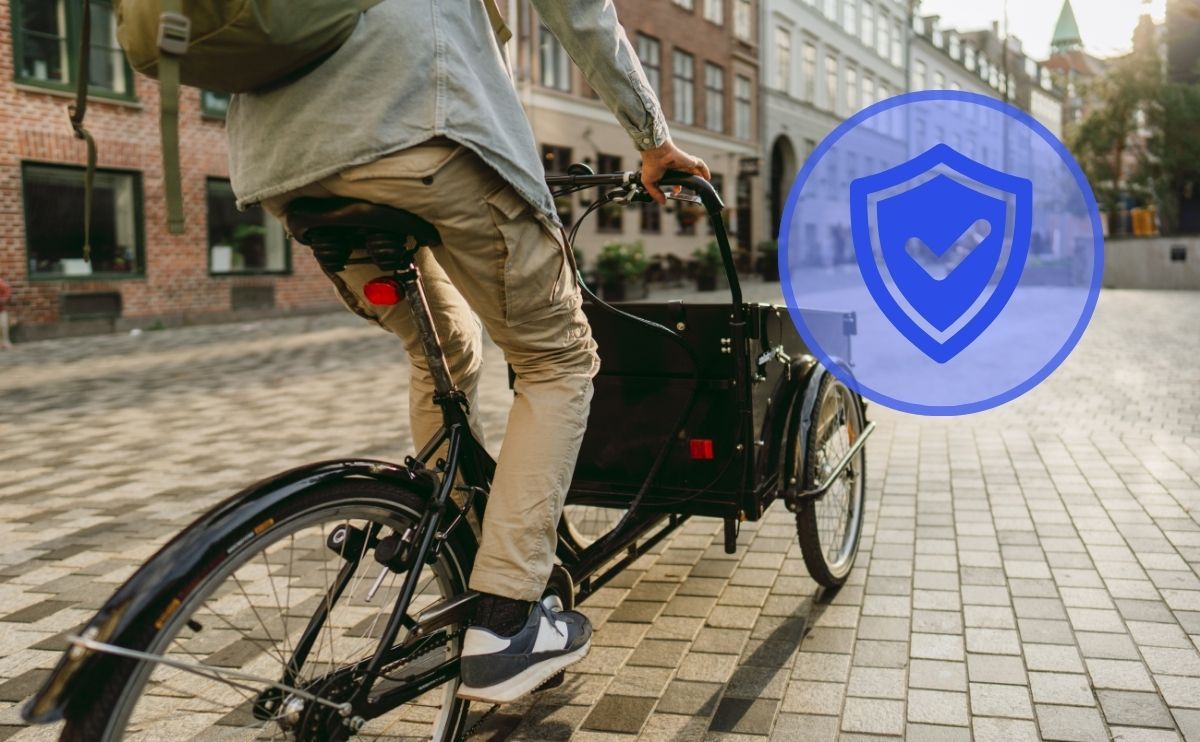
What a GPS tracker actually changes for a cargo bike #
A lock deters and delays a theft. A GPS tracker comes into play once the bike is gone: it lets you know where it is and genuinely improves your chances of getting it back. Specifically, a GPS tracker for a cargo bike lets you:
- receive an instant alert as soon as the bike moves without authorization;
- track its position directly from the mobile app;
- check its movement history to guide search efforts or law enforcement;
- generate a Theft File you can hand straight to the police (available exclusively with Invoxia).
According to a study conducted by Invoxia in October 2024, the recovery rate for a bike fitted with an Invoxia GPS tracker is roughly 10 times higher than the national average in markets where this was measured — a separate study, from June 2024, put the recovery rate for stolen bikes fitted with a GPS tracker at 52%, compared with around 5% on average without one.
Which Invoxia tracker should you choose for a cargo bike? #
For a cargo bike used in the US, the GPS Tracker Pro Max is the right choice: it runs on the global 4G LTE-M network with a built-in SIM card, so it works reliably in the US and more than 35 countries worldwide — unlike Invoxia’s LoRa/Sigfox-based trackers, which only cover Europe.
- 4G LTE-M network with a built-in SIM card, no separate carrier plan to set up.
- Coverage in more than 35 countries, including the US.
- Position updates up to once per second when Lost Mode is triggered.
- Battery life up to 6 months.
- Price: €179 with 1 year of subscription included (renewal afterward from about €60/year, roughly €5/month — Invoxia’s pricing is shown in euros site-wide, including on the US store).
If you’re based in France or one of 14 other European countries, the GPS Tracker Classic is worth knowing about as a lower-cost alternative: it uses Invoxia’s LoRa/Sigfox network instead of a SIM card, with battery life up to 6 months and a price of €99 with 1 year included (or €129 with 3 years included) — but it currently only works within that European coverage area, so it isn’t an option for a US-based cargo bike.
For installation, choose a spot that’s discreet but not fully sealed off from signal: a compartment in the cargo box, under a removable side panel, or fixed under the frame away from splashes. Avoid surfaces surrounded by metal on several sides, which can block the GPS signal. That means your seat tube or handlebars are usually poor spots…
On a cargo bike, it’s worth planning a second hiding spot if your budget allows: a tracker in the cargo box and a second one near the saddle or hub make it harder still for a thief who’s spotted and disabled the first one.
GPS tracker and lock: two protections that complement each other, not replace each other #
A GPS tracker doesn’t replace a mechanical lock — it covers the blind spot the lock leaves. On a cargo bike, given its value, the recommended combination remains:
- a U-lock or a hardened-steel chain, Sold Secure or ART certified, on the main frame;
- a second anchor point (a lighter cable or chain) to secure the wheel or the cargo box;
- a GPS tracker hidden on the bike, to locate it if the first two lines of defense are breached.
Depending on your needs, U-locks and hardened-steel chains don’t offer the same level of resistance: our bike lock guide walks through what to weigh up before choosing.
Cargo bike, GPS tracker and insurance #
Given the value of a cargo bike, dedicated insurance is almost always worth adding — many standard homeowners or renters policies cap or exclude bikes of this value. Some insurers offer a reduced deductible or more favorable terms for a bike fitted with a recognized GPS tracker, on a case-by-case basis. Before signing, compare bicycle insurance offers to check the coverage cap and the conditions around theft.
For a concrete example of recovery through the combination of a GPS tracker and insurance, Pierre’s story, who got his stolen bike back within 6 hours thanks to his Invoxia GPS tracker, illustrates how well the two work together.
FAQ — GPS tracker for cargo bikes #
Where should I place a GPS tracker on a cargo bike? Choose spots that are discreet and hard for a thief to reach: a compartment in the cargo box, under a removable side panel, or fixed under the frame away from splashes. A cargo bike offers more hiding spots than a standard bike — that’s an advantage worth using. Avoid spots surrounded by metal on several sides, which can weaken the GPS signal.
Is a GPS tracker enough to protect a cargo bike, or do I still need a lock? No, the two are complementary. The mechanical lock deters and delays a theft; the GPS tracker lets you locate the bike if it’s taken despite that. For a bike of this value, it’s best not to skip either one.
How long does the battery last on a GPS tracker for a bike? The GPS Tracker Pro Max offers battery life of up to 6 months depending on the tracking mode selected, which sharply limits recharging on a bike used daily.
Does the GPS tracker also work on an electric cargo bike? Yes, it works the same way regardless of the type of cargo bike (pedal-only or electric). The tracker runs on its own power supply and doesn’t need to be connected to the bike’s battery.
Does a GPS tracker for a cargo bike lower my insurance premium? It depends on the insurer. Some policies apply a reduced deductible or more favorable terms for a bike fitted with a recognized GPS tracker — check directly with your insurer before subscribing or renewing.
What should I do if my cargo bike is stolen? Check the position history in the app right away, file a police report including that history, and report the theft to your insurer along with proof of purchase for the tracker. Never try to recover the bike yourself: pass the location information on to law enforcement.
In summary #
A cargo bike checks every box that attracts thieves: high value, extended outdoor parking, and a size that sometimes makes a standard lock harder to use well. A GPS tracker doesn’t replace the lock, but it covers the blind spot it leaves — and genuinely improves the odds of getting the bike back if the worst happens.