

Losing a laptop in an open space or a bag in a train station can quickly turn into a nightmare. Traditional GPS is then powerless: walls absorb 20 to 30 dB of its signal – a factor of 100 to 1,000 – as shown by a study from Aarhus University in Estonia.
For reliable indoor geolocation, four technologies dominate: Wi-Fi RTT, Bluetooth Low Energy, Ultra-Wideband, and assisted/hybrid GPS. Let’s decode them, compare them, and you’ll finally understand why your tracker works or doesn’t work indoors!
Understanding Indoor Geolocation #
Under the term indoor positioning (or indoor positioning, RTLS, IPS) lie two challenges:
- Spatial accuracy: knowing if the object is “in the left drawer” or “on the 2nd floor, wing B.”
- Service continuity: maintaining tracking when moving from an underground parking lot to the outside.
The key? Choose (or combine) technologies suited to the location, budget, and use.
Wi-Fi RTT (IEEE 802.11mc) #
Principle #
The Wi-Fi RTT (Round-Trip Time) protocol measures the round-trip time of packets between smartphone/tracker and access points to calculate the distance.
Accuracy & Key Figures #
- 3 to 6 feet in good conditions, according to MIT’s FTM RTT tests.
- Compatible with Android 9+ and Wi-Fi access points supporting 802.11mc (specification available for free on the IEEE website).
Advantages #
- Infrastructure often already in place in offices, hospitals, or stores.
- No additional beacons.
Limitations #
- Uneven coverage in older buildings.
- Works poorly if few access points are visible.
Bluetooth LE (BLE 5.1/6.0) #
Principle #
The RSSI signal (received power) provides a distance index. Since Bluetooth 5.1, the angle of arrival allows for initial “direction finding.” Bluetooth 6.0 adds Channel Sounding for centimeter accuracy.
Advantages #
- Ultra-low power consumption: ideal for discreet beacons.
- Present on 100% of smartphones and tablets.
- Very low hardware cost.
Limitations #
- Short range (30–100 feet).
- Current accuracy: 10–16 feet (excluding Bluetooth 6.0).
Use Cases #
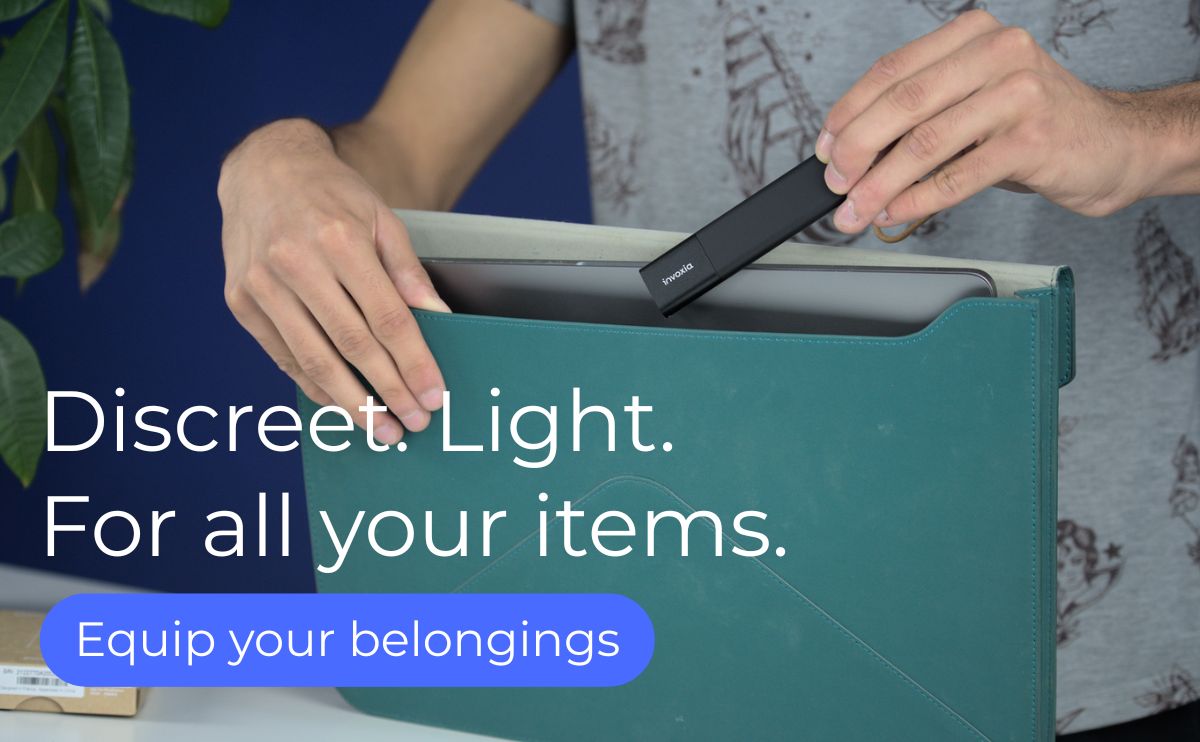
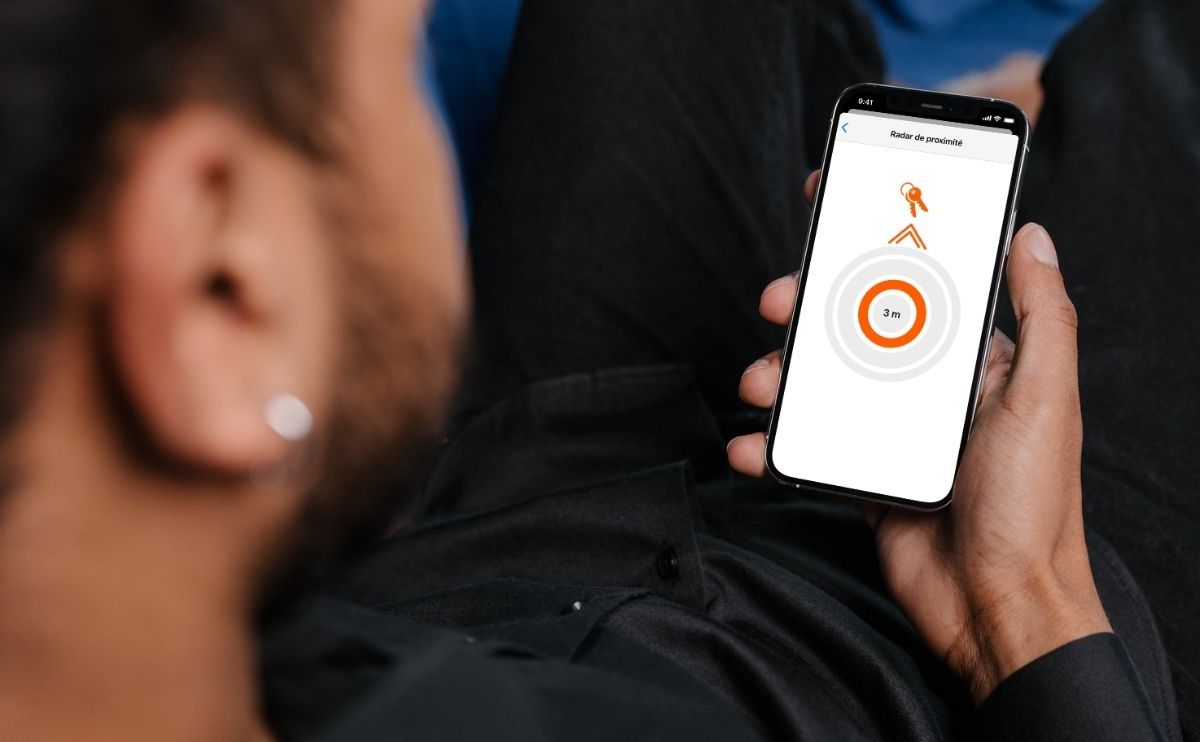
Finding keys, a wallet, or a badge within a few feet.
Ultra-Wideband (UWB) #
Principle #
Very wide pulses (≥500 MHz) allow for distance calculation by time-of-flight and directional detection.
Accuracy & Adoption #
- ≈ 4 inches demonstrated on the Qorvo/Decawave DW1000 module.
- Forecasts predicted that 32% of smartphones would be UWB by 2025.
Advantages #
- Unbeatable accuracy, ideal for smart home, automotive, or digital locks.
- Resistance to multipath interference.
Limitations #
- Compatible smartphones still a minority.
- Short range (up to 50 feet), higher cost than BLE.
Assisted GPS & Hybridization (GPS + Low-Bandwidth Network) #
Principle #
The tracker switches between GPS, Wi-Fi RTT, BLE, and LTE-M depending on the availability of each signal. The algorithm chooses the best source while conserving battery.
Key Strengths #
- Indoor/outdoor coverage without interruption.
- Very long battery life thanks to contextual standby.
- Position stored on a secure server (France, GDPR).
Quick Comparison #
| Use Case | Recommended Technology | Typical Accuracy | Strengths | Limitations |
|---|---|---|---|---|
| Keys or wallet at home | Bluetooth LE | 10–16 feet | Economical, universal | Range <100 feet |
| Patient in a hospital | Wi-Fi RTT | 3–6 feet | Existing infrastructure | Needs compatible access points |
| Valuable object in an apartment | UWB | <4 inches | Hyper-accurate | UWB smartphones required |
| Vehicle in a covered parking lot | Hybrid GPS with LTE-M connectivity | 10–100 feet | Indoor + outdoor | Network subscription |
| Inventory tracking in a warehouse | Wi-Fi RTT + GPS | 6–33 feet | Wide coverage | Initial calibration |
Best Practices for a Successful Deployment #
- Map your Wi-Fi access points: if your indoor geolocation solution requires it, provide their coordinates to improve trilateration.
- Place BLE beacons every 26–33 feet in critical areas (basement, stairwells).
- Update your firmware: recent Wi-Fi access points activate IEEE 802.11mc with a simple update.
- Test UWB on sensitive access points (vault room, showroom) for hands-free access control.
- Choose a hybrid tracker: you’ll avoid blind spots between two technologies.
FAQ #
Does indoor GPS drain the battery? #
No: a hybrid tracker turns off GPS when signals are too weak and relies on Wi-Fi or BLE, up to 10× less power-hungry. At Invoxia, the battery can last up to 3 months for the Pro model using LTE-M technology, and up to 6 months for the Classic model, which operates on low-bandwidth networks LoRa and SigFox.
What is the real accuracy of Wi-Fi RTT? #
In a standard office, expect 3 to 6 feet of error margin (MIT measurement); it decreases if access points are poorly placed or few in number.
Should you choose UWB or BLE? #
Opt for UWB if you already have compatible phones and if centimeter accuracy is critical; otherwise, BLE is sufficient for most common object searches.
No single solution covers all indoor geolocation scenarios.
- Wi-Fi RTT shines with its metric accuracy without added beacons.
- Bluetooth LE is unbeatable on the autonomy/cost ratio.
- UWB offers surgical precision.
- The Invoxia GPS Tracker Pro combines 4 technologies to ensure 24/7 tracking, indoors and outdoors.
By adopting a hybrid and scalable approach, you ensure reliable location for your objects, regardless of the environment.