

Majestic, calm, and deeply loyal, the Akita Inu is one of the most iconic Japanese breeds. Made famous worldwide by the story of Hachikō, a symbol of loyalty in Japan, the Akita Inu captivates with its noble appearance and reserved temperament. In France, this breed is attracting more and more enthusiasts looking for a protective, composed dog that is very attached to its family.
But behind this strong image lies a demanding dog that is not suitable for all types of owners. Independent, sometimes dominant, and not very demonstrative, the Akita Inu requires a real understanding of its physical, mental, and behavioral needs.
Before adopting an Akita Inu, it is essential to be well-informed. Origins, physical characteristics, behavior, health, training, lifestyle, and budget: this article offers you a complete guide to determine if the Akita Inu is truly right for you.
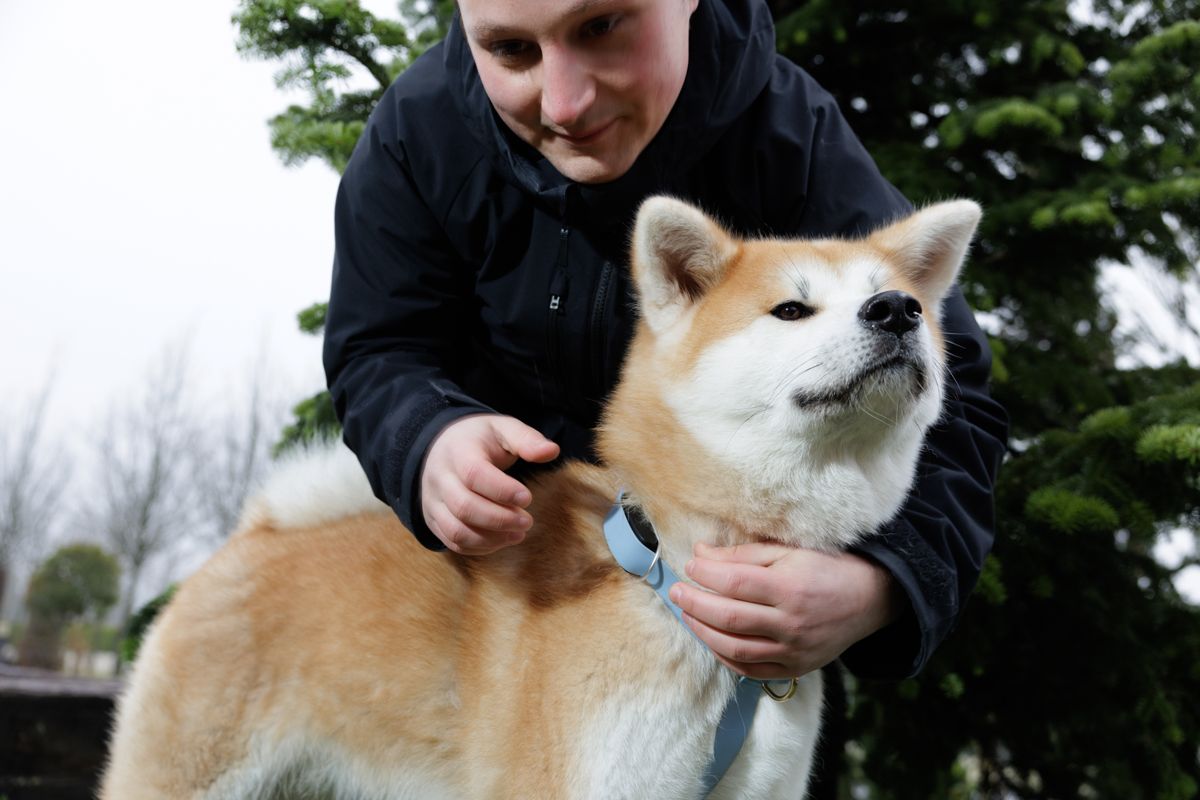
It is also the mascot of Invoxia: Umi, the Akita Inu of our administrative and financial manager, regularly visits us at the office, always equipped with her Biotracker!
Origins of the Akita Inu #
The Akita Inu is an ancient Japanese breed originating from the mountainous region of Akita, in northern Japan. Originally, it was used as a hunting dog for large game, including bears and boars, before becoming a highly respected guard and companion dog.
Over time, the Akita Inu has become a strong symbol of Japanese culture. The breed nearly disappeared after World War II before being preserved through conservation programs, notably led by the Nihon Ken Hozonkai (NIPPO). As early as 1931, the Akita Inu was officially classified as a “natural monument” of Japan, a status that underscores its heritage and cultural importance.
Physical Characteristics of the Akita Inu #
Powerful, massive, and harmonious, the Akita Inu is a large dog that exudes an impression of calm strength. Its proud head carriage and attentive gaze reinforce its image as a dignified and self-assured dog.
Size and Weight of the Akita Inu #
According to the official standard of the Fédération Cynologique Internationale (FCI):
| Gender | Height at withers | Average weight |
|---|---|---|
| Male | 25 to 28 inches | 77 to 99 pounds |
| Female | 23 to 25 inches | 66 to 88 pounds |
Coat Color of the Akita Inu #
The Akita Inu’s coat is double, dense, and protective. Recognized colors are:
- red fawn
- sesame
- brindle
- white
In all colors except white, there is urajiro, which are lighter areas of hair located on the chest, belly, inside of the limbs, and under the tail.
Physical Specificities of the Akita Inu #
The Akita Inu is distinguished by:
- a broad and powerful head
- triangular ears that are erect and slightly inclined forward
- a thick tail curled over the back
- a solid bone structure and developed musculature
Behavior of the Akita Inu #
The Akita Inu is a calm, reserved dog that is very loyal to its family. Not a frequent barker, it observes a lot and acts with discernment. Its temperament makes it an excellent natural guard dog, without unnecessary aggression.
Behavior of the Akita Inu with Children #
With children, the Akita Inu can be gentle and patient if properly socialized. However, it appreciates calm and structured interactions and does not tolerate rough or repetitive gestures well. Supervision is still recommended, as with any large dog.
Behavior of the Akita Inu with Other Animals #
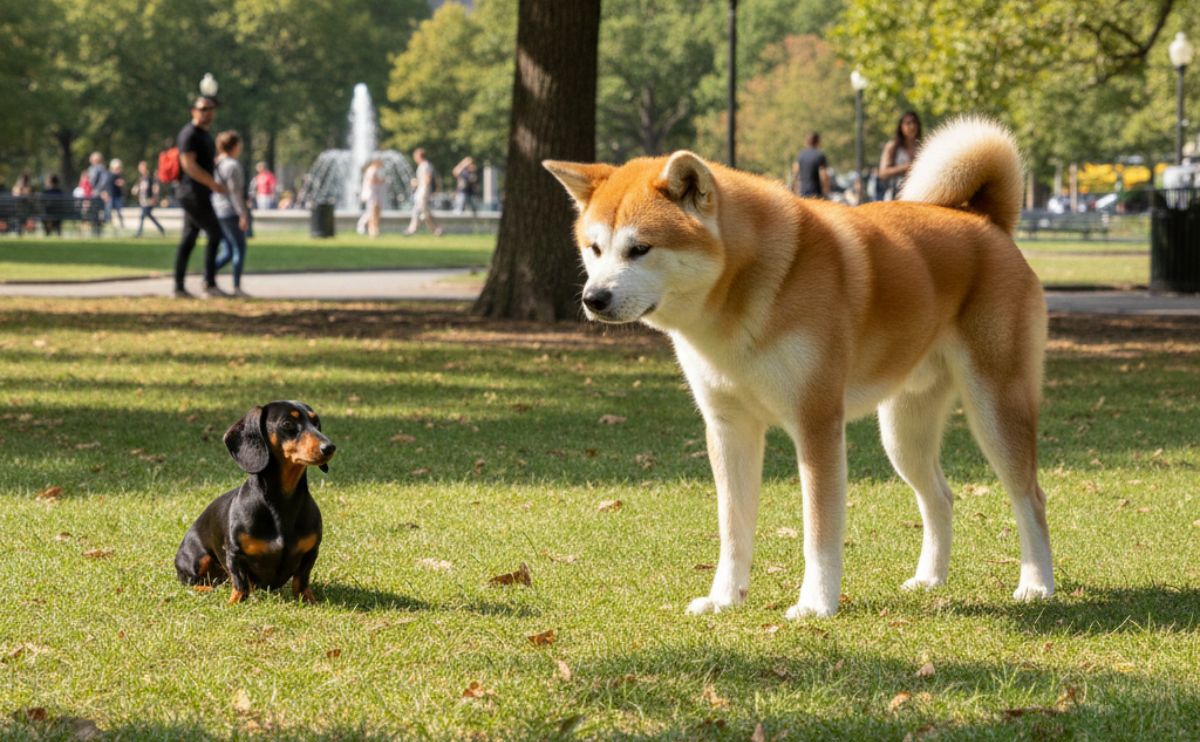
Cohabitation with other dogs can be tricky, especially with same-sex counterparts. Early socialization is essential to limit dominant behaviors. Caution is also recommended with small animals due to its predatory instinct.
Health of the Akita Inu #
The Akita Inu is generally a robust breed, but certain pathologies should be known to anticipate risks and ensure appropriate veterinary follow-up.
Life Expectancy of the Akita Inu #
The average life expectancy of the Akita Inu is between 10 and 13 years. A suitable diet, regular physical activity, and rigorous veterinary follow-up contribute to maintaining its health.
Common Diseases in the Akita Inu #
| Disease | Description | Frequency |
|---|---|---|
| Hip dysplasia | Poor formation of the hip joint | Medium |
| Hypothyroidism | Hormonal disorder affecting metabolism | Medium |
| Seborrhea | Chronic skin condition | Medium |
| Stomach torsion | Severe digestive emergency | Low to medium |
A change in behavior, a decrease in energy, or a loss of appetite should always lead to a veterinary consultation. These signals, sometimes invisible, can be detected thanks to the advanced technology of Invoxia’s Biotracker.
Training of the Akita Inu #
Training the Akita Inu is a fundamental point. Intelligent, self-assured, and independent, it needs a clear, consistent, and respectful framework to thrive.
✔️ Positive Training Methods #
The Akita Inu responds well to training based on:
- positive reinforcement
- consistency of rules
- calm and structured sessions
- a relationship based on trust
✔️ Importance of Early Socialization #
Socialization from an early age is essential to expose the Akita Inu to different environments, humans, and dogs, thus limiting mistrust and territorial behaviors in adulthood.
✔️ Learning Cleanliness #
The Akita Inu is generally clean by nature. A stable routine, regular outings, and patience allow for effective learning.
✔️ Teaching Basic Commands #
Basic commands can be acquired, but the Akita Inu does not obey mechanically. It needs to understand the meaning of requests and find interest in them.
❌ Managing Undesirable Behaviors #
Some behaviors may appear:
- excessive dominance
- refusal to obey
- resource guarding
How to manage them:
- establish a clear framework from the start
- avoid any power struggles
- consistently reinforce desired behaviors
- call on an experienced dog trainer if necessary
Examples of Training Exercises #
Some exercises are recommended for this breed with a particular temperament:
- self-control exercises
- structured leash walking
- mental stimulation games
Character and Lifestyle of the Akita Inu #
The Akita Inu is a dog that thrives in a calm, stable, and structured environment.
Physical Activity and Exercise #
The Akita Inu needs regular daily outings, without excess. It is not a hyperactive dog, but it must expend physical and mental energy to remain balanced.
Character Indoors #
Indoors, the Akita Inu is calm, discreet, and independent. It appreciates tranquility and does not tolerate constant agitation well.

Character with Family and Other Animals #
Very attached to its family, the Akita Inu is loyal and protective but not very demonstrative. It often chooses a reference person.
Living Environment #
A house with a fenced garden is ideal, although apartment living is possible provided that appropriate and regular outings are offered.
Grooming and Hygiene of the Akita Inu #
The Akita Inu is a robust and naturally clean dog, but its grooming requires particular attention, especially due to its size, dense coat, and potential skin sensitivity.
Grooming the Coat of the Akita Inu #
The Akita Inu has a double coat consisting of a hard outer coat and a very dense undercoat. In normal periods, brushing once or twice a week is sufficient. During seasonal shedding, usually in spring and fall, daily brushing is strongly recommended.
For effective grooming:
- use a brush suitable for dogs with a dense undercoat
- complement with a shedding rake during heavy hair loss
- avoid clipping, which alters natural thermal regulation
Baths should remain occasional: 2 to 3 per year are sufficient.
Skin Hygiene #
The Akita Inu may have skin sensitivities. It is recommended to:
- monitor for redness and itching
- dry the dog well after rain or bathing
- adapt the diet if necessary
Ear Care #
The erect ears of the Akita Inu naturally limit infections, but a check every 1 to 2 weeks is advised to detect wax buildup or unusual odors.
Nail and Paw Care #
- check nails about once a month
- trim if they do not wear down naturally
- regularly inspect paw pads, especially in cold weather or on abrasive surfaces
Dental Hygiene #
To prevent tartar buildup:
- brushing teeth is recommended several times a week
- use dental toys or treats
- annual veterinary check-up
Diet and Impact on Overall Care #
A quality diet, adapted to the Akita Inu’s morphology and activity level, plays an essential role in:
- skin and coat health
- joint protection
- maintaining a healthy weight
Adoption and Cost of the Akita Inu #
Price to Adopt an Akita Inu #
An Akita Inu registered with the LOF generally costs between 1,500 € and 2,500 €, depending on the lineage and breeding.
Annual Cost for Maintenance and Care #
The average annual budget is between 1,000 € and 1,500 €, including:
- food
- veterinary care
- parasite prevention
- accessories
- dog insurance
Conclusion #
The Akita Inu is a majestic, loyal dog deeply attached to its family. Its independent and protective nature makes it an exceptional companion for informed owners capable of providing a stable, respectful, and consistent framework. Well understood and properly accompanied, the Akita Inu develops a strong, unique, and lasting relationship with its human.