

Canine separation anxiety affects many households. According to PetRadar, between 14 and 20% of dogs experience this disorder, which can manifest as incessant barking, destruction, or even escapes. For the owner, the situation is often difficult to understand and manage. Fortunately, solutions exist, and innovative tools like the Minitailz Biotracker GPS now provide valuable help in detecting and better managing this problem.
What is Dog Separation Anxiety? #
Separation anxiety is a true emotional distress that appears when the dog is left alone. It is not just simple boredom: the dog experiences the absence as a loss and manifests intense stress.

Behavioral veterinarians remind us that it is one of the most common disorders after aggression, and it can affect both the quality of life of the animal and that of its owner.
The Most Common Causes #
Among the main triggers of dog separation anxiety:
- a lack of habituation to solitude, often observed in puppies or dogs adopted from shelters;
- changes in routine, such as returning to the office after a period of teleworking or moving;
- a traumatic past related to abandonment or abuse;
- a lack of physical and mental stimulation on a daily basis.
Symptoms of Dog Separation Anxiety #
The manifestations are varied, but some signs are regularly observed.
| Symptom | When it Appears | Meaning |
|---|---|---|
| Barking / howling | As soon as the owner leaves | Strong distress, anxious vocalization |
| Destruction (furniture, doors) | During the absence | Attempt to escape or self-soothing |
| Sudden uncleanliness | Indoors despite training | Uncontrollable stress |
| Salivation, panting, agitation | Before and during the absence | Extreme nervousness |
| Self-mutilation (licking, biting) | In prolonged solitude | Deep stress, need for escape |
A study published by the veterinary clinic Étoiles du Nord in France reveals that 90% of anxious dogs vocalize, 80% destroy, and 55% become unclean.

How to Diagnose This Disorder? #
The diagnosis is based on three essential steps:
- Observe if the symptoms appear only during absences.
- Rule out any medical cause (pain, digestive or neurological disorders).
- Consult a behavioral veterinarian, capable of establishing an adapted protocol.
The use of video surveillance or connected trackers, like the Minitailz Biotracker GPS by Invoxia, can also help to objectify the dog’s behavior.
How to Soothe My Dog’s Separation Anxiety #
To reduce this disorder, several approaches effectively complement each other:
- Progressive habituation: start by leaving him alone in a room of the house, then move on to very short absences whose duration you gradually extend.
- No effusive cuddles: when you leave and return, avoid jumping on him or being too emotional. Dogs tend to understand that something is wrong and will take it as a sign.
- Environmental enrichment: do not hesitate to invest in interactive toys, licking mats, objects carrying the owner’s scent.
- Reassuring routine: prefer regular schedules for meals, walks, and playtimes.
- Physical and mental stimulation: a tired dog handles solitude better. And to tire him out, he needs to expend energy both physically and mentally, through sports activities or games.
- Desensitization to departure signals: put on a coat or take your keys without leaving to break the association.
- Professional help: trainers and behavioral veterinarians are your best allies for severe cases.
How Can the Minitailz Biotracker GPS Help Detect Dog Separation Anxiety? #
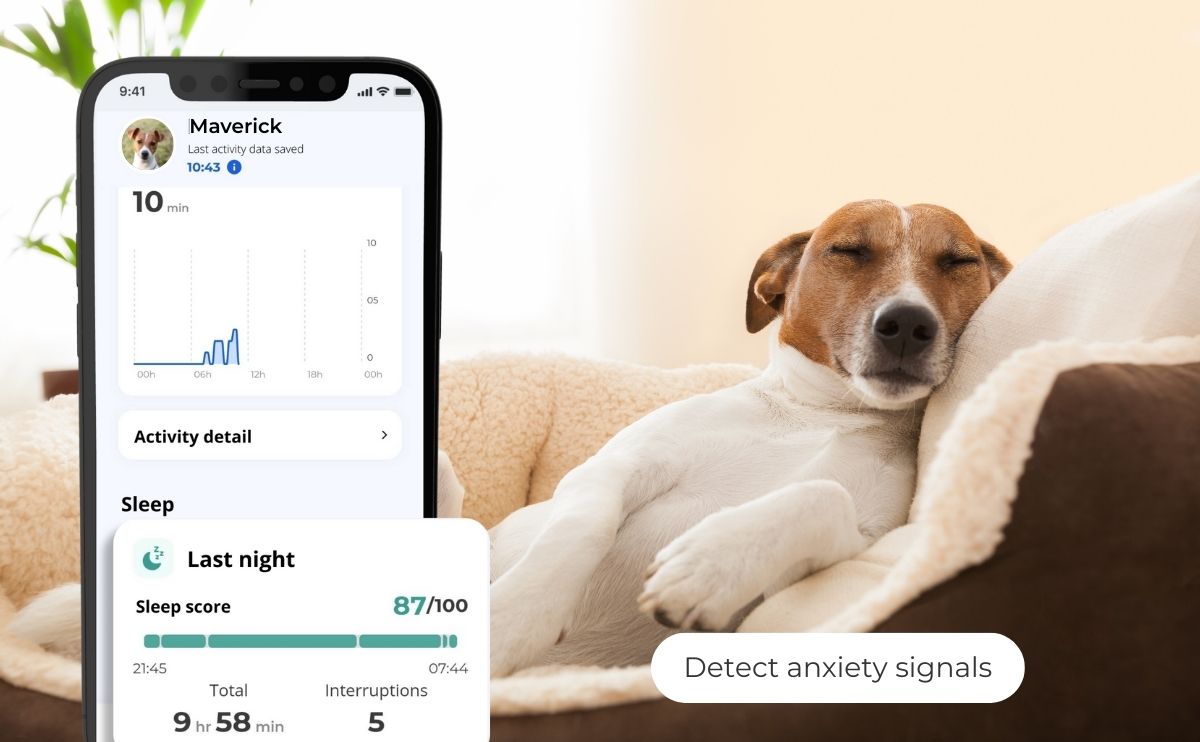
Traditional solutions, of course, rely on education and observation, but technology can prove to be an indispensable ally on a daily basis. The Minitailz Biotracker GPS not only locates the dog: it analyzes its behavior and provides useful objective data to detect separation anxiety.
One of its flagship features is the bark detection. The device sends an alert if the dog barks for an extended period, a key symptom of this disorder. The owner can thus know when the vocalizations occur and measure the effectiveness of the solutions implemented.
In parallel, the Biotracker GPS monitors activity and sleep. Unusual agitation, repeated movements, or disturbed rest are all stress indicators that the tracker helps identify. In case of stress-related escape, the integrated GPS also ensures the dog’s safety.
When to Consult a Professional? #
If despite efforts the dog continues to suffer, if anxiety results in self-mutilation or weight loss, it is essential to consult a veterinarian. In some cases, temporary medical treatment can accompany educational work and behavioral monitoring.
Dog separation anxiety is a serious disorder, but solutions exist. Progressive education, reassuring routines, and environmental enrichment are the pillars of good management. Technology provides unprecedented support: with its bark detection and behavioral monitoring, the Minitailz Biotracker GPS helps owners objectively understand what their dog is experiencing and act more effectively. A modern approach to improve daily life, strengthen the bond, and offer dogs a more serene life.