

The Rottweiler is one of the most well-known dog breeds in the world, often associated with strength and protection. Yet, behind its imposing physique, this dog hides an unsuspected loyalty and gentleness towards its family. Very popular in France, where it regularly ranks among the 20 most registered dog breeds at the LOF, the Rottweiler is also widespread in the United States and Germany, its country of origin.
Its sometimes controversial image, linked to its power, should not overshadow its many qualities: an exceptional working dog, a faithful companion, and an ideal protector. In this article, we will explore its origins, characteristics, behavior, health, training, and everything you need to know before adopting a Rottweiler.
Origins of the Rottweiler #
The Rottweiler has its roots in Germany, specifically in the town of Rottweil, from which it takes its name. In the Middle Ages, it was used as a butcher’s dog to guard and drive cattle herds. Its robustness and protective instinct made it a valuable ally for breeders and traders.
With the rise of modern breeding and the gradual disappearance of its traditional functions, the Rottweiler has found new missions: guard dog, police dog, military dog, and today a companion and protection dog. This evolution testifies to its great adaptability.
Physical characteristics of the Rottweiler #
The Rottweiler is distinguished by its imposing and muscular stature, which naturally inspires respect.
Size and weight #
Here is a summary table of the Rottweiler’s size and weight standards:
| Gender | Height (at the withers) | Average weight |
|---|---|---|
| Male | 24 to 27 inches | 99 to 132 pounds |
| Female | 22 to 25 inches | 77 to 106 pounds |
Coat color #
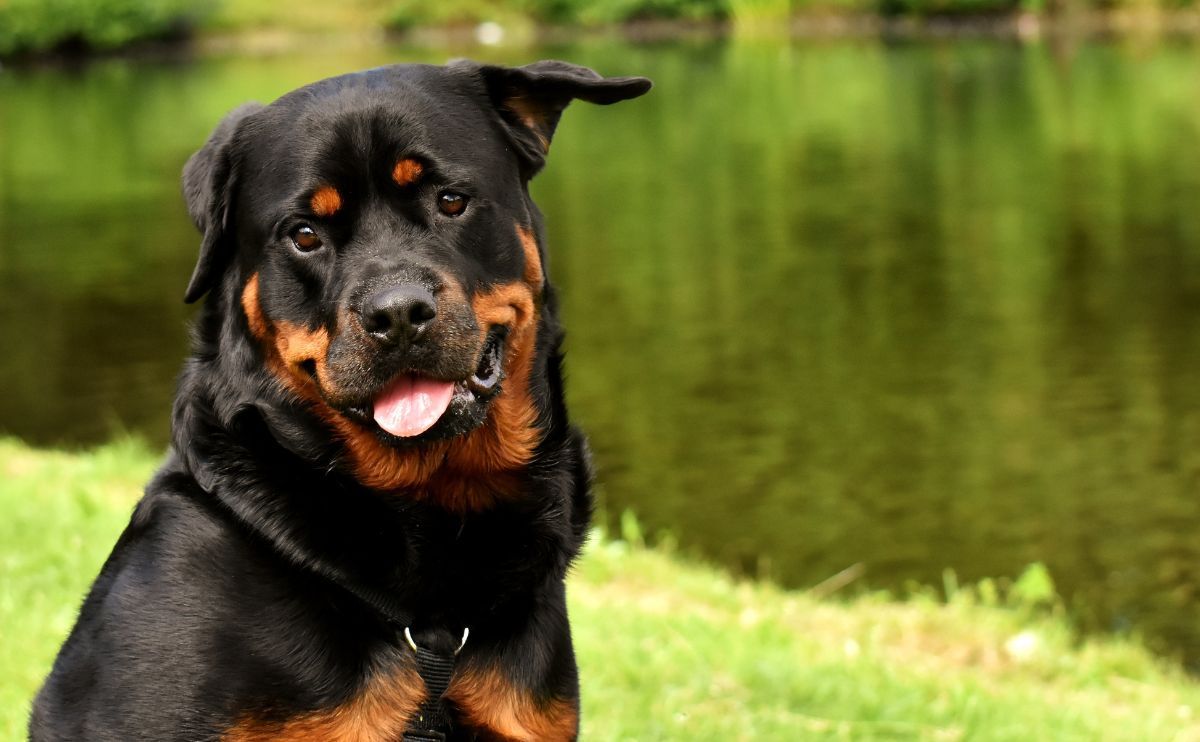
The Rottweiler’s coat is short, dense, and shiny. Its coat is always black with well-defined tan markings located on the cheeks, muzzle, chest, limbs, and under the tail. This color combination contributes to its noble and powerful appearance.
Specificities #
The Rottweiler has a broad head and a frank gaze that expresses both strength and confidence. Its ears are medium-sized, triangular, and drooping - unlike other guard dogs like the Doberman or the Pitbull, whose ears are still sometimes cropped today to give them a more threatening appearance. Its powerful jaw and compact body make it an enduring and solid dog, perfectly suited for guarding and working.
Category 2 dogs #
The Rottweiler is recognized by the Fédération Cynologique Internationale (FCI) and classified in:
- Group 2: Pinscher and Schnauzer type dogs – Molossoids – Swiss mountain and cattle dogs
- Section 2.1: Molossoids, mastiff type
- Without mandatory working trial for confirmation.
👉 In short, this places it in the category of molossoid type dogs, known for their power, developed musculature, and protective instinct.
Behavior of the Rottweiler #
The Rottweiler is often perceived as an intimidating dog, but in reality, it is a loyal and affectionate companion when well-trained and socialized.
Behavior with children #
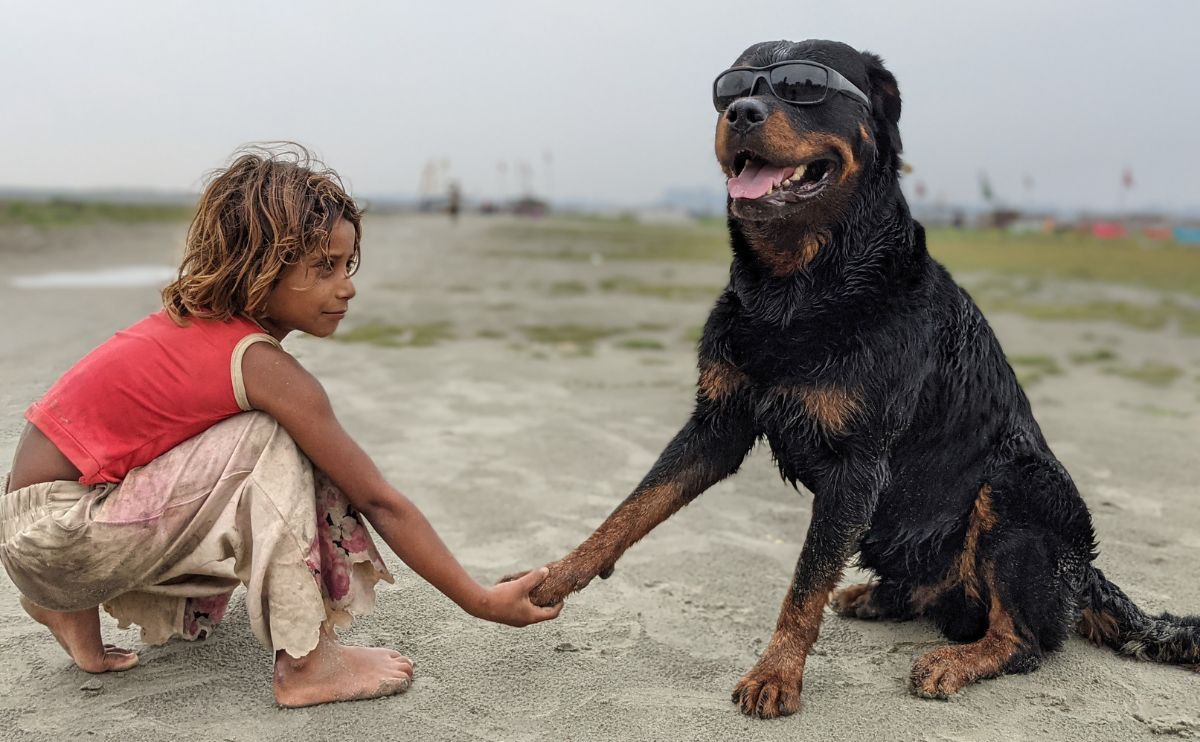
Contrary to popular belief, the Rottweiler can be an excellent companion for children. It is protective, gentle, and patient. However, its size and strength require increased vigilance, especially with younger children. Interactions should always be supervised.
Behavior with other animals #
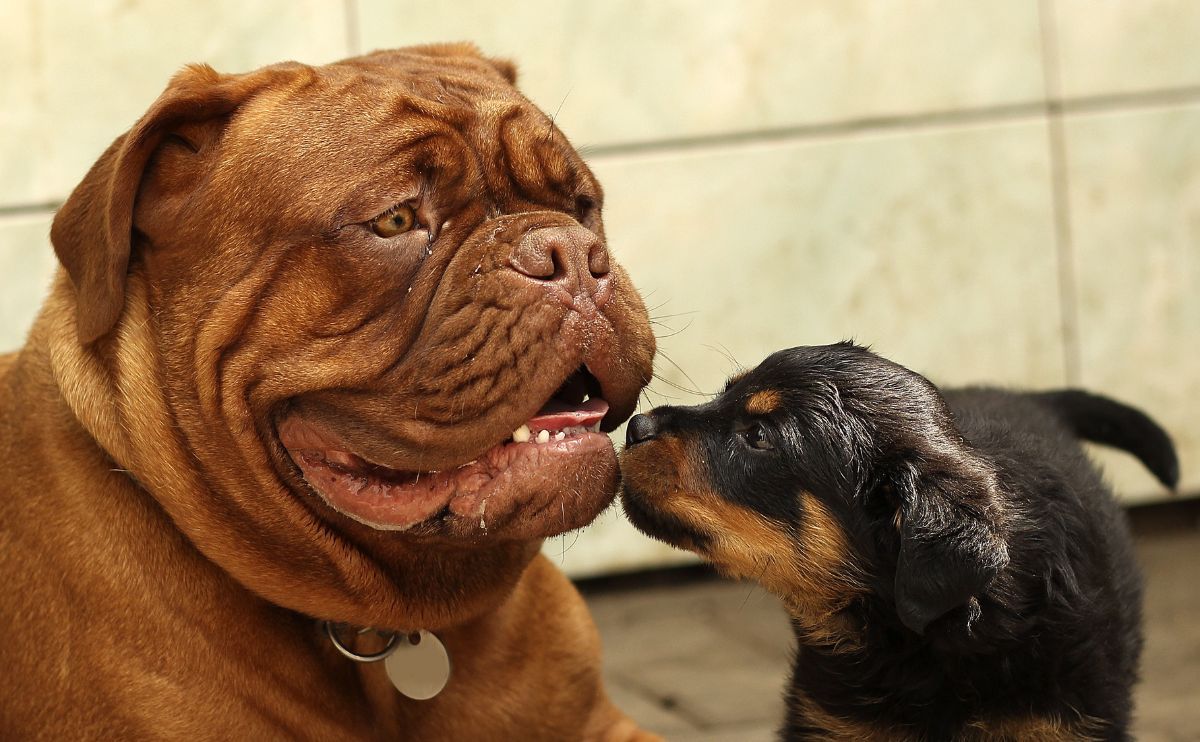
The Rottweiler can coexist with other animals, but early socialization is essential. Well-introduced, it can get along with other dogs and even with cats. Without this socialization, it may develop a marked dominance instinct.
Health of the Rottweiler #
The Rottweiler is a robust dog, but like all large breeds, it is predisposed to certain pathologies.
Life expectancy #
The life expectancy of a Rottweiler is between 8 and 10 years, which is average for a large dog. With a good diet, appropriate veterinary care, and enough exercise, some individuals can live longer.
Common diseases #
Here is a table of the most common diseases in the Rottweiler:
| Disease | Description | Frequency |
|---|---|---|
| Hip dysplasia | Joint malformation affecting mobility | High |
| Elbow dysplasia | Elbow joint problem | Medium |
| Heart diseases | Insufficiency, cardiomyopathy, or atrial fibrillation | Medium |
| Cancer (osteosarcoma) | Common bone tumor | Medium |
| Obesity | Related to an inappropriate diet | Medium |

Training of the Rottweiler #
Training the Rottweiler is a crucial element in making it a balanced and pleasant companion. Its strength, intelligence, and protective instinct require an owner capable of setting a clear, kind, and consistent framework.
✔️ Positive training methods #
The Rottweiler learns quickly, but it does not tolerate brutality or coercive methods. Using positive reinforcement — food rewards, petting, or verbal praise — helps create a trusting relationship and stimulate its motivation.
For example, when it sits on command, praise it with a “good job” and give it a treat. By repeating this process, it will quickly associate the requested behavior with a pleasant experience!
✔️ Importance of early socialization #
The Rottweiler is naturally protective and can be wary of strangers. To avoid excessive behaviors, it must be accustomed from an early age to meet different people, animals, and environments.
Gradually expose it to crowds, public transport, children playing in a park, or other dogs during supervised walks. This diversity of experiences will help it become a balanced adult.
✔️ Teaching your Rottweiler cleanliness #
Like many dogs, the Rottweiler learns cleanliness fairly quickly if a clear routine is established. The secret lies in regularity and patience.
From the start, take it out systematically after meals, upon waking, and before bedtime. When it relieves itself outside, praise it immediately. On the other hand, ignore accidents indoors, without scolding, to avoid confusion.
✔️ Teaching basic commands #
A well-trained Rottweiler must master simple commands to ensure its safety and that of others. Basic commands like “sit,” “lie down,” “stay,” or “heel” should be integrated from the first months.
To teach “stay,” ask it to sit, step back a few steps, and return to praise it as soon as it stays in place. Gradually increase the distance and duration.
❌ Managing undesirable behaviors #
Due to its power, it is essential to quickly correct problematic behaviors such as excessive barking, the tendency to pull on the leash, or excessive protection of its territory. Firmness must always be accompanied by calm and consistency.
If the Rottweiler pulls on the leash, stop walking immediately and resume only when it relaxes. Thus, it understands that pulling does not allow it to move forward.
Examples of training exercises #
The Rottweiler loves to work and engage in stimulating activities. Offering regular exercises allows it to channel its energy and reinforce its obedience.
- Outdoor obedience exercise: recall sessions in a secure park to reinforce discipline and concentration.
- Tracking games: hide toys or treats and let it find them using its highly developed sense of smell.
- Sports activities: agility (adapted to its size), cani-hiking, or canicross combine physical exertion and bonding with its owner.
Character and lifestyle of the Rottweiler #
The Rottweiler is a dog that is both powerful and balanced, capable of adapting to various lifestyles.
Physical activity and exercise #
Energetic, the Rottweiler needs at least 1.5 hours of daily exercise: long walks, dynamic games, and mental stimulation.
Indoor character #
At home, the Rottweiler is calm and composed. It loves being close to its family and does not tolerate prolonged solitude well.
Character with family and other animals #
Loyal and protective, the Rottweiler develops a strong attachment to its family. With successful socialization, it can be affectionate with other animals.
Living environment #
The Rottweiler is not suited for apartment living unless it has many daily outings. It thrives better in a house with a secure garden.
Grooming and hygiene of the Rottweiler #
The Rottweiler requires moderate but regular grooming to stay healthy and comfortable.
Coat and brushing #
Its short coat requires weekly brushing to remove dead hair and maintain a shiny coat.
Veterinary care and hygiene #
- Regular ear cleaning to prevent infections
- Monitoring teeth and brushing to prevent tartar
- Regular nail trimming to avoid injuries
Diet #
A large-sized kibble, rich in protein (≥ 28%) and moderate in fat, perfectly meets its nutritional needs. The recommended amount varies between 1 and 1.3 pounds per day for an active Rottweiler, and a little less for a more sedentary Rottweiler. These doses should be divided into two meals, according to the age, activity level, and metabolism of each dog.
In parallel, it is essential to control treats. In a powerful dog like the Rottweiler, if a few extra pounds are not very noticeable on its massive silhouette, but it can have a significant impact on its joints and overall health. Therefore, prefer light treats and use them mainly in the context of training and positive reinforcement.
Adoption and cost of the Rottweiler #
Before adopting a Rottweiler, it is important to be well-informed about the costs and responsibilities associated with this breed.
Price for adoption #
The price of a Rottweiler puppy registered at the LOF varies between 1,000 and 2,000 €, depending on the breeding, lineage, and health guarantees offered.
Annual cost for maintenance and care #
The annual budget for a Rottweiler is substantial due to its size and specific needs. Here is a detailed estimate of the main expense items:
- Food: between 700 and 1,000 € per year for a quality diet adapted to a large dog. The choice of premium foods (protein-rich kibble, joint supplements) may slightly increase this cost.
- Veterinary care: between 300 and 600 € per year, including vaccines, deworming, antiparasitic treatments, and check-up visits. This budget may rise in case of specific diseases (dysplasia, tumors, etc.).
- Possible health insurance: between 250 and 600 € per year, depending on the chosen plan (basic or premium). It helps cover part of the veterinary costs, often high in large breeds.
- Accessories and maintenance: between 100 and 200 € per year, for collars, harnesses, sturdy toys, bedding adapted to its size, and hygiene products.
In total, plan on average between 1,400 and 2,400 € per year to ensure the well-being of a Rottweiler, not counting any unforeseen expenses (veterinary emergencies or operations).