

Taking care of your dog’s health is no longer just about taking them out two to three times a day or following the recommended kibble quantities. It’s about having reliable data daily to adapt to your pup’s needs.
With the new features of the Minitailz Biotracker GPS, Invoxia takes a step forward towards ultra-personalized monitoring. Now, your companion can benefit from precise tracking of distances traveled and calories burned. These tools allow owners to better understand their dog’s needs, adjust their lifestyle, and anticipate health issues.
Distance Tracking: Walk, Trot, Run… Discover How Many Miles Your Dog Travels! #
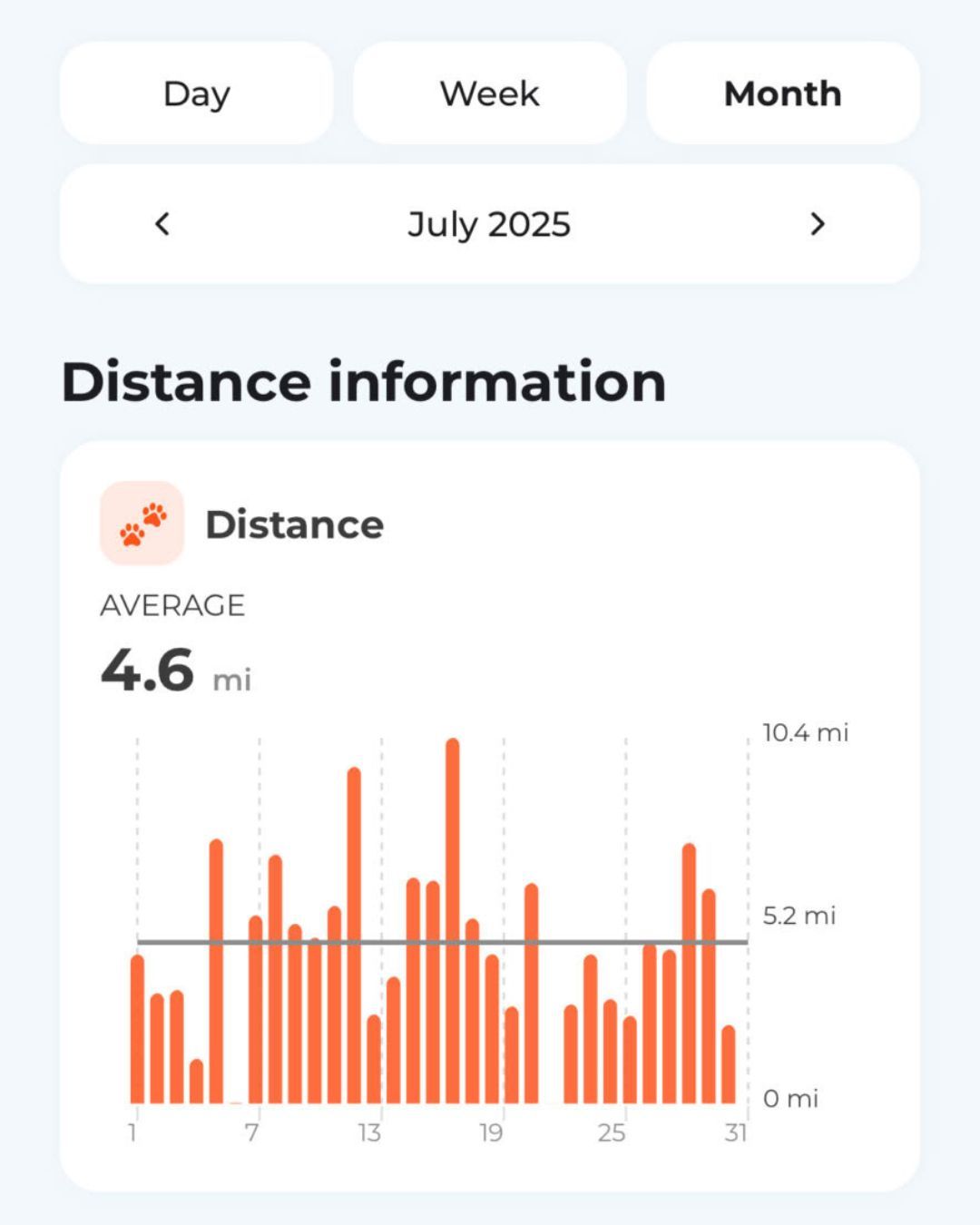
The Minitailz Biotracker GPS calculates the distance your dog travels by combining their size and activities: walking, trotting, running. By knowing the animal’s morphology, the connected health tracker can determine the total distance over a given period. This allows distinguishing a dog that strolls leisurely every day from a more active dog that runs, plays, or follows more demanding exercises.
💡 Why It’s Essential:
- You can identify if daily walks are sufficient.
- You can adjust the pace: add longer or more rhythmic sessions according to the dog’s needs.
- You can monitor progress: if your dog gradually increases their distances, it’s an indicator of endurance, fitness, or improvement in their health condition.
How Far Do Our Pups Travel Based on Their Age, Weight, and Breed? #
As expected, the youngest are the most energetic! With an average of 4.7 miles per day, dogs between 1 and 2 years old are the walking champions. Then this distance gradually decreases throughout their life, reaching an average of 2.2 miles around 10 years old.
We also compared the distances traveled based on the dogs’ weight. No big surprise here: the lightest and heaviest dogs are the ones that travel the least miles. Count between 2.8 and 3.7 miles daily for the lightweights, and between 2.2 and 2.8 miles for those 55 pounds and over.
And this trend is confirmed when we look at the breeds that walk the most. Leading the ranking in our Minitailz Biotracker GPS community is the Brittany Spaniel, with a hefty average of 6.2 miles! Alongside it on the podium are the English Cocker Spaniel and the Malinois, with 5.9 miles for both breeds.
And of course, we find in this ranking very energetic dog breeds, like the Australian Shepherd or the Border Collie, who are champions of dog sports.
Calorie Tracking: Adjust Their Meals and Activities #
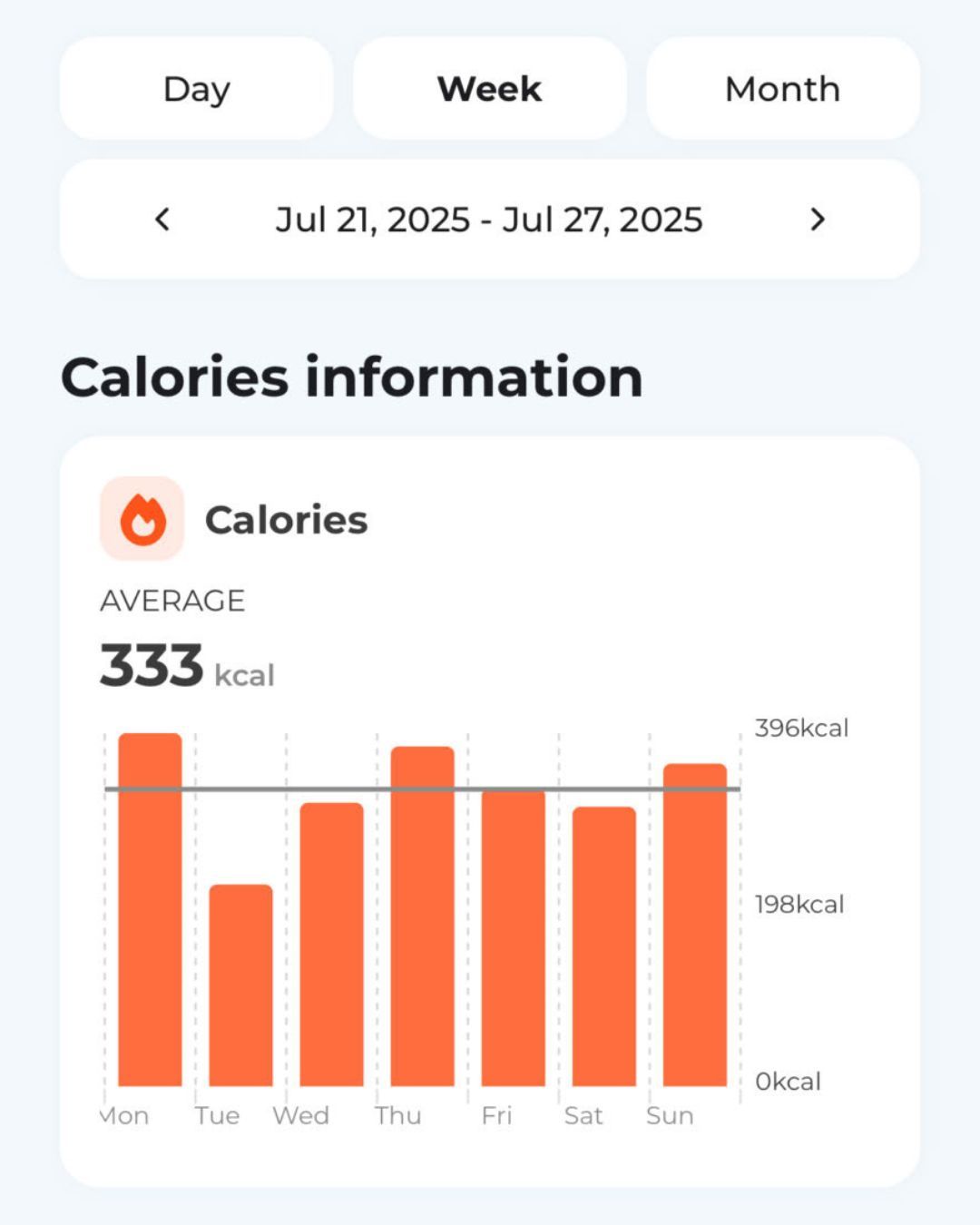
As with their humans, overweight is a real problem for dogs. Some breeds are more prone to it than others, like the Dachshund or the Beagle. Being able to track caloric intake - directly on kibble packages - and expenditure - thanks to the Minitailz Biotracker GPS - is therefore essential to maintain your pup’s ideal weight!
At Invoxia, the system relies on two main steps:
- Estimation of the basic calories needed for basic body functions (Resting Energy Requirement, RER), which depends on the animal’s weight.
- Application of coefficients related to activity, age or physiological stage (puppy/adult/senior), sterilization, to obtain the actual daily caloric needs (Maintenance Energy Requirement, MER).
With this system, the Minitailz Biotracker GPS can determine with great precision the calories burned by your dog during the day.
💡 Why It’s Essential:
- You can adjust meals and portions based on your dog’s caloric expenditure.
- You can extend or shorten exercise sessions, add a play session or a walk if the caloric expenditure is too low.
How to Calculate Your Dog’s Necessary Caloric Intake? #
To help you, we’ve prepared a small example:
| Dog Profile | Estimated Weight | Activity/Lifestyle | RER Calculation | MER Estimation (cal/day) |
|---|---|---|---|---|
| Adult dog, neutered, moderate activity | 44 pounds | daily walks, light play | RER = 70 × 20^0.75 ≈ 662 kcal/day | MER ≈ RER × 1.6 → ≈ 1,060 kcal/day |
| Active/sporty dog, not neutered | 66 pounds | running, training, intense play | RER = 70 × 30^0.75 ≈ 1,030 kcal/day | MER ≈ RER × 2.0 → ≈ 2,060 kcal/day |
To obtain the MER, multiply the RER by the multiplier coefficient corresponding to your dog’s lifestyle*:
-
Inactive/Sedentary: 1.2
-
Neutered Adult: 1.6
-
Non-neutered Adult: 1.8
-
Active: 2.0
-
Very Active/Working Dog: 3.0 – 6.0
-
Puppy (0 to 4 months): 3.0
-
Puppy (4 months to adulthood): 2.0
-
Pregnant Female: 3.0 (increasing in advanced stages)
-
Lactating Female: 4.0 – 8.0 (depending on litter size)
These examples show that for two dogs of different weights, but especially different activity levels, caloric needs can almost double. This illustrates the impact of lifestyle on the required energy.
What the Minitailz Biotracker GPS Data Changes for Owners #
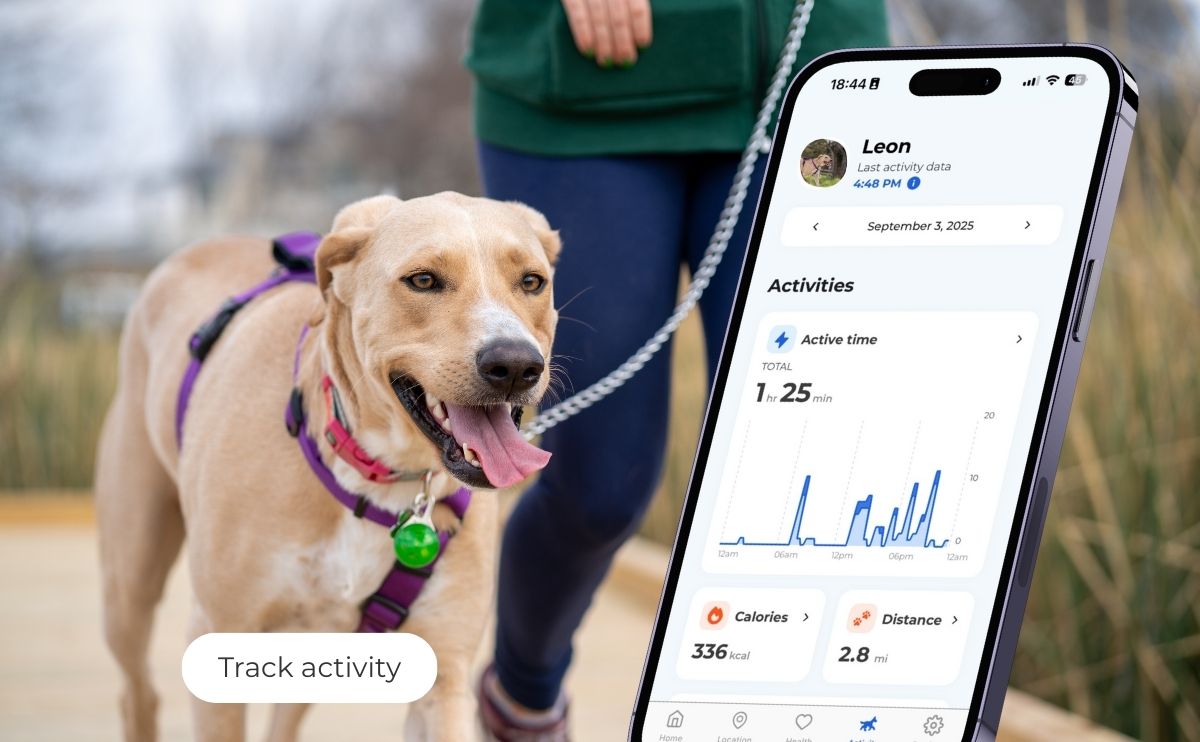
Integrating distance and calorie tracking changes the game for dog parents:
- You move from a “guesstimate” to measurable elements.
- It helps to prevent overweight or spot a lack of energy. For example, if a dog seems tired or thin despite their apparent “normal” diet, the tracker data can reveal a caloric deficit or lack of activity.
- You can adjust diet, portions, type of play, or walk duration based on concrete data. It’s more motivating for the owner, fairer for the dog.
- In case of veterinary recommendation, the figures (daily distance, calories burned) provide objective evidence to adapt the protocol.
The Minitailz Biotracker GPS, Always More Than Just a GPS Tracker for Dogs #
These new features - calorie and distance tracking - add to the already appreciated features of the Minitailz Biotracker GPS:
- tracking of resting and on-demand heart and respiratory rates
- overall activity and well-being monitoring
- sleep monitoring
- bark detection - particularly useful in disorders like separation anxiety
- GPS location and anti-escape alerts
The whole makes the Minitailz Biotracker GPS a connected health assistant capable of providing a complete and unprecedented view of your dog’s health and well-being!
These two major innovations join already very useful features for dog parents, such as heart and respiratory rate monitoring or sleep tracking. The Minitailz Biotracker GPS thus positions itself as a truly proactive tool for canine health. Not only does it help you spot signals before problems set in, but it also allows you to act with relevance. For a dog in great shape, a reassured owner, and a strengthened relationship!
*Sources: PetMD