

Obesity in dogs has become a real public health issue for animals. It is estimated that 20 to 40% of domestic dogs worldwide are affected. However, an obese dog is not just overweight: its excess fat can have serious health consequences and reduce its lifespan.
Fortunately, with simple adjustments in diet, physical activity, and now the intelligent monitoring of its energy expenditure, it is possible to help it regain an ideal weight.
What are the causes of canine obesity? How to prevent it? And how to help an obese dog lose weight? Here are all the answers!
Why is my dog obese? The main causes #
Obesity in dogs is generally due to an imbalance between caloric intake and energy expenditure. Several factors contribute to this excessive weight gain.
A diet too rich #
A dog that consumes more calories than it expends will inevitably gain weight. Among the common causes:
✔️ Too generous portions
✔️ Too caloric foods (inappropriate kibble, excessive treats)
✔️ The bad habit of giving table scraps - which can sometimes turn out to be
toxic foods for your dog

Lack of exercise #
A dog that expends little energy will easily store fat. This is particularly the case:
- For dogs living in apartments with too short or too rare walks
- For older dogs, who lose energy and mobility with age
Medical and hormonal factors #
In some cases, canine obesity is not related to diet or lifestyle. Medical factors may come into play:
✔️ Sterilization: a sterilized dog burns on average 20% fewer calories
✔️ Hypothyroidism: slows metabolism and promotes fat storage
✔️ Cushing’s syndrome: a hormonal disease that leads to abnormal fat accumulation
🐕 Which dog breeds are predisposed to obesity? #
Some dog breeds have a slower metabolism or a genetic predisposition to overweight. Among the most affected:
- the Labrador Retriever
- the Golden Retriever
- the Beagle
- the Cocker Spaniel
- the Pug
- the Dachshund
- the French Bulldog
- the Basset Hound
- the Newfoundland
If your dog is one of these breeds, increased vigilance on its diet and physical activity is essential.
How do I know if my dog is obese? #
A dog is considered obese when its weight exceeds 20% or more of its ideal weight. Here are some signs to watch for:
👉 Ribs are no longer palpable under a layer of fat
👉 Belly is rounded and hanging
👉 Rapid shortness of breath during exertion
👉 Difficulty jumping or getting up after prolonged rest
To confirm, a veterinarian can calculate its body condition score (BCS) and propose a suitable plan.
⚡ Tracking Calories Burned: A New Weapon Against Canine Obesity with the Biotracker #
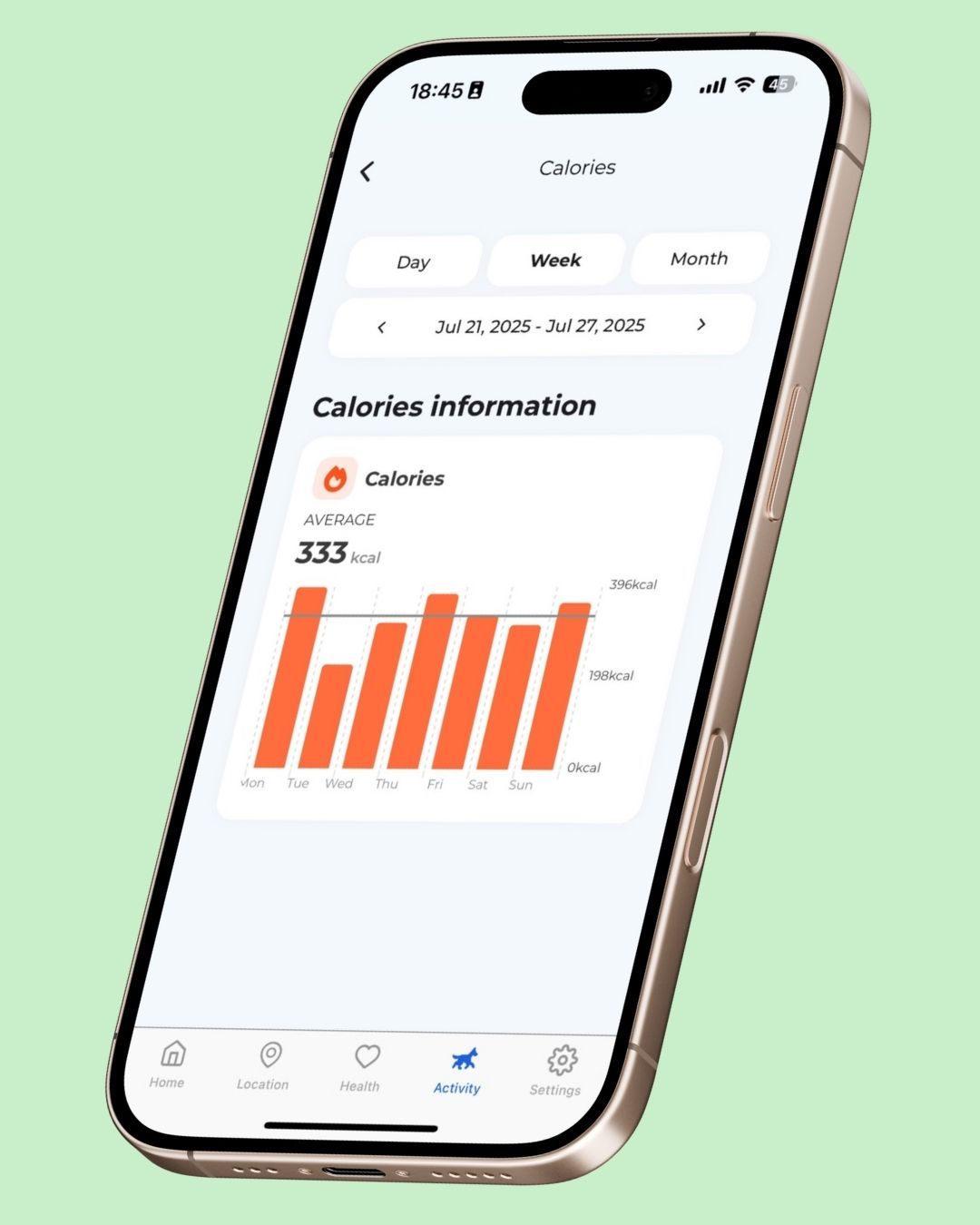
Today, prevention also involves technology. With the new calories burned tracking feature of the Biotracker, owners can finally measure how much energy their dog actually burns each day.
This precise tracking helps understand the dog’s energy balance:
- If its caloric intake is higher than its expenditure, weight gain is inevitable.
- If it burns enough calories, its weight remains stable.
Thanks to this data, owners can adjust diet and physical activity according to their companion’s exact profile.
📌 To learn more, check out our article dedicated to calorie tracking in dogs.
How the Biotracker by Invoxia Helps Prevent Obesity in Dogs #
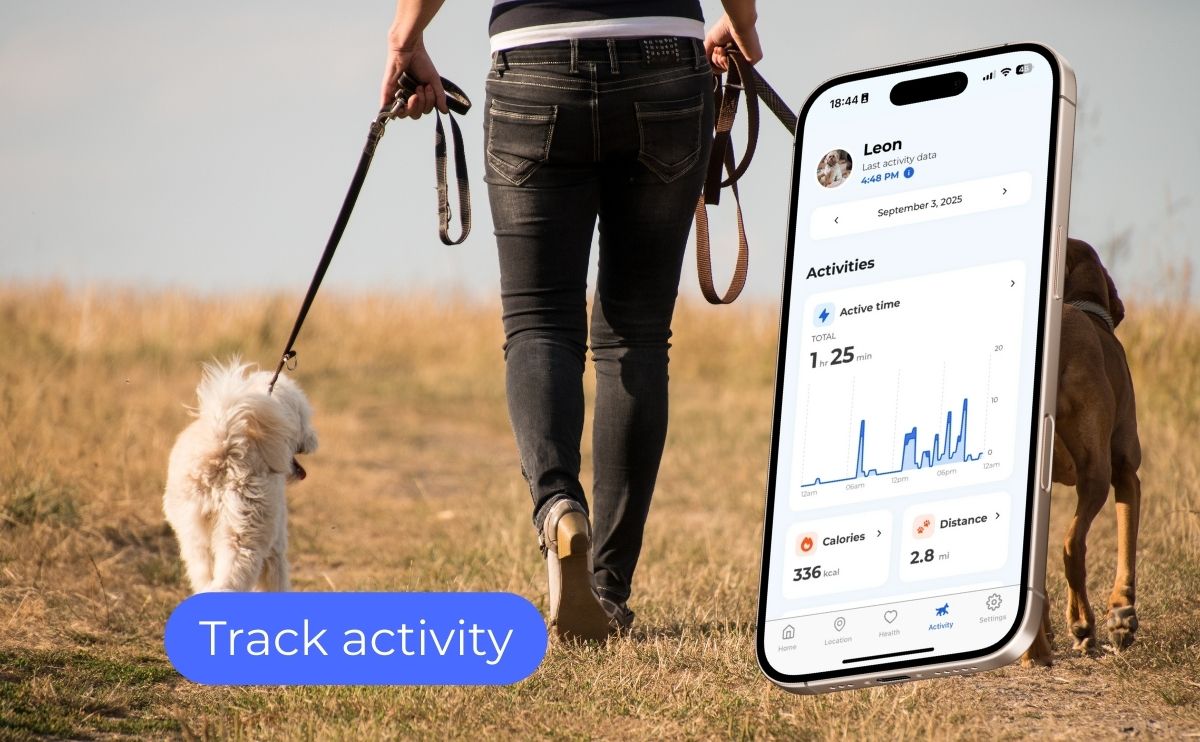
In addition to calorie tracking, the Biotracker by Invoxia offers numerous health and activity features:
1. Physical activity tracking #
Analysis of time spent walking, running, or playing. A sudden drop can be a sign of sedentary behavior.
2. Long-term trend analysis #
Comparison of activities week by week and compared to other dogs of the same breed and size.
3. Monitoring heart and respiratory rate #
An obese dog often has a high heart rate and accelerated breathing. The Biotracker GPS detects these variations.
4. Detection of behavioral changes #
Less interest in play, rapid shortness of breath, increased sleep: indicators that the tracker identifies.
5. Personalized reports and recommendations #
Every week, you receive a complete report and tailored advice to keep your dog healthy.
Obese Dog: What are the risks? #
An obese dog is exposed to many health problems:
🔴 Osteoarthritis and joint pain
🔴 Diabetes mellitus (risk multiplied by 4)
🔴 Heart and respiratory diseases, such as
dilated cardiomyopathy
🔴 Reduced lifespan by an average of 2 years
🔴 Increased risk of
heatstroke in your dog
How to help an obese dog lose weight? #
A suitable program combining balanced diet, physical activity, and veterinary follow-up allows a dog to regain its ideal weight.
🍗 Adjust its diet #
✔️ Light and protein-rich kibble
✔️ Meals divided into 2 to 3 portions per day
✔️ Healthy treats (carrots, apples, zucchini)
✔️ Weighed portions to avoid overfeeding
🏃♂️ Increase its physical activity #
✔️ Walks of 30 to 60 minutes per day
✔️ Fun activities:
agility, swimming, ball games
✔️ Interactive games to stimulate it
👨⚕️ Consult a veterinarian #
Veterinary follow-up remains essential to ensure there is no underlying medical cause.
Prevention: How to avoid canine obesity? #
👉 Regularly weigh your dog
👉 Adjust diet according to age, breed, and lifestyle
👉 Make exercise a habit from a young age
👉 Limit treats and ban table scraps
An obese dog is more than just an overweight dog: it’s a dog in danger. But by adopting the right habits and relying on innovative tools like the Biotracker, you can offer it a longer and happier life.
👉 Do you think your dog is overweight? Consult your veterinarian to establish a suitable plan!
FAQ on Obese Dogs #
How do I know if my dog is overweight or obese? #
A dog is considered overweight when its weight exceeds 10 to 15% of its ideal weight, and obese beyond 20%. The veterinarian can calculate its body condition score (BCS) to confirm the diagnosis.
Which dog breeds are most affected by obesity? #
The Labrador Retriever, Golden Retriever, Beagle, Pug, French Bulldog, Cocker Spaniel, and Dachshund are among the breeds most predisposed to obesity.
What are the dangers of obesity in dogs? #
An obese dog is at risk of developing osteoarthritis, diabetes, heart or respiratory diseases, and losing an average of 2 years of lifespan.
How to make an obese dog lose weight? #
Weight loss is based on three pillars:
- A light and controlled diet
- Regular physical activity
- Suitable veterinary follow-up
Are there tools to monitor my dog’s weight? #
Yes! Solutions like the Biotracker by Invoxia allow tracking of activity, health, and now daily caloric expenditure. A valuable asset to prevent obesity and adjust diet.