

You may have already experienced this scene: a peaceful walk turns into a tug-of-war because your dog is barking furiously at another dog, or a city trip punctuated by jumps and tremors at every noise. Don’t panic: if your companion reacts intensely to certain stimuli, he is not “unmanageable,” he is simply a reactive dog.
The good news? With a little patience, a better understanding of his stress signals, and the help of technology, it is possible to turn these difficult moments into real opportunities for progress and bonding.
Understanding What a Reactive Dog Is #
Having a reactive dog is not uncommon. Many owners discover one day that their companion reacts excessively to certain stimuli. Noises, bicycles, other dogs, strangers… where other dogs remain calm, the reactive dog barks, pulls, growls, or tries to flee.
Common Causes #
Rest assured, a dog does not become reactive overnight, at least not without reason. Among the most common causes of this reactivity are:
- Lack of early socialization
- Negative experiences - either past abuse or recent trauma
- Genetic predispositions
- The hypervigilant temperament of some dogs
👉 Recognizing these factors is essential to no longer perceive reactivity as “bad education,” but as an emotional state to be supported.
Reactive Dog: What Stress Signals Should You Know? #
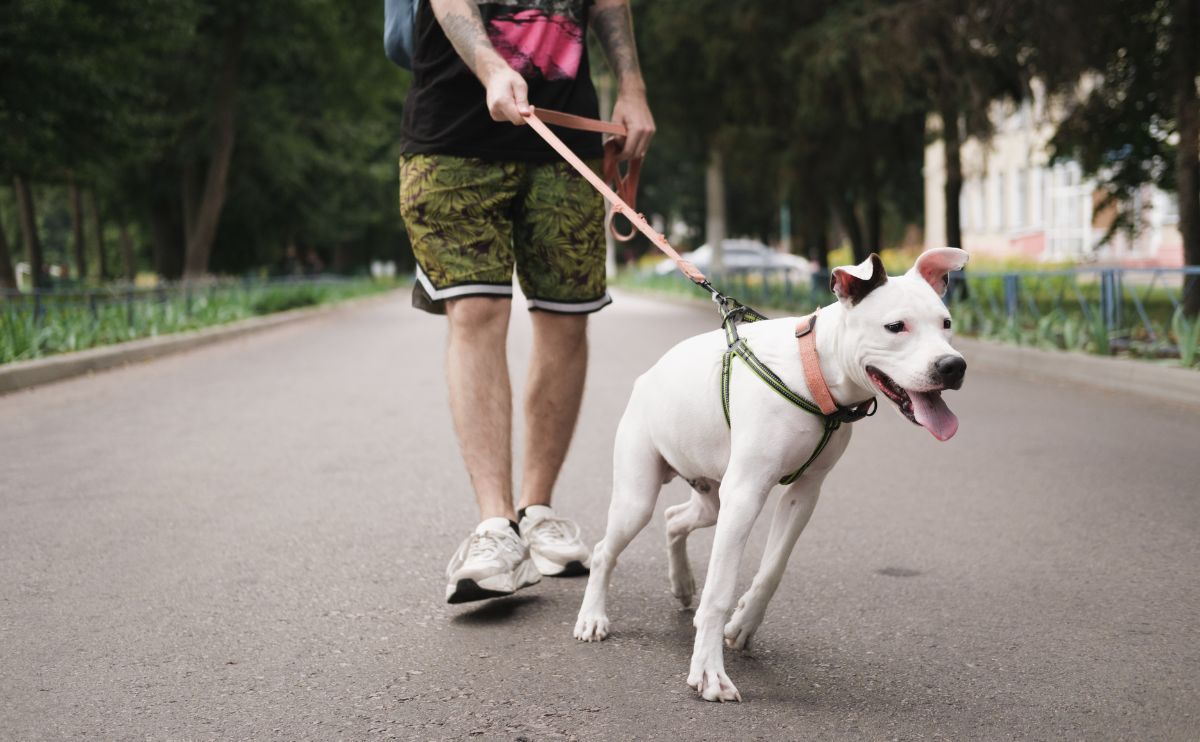
A dog constantly communicates with his body, as explained by Zooplus. Stress signs appear well before barking or fleeing. Spotting them in time is the key to preventing escalation.
Physical Signals #
- Rapid panting without exercise
- Trembling, pinned ears, low tail
- Repeated yawning, compulsive licking
Behavioral Signals #
- Permanent hypervigilance
- Sudden flight or rigid blocking
- Excessive barking or whining
Biotracker for a Reactive Dog: When Data Complements Observation #
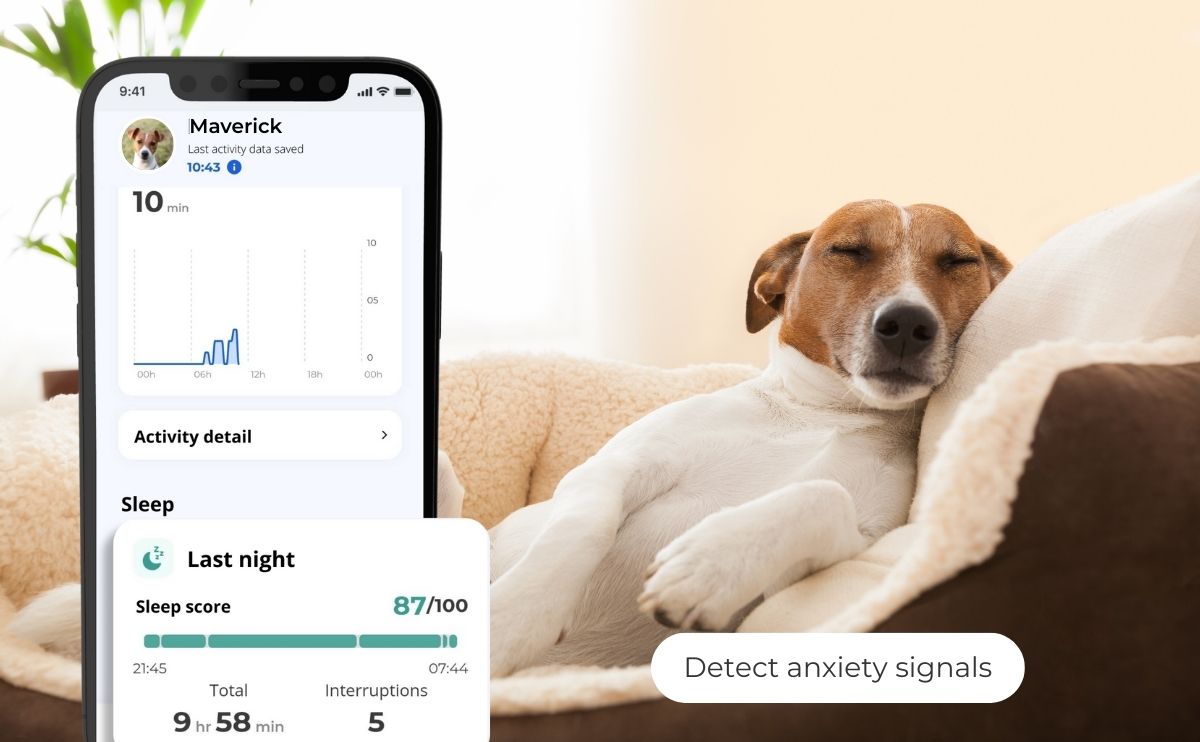
The Biotracker from Invoxia is not just a tracker. It is a real tool for monitoring health and behavior. For a reactive dog, it becomes a valuable aid:
- It detects barking and sends an alert to its parents after a certain duration. This could be separation anxiety or a real stress spike: it’s up to you to analyze the other signals.
- It monitors resting heart and respiratory rates, revealing stress peaks invisible to the naked eye.
- It analyzes sleep, which is a very good indicator of emotional well-being.
- It measures daily activity: ideal for knowing if he is getting enough exercise or to see if educational work is paying off.
- It secures walks thanks to GPS: if the dog panics and escapes, the owner can find him immediately.
👉 The Biotracker turns reactivity into actionable data, to progress with more confidence.
| Visible Signals | What It Means | Data Measured with the Biotracker |
|---|---|---|
| Panting, pinned ears | Immediate discomfort | Resting heart rate |
| Repeated yawning | Attempt to soothe | Activity variation and sleep quality |
| Trembling, fleeing | Intense anxiety | Resting respiratory rate and location |
| Uncontrolled barking | Excitement or panic | Barking, even when you are away |
How to Support a Reactive Dog Daily #
Having a reactive dog requires patience and consistency, but progress is possible. For this, positive education, gradual desensitization, and a stable routine are your daily allies.
✅ Favor Positive Education #
A reactive dog already tends to be on the emotional edge, and punishment often only makes things worse. Rather than sanctioning undesirable behaviors, it is much more effective to reinforce good behaviors with rewards. This can be a treat, a pet, or simply an encouraging word.
👉 Positive education helps the dog associate his calm reactions with something pleasant, which promotes better emotion management in the long term.
✅ Work on Gradual Desensitization #
Reactivity does not disappear overnight. It is essential to expose the dog to his triggers gradually, without ever putting him in a panic situation. For example, if your dog reacts to bicycles, start by getting him used to seeing them from afar, at a distance where he remains calm. Gradually reduce the distance, always rewarding his calmness.
👉 This gentle approach allows the dog to reassess his fears and gain confidence, rather than being overwhelmed by anxiety.
✅ Maintain a Stable Routine #
Reactive dogs need clear markers to feel safe. A stable routine, with regular schedules for meals, walks, and rest times, allows them to anticipate what will happen and reduce stressful surprises. Conversely, an environment that is too changing or unpredictable can increase their anxiety and trigger more reactive behaviors.
👉 By establishing reassuring habits, the dog learns to better manage his daily life and evolve in a secure environment.
Tools like the Biotracker can greatly help you improve your dog’s daily life. If he sleeps better, you know he is less stressed in general. If he has an equivalent activity level every day, you know his routine is maintained.
Living with a reactive dog can be challenging, but it is also a beautiful human and canine adventure. By learning to interpret his stress signals and relying on the objective data from the Biotracker, owners have an unprecedented lever to improve their companion’s quality of life.
Technology does not replace love and patience, but it allows for better understanding, better anticipation, and securing daily life. With the right support, reactivity is no longer a fatality: it is the beginning of a journey of shared trust.
Reactive Dogs in Summary - FAQ #
What is a reactive dog? #
A reactive dog is a dog that reacts intensely to certain stimuli such as other dogs, noises, bicycles, or strangers. Contrary to popular belief, it is not necessarily an aggressive dog: its reaction is generally linked to stress, anxiety, or a lack of socialization.
How do you know if your dog is reactive? #
A reactive dog is recognized by its stress signals: panting, trembling, pinned ears, low tail, excessive barking, or attempts to flee. These behaviors often appear in specific contexts (walks, encounters, sudden noises).
Why is my dog reactive? #
The causes of a reactive dog are multiple:
- insufficient socialization when he was a puppy,
- a bad past experience (trauma, fear),
- a genetic predisposition to anxiety,
- or simply a very vigilant temperament.
How to manage reactivity in a dog? #
To calm a reactive dog, an approach based on patience and positive education is needed. Avoid punishment and favor gradual desensitization, reassuring routines, and positive reinforcement. Using tools like the Biotracker also allows tracking physiological stress signs and measuring progress over time.
Can a reactive dog be cured? #
We don’t really talk about “cure,” but about improvement and management. With regular work, the support of a trainer or a behavioral veterinarian, and an objective follow-up of health data, a reactive dog can learn to better manage his emotions and significantly reduce his reactions.
What is the difference between a reactive dog and an aggressive dog? #
An aggressive dog seeks to harm, while a reactive dog primarily expresses fear, discomfort, or stress. Reactivity is an emotional reaction, not an intention to harm. This is why support must be kind and focused on understanding.