

An e-bike often costs several times what a conventional bike does, and the lock that protects it is the cheapest part of the whole set-up. As Laka, a cycling insurer, puts it, spending a couple of hundred pounds on a couple of locks will likely be a savvy long-term investment. Here is how to choose an e-bike lock, which security ratings to look for, how much to spend and how to fit it so that the bike is still there when you come back.
1. Why an e-bike needs a better lock #
An e-bike concentrates value in several places at once: the frame, the motor, the display and the battery. That is why the advice for e-bikes is stricter than for an ordinary commuter bike. Hiplok, a lock manufacturer, starts from the same observation: if you have just shelled out a couple of thousand pounds, the lock has to match.
Two practical points follow. First, e-bike frames are bulkier, and Hiplok points to the down tube as the reason a lock with a larger locking circumference is needed, to go through the wheel, the frame and whatever you are locking to. Second, the lock is only one layer of protection. The rest of this article covers the others: the battery, registering the bike, insurance and, last, a tracker.
2. Which type of lock? #
D-locks and chains. Cyclingnews, an editorial site that earns affiliate commissions, calls for extra-secure D-locks and chain locks to protect an e-bike. Hiplok recommends a chain lock and names wearable chains as an option, which is convenient if you carry the lock on yourself. Laka says a D-lock minimises the gaps between the lock, the bike and the object it is attached to, which leaves less room for a tool.
Folding locks. Hiplok warns that many of the foldable locks do not meet the Gold standard (see the ratings below). If you want one, check the rating on the exact model before you buy.
Cable locks. They are a poor main protection. Cycloscope, an affiliate blog, says cables are good as secondary security but too easy to cut alone, and Laka says they are not recommended for long-term parking or in high-crime areas. Treat a cable as a complement, for example to secure a wheel in addition to a stronger lock.
Combination locks. Laka reminds you to scramble a combination lock regularly, so that the code does not stay on the last digits you set.
3. Which security ratings should you look for? #
In the UK, the rating most guides refer to is Sold Secure, which grades locks by how long they resist attack. Hiplok advises looking for a maximum security rating, such as the Gold Sold Secure badge. Cycloscope says the same: always check for a Sold Secure rating, and gold is where you want to be. Laka goes one step further and notes that Silver may not offer the best protection for e-bikes.
The ratings are not a promise about every product in a range. Cyclingnews points out that one popular manufacturer’s lock has not been tested against Sold Secure’s e-bike standard. And the guides do not always agree: two of them rate the same lock at different Sold Secure levels. When you shop, check the rating on the packaging or the product page of the exact model, not just the brand.
There is one more reason to care about the badge, and that is your insurance (see section 7).
4. Weight and budget: finding the right compromise #
A good lock is heavy, and that is part of what makes it dissuasive. Cyclingnews gives the weight of the four locks in its test: between 1,626 g and 1,995 g, about 1.6 to 2 kg. The Cycloscope picks range much more widely, from a few ounces for the lightest to more than 8 lb (about 3.9 kg) for the heaviest. Pick a weight you will really carry every day: a lock left at home protects nothing.
On budget, the guides do not agree on a single number. Cycloscope reports that some say you should spend at least 5% of your bike’s value on a lock. Laka talks in absolute terms: a couple of hundred pounds on a couple of locks. For a bike worth £2,000, 5% is £100, which fits with that picture. These are rules of thumb from a blog and an insurer, not standards, but they give a realistic order of magnitude.
5. How to lock your e-bike #
- Always lock it, even for a short stop. Lock the frame and, ideally, the wheel to something fixed. Cycloscope says the lock should be large enough to secure a wheel, a chunk of the frame and an external anchor, such as a pole or a bike rack.
- Thread the lock through the main triangle. Laka recommends threading it through the main triangle of the frame and onto a fixed object.
- Do not lock the front wheel alone. Laka warns against it, as thieves can easily remove the wheel. Hiplok’s advice is the same in different words: through the wheel, the frame and the fixed object.
- Use a second lock. Laka says a second lock means securing both the frame and the wheel. Taking the front wheel or the seat with you is another option it mentions.
- Cut the gaps. A D-lock sized to the frame and the anchor leaves less space for a tool (Laka). Hiplok suggests looping a chain back on itself when you use a rack.
- Choose something solid to lock to. Hiplok and Laka both talk about a fixed object: the bike is only as safe as the thing it is locked to, so pick a stand or post that is clearly anchored.
6. Mistakes that make theft easier #
Several of the mistakes above come up again and again: locking only the front wheel, relying on a cable alone, choosing a lock that does not meet the Gold standard, or leaving a combination lock on the code you last used. Hiplok adds one more that is easy to forget: some e-bikes come with pre-installed battery locks, so do not forget to lock those too.
7. Insurance: read the small print #
Insurers often tie the cover to the lock. Hiplok says your insurer will only cover bikes of a certain value if they are locked with a Gold-rated lock, and Laka says many insurers mandate robust locking mechanisms, like Gold-rated locks, for theft cover. Both are commercial sources, so read your own policy: the minimum rating, the type of lock and the conditions for leaving the bike unattended vary from one insurer to another.
Hiplok also suggests looking for a policy that covers the bike and its accessories, since the battery and the display are part of what you ride.
8. Take the battery, record the serial number #
Hiplok recommends taking easily removable batteries and accessories with you when you can. Laka goes further: remove the battery when you store your e-bike, especially overnight or for longer periods.
Then think about identification. Hiplok notes that the serial number is on the frame and usually on the battery, so record both. It also names BikeRegister, which it says links directly to security services. Laka recommends keeping a record of the serial numbers for the bike and its components. If the bike is stolen, those numbers are what lets you describe it precisely.
9. Add a GPS tracker as a second layer #
A lock slows a thief down; it does not always stop one. Cycloscope says that smart locks with GPS tracking or alarms can add security, but should be used in addition to a solid physical lock. Laka also lists GPS tracking as a way to get alerts on your phone.
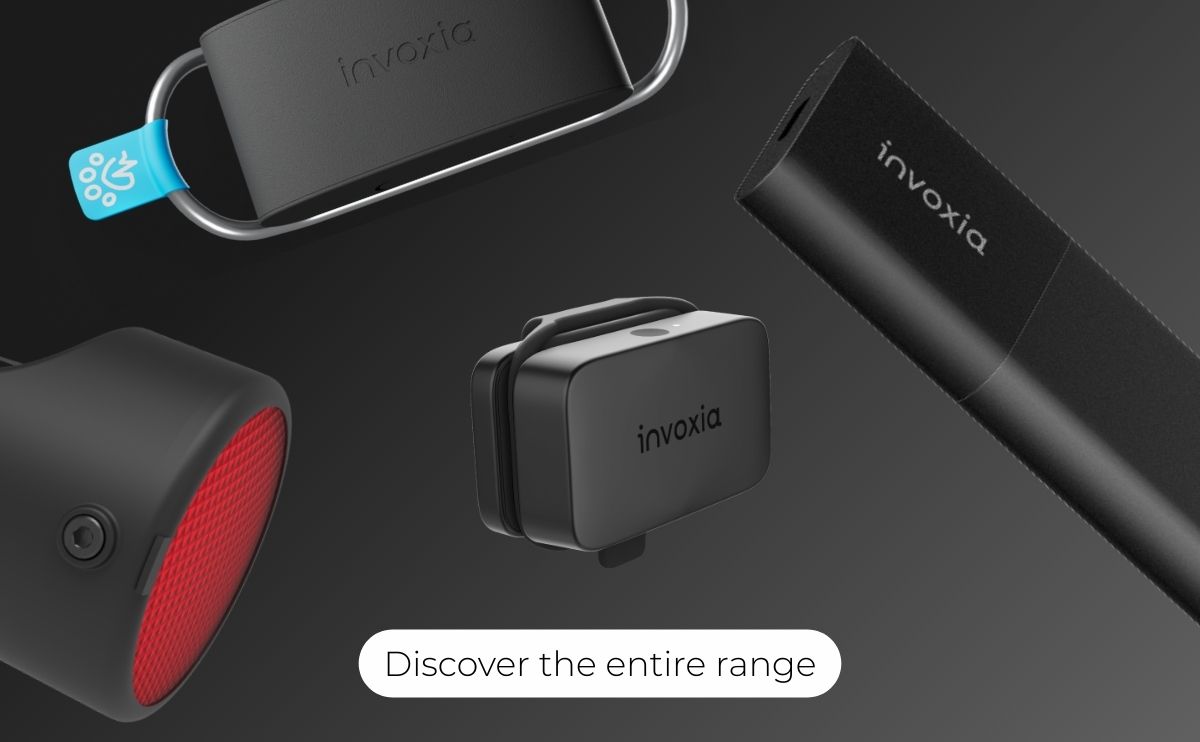
The GPS Tracker Classic (€99 for 1 year, €129 for 3 years) weighs 27 g, resists water and dust (IP67), flags movement and tilt, and offers 3 to 6 months of battery life. To compare the options for your bike, you can choose a GPS tracker for your bike, or read how to choose a connected anti-theft device for your bike.
FAQ: e-bike locks #
What is the best lock for an e-bike? #
A D-lock or chain lock with a Gold Sold Secure rating. Hiplok recommends a chain, Cyclingnews highlights D-locks and chains, and Hiplok, Cycloscope and Laka all point to Gold as the level to aim for.
What does Sold Secure Gold mean? #
It is the maximum security rating that Hiplok refers to, and the level that Cycloscope says you want. Laka says Silver may not offer the best protection for e-bikes. Check the rating of the exact model, as ratings can differ from one lock to another within a range.
How much should I spend on an e-bike lock? #
Cycloscope says some recommend at least 5% of the bike’s value. Laka suggests a couple of hundred pounds on a couple of locks.
How do I lock an e-bike properly? #
Thread the lock through the main triangle of the frame and onto a fixed object, and secure the wheel with a second lock. Do not lock the front wheel alone.
Should I take the battery off my e-bike? #
Yes, when you can. Hiplok recommends taking easily removable batteries and accessories with you, and Laka says to remove it when you store the bike, especially overnight.
Do I need a Gold-rated lock for my insurance? #
It depends on your policy. Hiplok and Laka say many insurers require a Gold-rated lock for theft cover, so check your own terms.
Does a GPS tracker replace a lock? #
No, it complements it. A tracker can help you follow the bike after a theft, but it does not replace a good physical lock.