

Traveling with your dog is often the best way to enjoy a vacation without leaving them behind. But between documents, transportation, safety, health, heat, accommodation rules, and local restrictions, taking a dog on a trip takes a little preparation.
This dog travel checklist helps you check the essentials before you leave: paperwork, packing, car safety, stress management, legal requirements, and the precautions to take once you arrive.
For the full planning process, you can also read our complete guide to traveling with your dog. This article is more practical: a vacation checklist for dog owners to review before departure.
Dog Travel Checklist: The Essentials to Check #
Before getting into the details, here is the dog travel checklist to keep close by.
Documents and Regulations #
- Make sure your dog’s microchip details are current with the registry where they are listed.
- Check whether your destination requires a rabies vaccination, health certificate, EU pet passport, or other official documents.
- If you are entering or re-entering the United States, review the latest CDC dog import requirements.
- If you are traveling from the US to another country, check the USDA APHIS pet travel requirements.
- If you are traveling within the European Union, review the EU rules for traveling with pets and other animals.
- Keep digital copies of your dog’s documents.
- Note the contact details of a veterinarian near your destination.
Transportation #
- Choose the right mode of transport: car, train, plane, ferry, or local transit.
- Use a crash-tested crate, a car safety harness, or a barrier when traveling by car.
- Get your dog used to short trips before a long journey if they are anxious.
- Plan regular breaks.
- Keep water, a bowl, leash, waste bags, and documents easy to reach.
- Never leave your dog alone in a car.
Your Dog’s Travel Bag #
- Usual food.
- Food and water bowls.
- Water for the journey.
- Short leash.
- Long line.
- Well-fitted harness or collar.
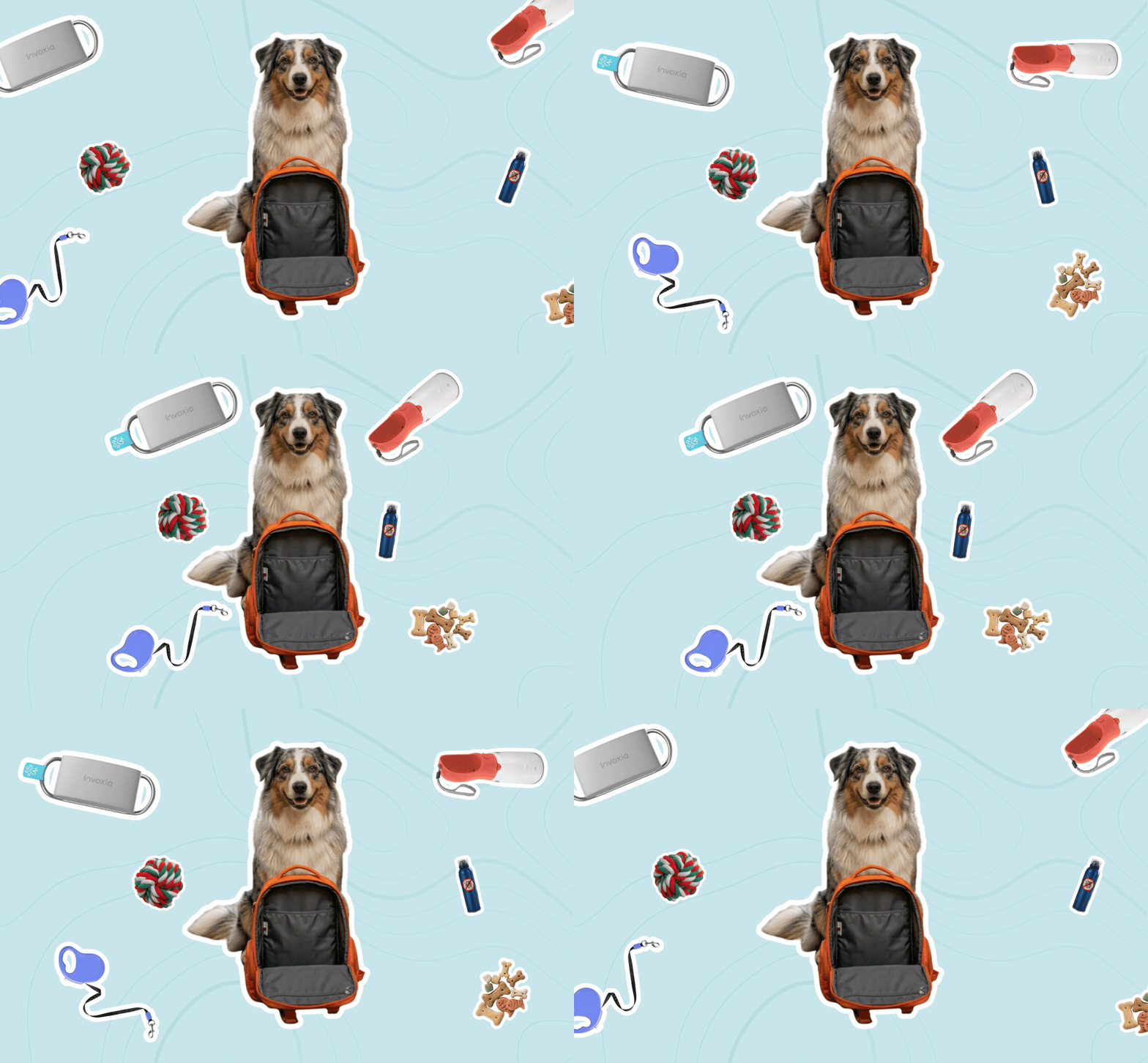
- Biotracker to monitor health, activity, and location.
- ID tag with your phone number.
- Waste bags.
- Towel.
- Bed, mat, or blanket.
- Familiar toy.
- Any medication.
- Parasite protection.
- First-aid kit.
Safety at Your Destination #
- Confirm that the accommodation truly accepts dogs.
- Identify risk areas: roads, balconies, unfenced yards, pools, beaches, trails, or wildlife areas.
- Keep your dog on leash or on a long line in unfamiliar places.
- Check local rules for beaches, parks, public transport, restaurants, and trails.
- Use a GPS tracker if your dog is discovering a new environment.
Why Prepare Your Dog’s Trip in Advance? #
A trip changes a lot for a dog: new sounds, new smells, a different routine, longer journeys, heat, unfamiliar accommodation, other animals, and busy public places.
Even a calm dog can be unsettled by those changes. Preparing your dog’s trip in advance helps reduce three major risks: stress, health issues, and getting lost.
The goal is not to plan every minute. It is mainly to avoid the mistakes that can complicate a vacation: expired paperwork, missing border documents, motion sickness, an unsafe rental, or outdated microchip contact details.
30 to 15 Days Before: Documents, ID, and Rules #
Check Your Dog’s Identification #
Start by checking that your dog is properly identified and that your contact details are up to date with the database where the microchip is registered. In the US, there is no single national pet registry, so the most important step is to confirm the microchip number, the registry, and the phone number attached to it. In Europe, microchip identification is also central to pet travel rules.
This step matters even more if you are staying at a campground, hiking, renting a house with a yard, or visiting a region your dog does not know.
Prepare Documents Based on Your Destination #
For domestic travel, keep your dog’s identification information, vaccination record, and your regular veterinarian’s contact details available.
For international travel, requirements vary by destination. If you are traveling from the United States, the USDA APHIS pet travel portal lets you check destination-specific rules and whether a USDA-endorsed health certificate is needed.
If you are entering or returning to the United States with a dog, the CDC requires travelers to follow its dog import rules, including the required documentation for the dog’s travel history and rabies status.
If you are traveling in the European Union, dogs generally need to be microchipped, vaccinated against rabies, and accompanied by an EU pet passport or the appropriate animal health certificate. The European Commission explains these requirements on its official page for traveling with pets in the EU.
For any country outside the US or EU, check the official government website of the destination before booking. Rules can depend on where the dog has been in the previous months, not only on where the trip starts.
Book a Vet Appointment if Needed #
A veterinary check-up is a good idea if your dog is older, has a chronic condition, is anxious, gets car sick, is sensitive to heat, or will travel internationally.
Your vet can check vaccines, parasite protection, your dog’s general condition, and travel-specific risks. If you notice unusual signs before departure, such as marked fatigue, coughing, limping, breathlessness, appetite loss, or a change in breathing, it is better to check before you leave.
To help identify warning signs, you can read our article on symptoms to watch for in dogs.
15 to 7 Days Before: Prepare the Journey #
By Car: Safety and Rules to Know #
The car is often the easiest way to travel with a dog, especially for domestic vacations. It still needs proper preparation.
In the United States, there is no single federal rule requiring a dog seat belt in every vehicle, and state rules can vary. Across Europe, the common principle is similar: your dog should not distract the driver or create a hazard. In practice, a loose dog in the cabin can be dangerous during sudden braking, sharp turns, or an accident.
Use one of the following:
- a well-secured travel crate;
- a car safety harness attached to the seat belt system;
- a cargo barrier or divider;
- a secure, ventilated cargo area.
Avoid attaching your dog to a seat belt by the collar. In a sudden stop, pressure on the neck can be dangerous. A harness distributes force more safely.
Manage Car Stress #
A stressed dog in the car may pant, shake, whine, drool, vomit, refuse to get in, or try to escape. If this sounds familiar, start training before the long trip.
A few days or weeks before vacation, try short positive drives: a few minutes in the car, followed by a pleasant walk or play session. The goal is to stop the car from being associated only with the vet or an unpleasant event.
On departure day:
- keep a familiar blanket or toy nearby;
- avoid a large meal right before the journey;
- ventilate the vehicle properly;
- drive smoothly, especially around bends;
- take regular breaks;
- let your dog rest if they seek quiet.
If your dog is very anxious, gets motion sickness, or cannot settle, ask your veterinarian for advice. Never use human medication without veterinary guidance.
Be Careful with Heat in the Car #
Heat is one of the biggest travel risks for dogs. Never leave a dog alone in a vehicle, even in the shade, even with the windows cracked, and even for a few minutes.
During the journey, keep water available, avoid driving at the hottest time of day when possible, and plan stops in shaded areas.
By Train: Check Conditions Before Booking #
Train rules vary widely by country and operator. In the US, Amtrak’s pet policy allows small dogs and cats on many trips, but weight limits, trip duration, reservations, and carrier rules apply. In Europe, each operator has its own requirements for tickets, carriers, leash, and muzzle.
Before you leave, check:
- whether your dog must travel in a carrier, crate, or on leash;
- whether a muzzle is required;
- the animal ticket price;
- the rules for international routes;
- restrictions by train type.
Even if dogs are allowed on board, think about your dog’s comfort and other passengers: walk your dog before departure, bring a blanket, keep water accessible, and avoid peak travel times if possible.
By Plane: Plan Earlier #
Air travel requires more preparation. Each airline sets its own pet policy: cabin weight limits, carrier dimensions, cargo conditions, crate standards, breed restrictions, paperwork, and reservation rules.
Before booking, check the airline’s official conditions and the rules of the destination country. The US Department of Transportation’s guidance on flying with a pet also reminds travelers that pet air travel rules depend on the airline and that passengers should confirm requirements before flying.
For older, anxious, brachycephalic, or medically fragile dogs, air travel may be inappropriate. Ask your vet before choosing this option.
7 to 2 Days Before: Pack Your Dog’s Bag #
What Should You Pack for Your Dog? #
Your dog’s bag should include everything that helps them keep their routine and avoid surprises.
Pack:
- their usual food;
- enough food for the full stay, plus a small buffer;
- two bowls;
- a travel bottle or water for the trip;
- a short leash;
- a long line;
- a well-fitted harness or collar;
- an ID tag with your phone number;
- waste bags;
- a towel;
- their bed, mat, or blanket;
- a familiar toy;
- any medication;
- parasite protection;
- health records or pet passport;
- a first-aid kit.
For dogs under medical care, add copies of prescriptions and your usual veterinarian’s contact details.
Invoxia Biotracker
What if you could better understand your dog's trips?
The Invoxia Biotracker helps you keep an eye on your dog's well-being while traveling. With health, activity, and GPS tracking in one device, it helps you care for your dog more closely every day.
Discover the BiotrackerPrepare a Dog First-Aid Kit #
A first-aid kit does not replace a vet, but it can help you handle minor incidents until you can get advice.
You can include:
- sterile gauze;
- saline solution;
- pet-safe antiseptic;
- tick remover;
- cohesive bandage;
- tweezers;
- thermometer;
- light blanket;
- contact details for a vet near your destination.
Do not add medication without veterinary advice. Some common human medications are dangerous for dogs.
Keep Their Usual Food #
Vacation is not the right time to suddenly change your dog’s diet. A sudden change can cause digestive issues, especially with travel stress, heat, or a different schedule.
Bring your dog’s usual food, ideally with a little extra. If you need to buy more at the destination, check in advance that the same brand or a suitable alternative is available.
For long journeys, avoid a heavy meal right before departure, especially if your dog is prone to motion sickness.
The Day Before Departure: Final Checks #
The day before you leave, take a few minutes to review everything. This is often when small omissions appear.
Documents #
Check that you have:
- vaccination record or health record;
- EU pet passport or health certificate if needed;
- rabies vaccination proof if needed;
- prescriptions or medication;
- your regular vet’s contact details;
- a vet contact near your destination;
- digital copies of important documents;
- updated microchip registry details.
Safety #
Check that:
- the ID tag is readable;
- the phone number is current;
- the harness or collar fits well;
- the leash and long line are in good condition;
- the crate or car restraint is ready;
- the accommodation accepts dogs;
- the yard, balcony, or outdoor access appears secure.
Vacations increase the risk of a dog getting lost because the environment is unfamiliar. A sudden sound, an interesting smell, a gate left open, or a highway rest stop can be enough.
A GPS tracker can be useful for hikes, camping, rentals with yards, busy places, or any unfamiliar environment. The Invoxia Biotracker helps track your dog’s location, as well as health and activity indicators, so you can notice changes during the trip.
Health #
Observe your dog before leaving. Are they eating normally? Sleeping as usual? More tired than normal? Breathing differently? Limping? More agitated or more withdrawn?
Travel can hide or worsen an issue that was already starting. To follow your dog’s general condition more closely, read our guide on how to monitor your dog’s health.
Departure Day: Dog Travel Checklist #
On departure day, keep these items within reach:
- water;
- collapsible bowl;
- leash;
- waste bags;
- towel;
- treats;
- documents;
- medication if needed;
- charged phone;
- GPS tracker charger if you use one.
Before getting in the car or boarding a train, give your dog a proper walk. Let them sniff, relax, and relieve themselves. A dog who has had a calm outlet before departure is often more settled during the journey.
During travel, watch for signs of stress or discomfort: excessive panting, agitation, heavy drooling, shaking, lethargy, or vomiting. If in doubt, stop when safe and contact a veterinarian if symptoms continue.
On Arrival: Secure the First Hours #
The first hours at your destination matter. Your dog is discovering a new environment and may be more excited or more nervous than usual.
Before letting your dog loose in a yard, check:
- fences;
- gates;
- gaps in hedges;
- road access;
- balcony or terrace access;
- pools;
- plants within reach;
- other animals nearby.
Some plants can be toxic to dogs, both in gardens and rentals. To check common risks, read our guide to plants that are toxic to dogs.
Keep your dog on leash or on a long line during the first walks, even if their recall is reliable at home. In an unfamiliar place, smells, wildlife, noises, or other dogs can change their behavior. If you use a Biotracker, set up safe zones before letting your dog explore more freely.
Set up a quiet corner quickly with their belongings: bed, blanket, bowl, and toy. Familiar items help your dog settle.
Special Checklist for Road Trips with a Dog #
Since the car is one of the most common ways to travel with a dog, here is a dedicated recap.
Before Leaving #
- Get your dog used to the car if needed.
- Check the restraint system.
- Bring water and a bowl.
- Avoid a large meal right before departure.
- Plan breaks along the route.
- Travel during cooler hours in summer.
- Keep documents accessible.
- Make sure your dog cannot distract the driver.
During the Trip #
- Dog secured or restrained.
- Regular breaks.
- Water offered frequently.
- Never alone in the car.
- No head out of the window.
- Watch for stress, heat, or nausea.
At Every Stop #
- Attach the leash before opening the door.
- Stop in a safe area.
- Offer water.
- Let your dog walk for a few minutes.
- Check their behavior quickly.
One extra reflex: keep an eye on your dog during vacation
On vacation, dogs often discover an unfamiliar environment: new smells, new paths, an unknown yard, a beach, a forest, a campground, or a highway rest area. Even with good recall, the risk of disorientation or escape can increase.
A GPS tracker like the Invoxia Biotracker can help you travel more calmly. It lets you follow your dog's location, activity, rest, and health indicators such as heart rate and respiratory rate.
FAQ: Common Questions About Traveling with a Dog #
What documents do I need to travel with my dog? #
For domestic trips, keep your dog’s identification details, vaccination record, and vet contact information. For international travel, rules vary. The USDA APHIS pet travel portal explains export requirements from the US, while the CDC covers requirements for dogs entering or re-entering the United States. For EU travel, check the official EU pet travel rules.
Do dogs need a pet passport? #
In the European Union, dogs generally need an EU pet passport or the correct animal health certificate, plus microchip identification and rabies vaccination. The United States does not issue an EU-style pet passport, but health certificates and import documents may be required depending on the destination.
How should a dog travel in a car? #
Your dog should be secured so they cannot distract the driver or be thrown forward in a sudden stop. The safest options are a travel crate, a car safety harness, or a cargo barrier, depending on your dog and vehicle.
Is a dog seat belt required by law? #
Rules vary by country, state, and region. Even where a specific dog seat belt is not required, a loose dog can create a safety risk and may violate rules about driver control. Use a harness, crate, or barrier as a default.
How can I calm a dog who is stressed in the car? #
Use short positive trips before the vacation, bring a familiar item, avoid heavy meals before departure, drive smoothly, and plan breaks. If stress is intense or linked to vomiting, ask your veterinarian before traveling.
Can I leave my dog alone in the car during vacation? #
No. Never leave a dog alone in a car, even in the shade or with the windows cracked. Temperatures can rise quickly and heatstroke is a veterinary emergency.
Can dogs take the train? #
Yes, but the rules depend on the train operator, country, dog size, and route. In the US, Amtrak allows small pets on many trips under specific conditions. In Europe, check the operator’s official pet policy before booking.
Can dogs fly on planes? #
Sometimes, but rules depend on the airline, the dog’s size, breed, carrier, and destination. Dogs may travel in cabin, as checked baggage, as cargo, or be refused under certain conditions. Always check the airline and destination rules before booking.
What should I pack in my dog’s travel bag? #
Pack your dog’s usual food, bowls, water, leash, long line, harness, ID tag, documents, medication, first-aid kit, towel, bedding, and a familiar toy. Add parasite protection suited to the destination.
How can I prevent my dog from getting lost on vacation? #
Update microchip contact details, add an ID tag with your phone number, use a leash or long line in unfamiliar places, and check accommodation safety. A GPS tracker can also help you follow your dog in real time, especially while hiking, camping, or exploring new places.
Can my dog go to the beach? #
It depends on local rules, the season, and the specific beach. Some beaches ban dogs during peak season, while others allow them on leash or at specific times. Always check local rules before going.
In Short: A Good Checklist Makes Dog Travel Easier #
A dog travel checklist helps you avoid last-minute mistakes and leave with more confidence. The most important points are identification, documents, transport rules, car safety, stress management, heat prevention, health monitoring, and escape prevention.
The better prepared your dog is, the easier the trip will be for both of you. And for the broader planning process, including destination, accommodation, activities, transport, and safety, read our complete guide to traveling with your dog.