

Going away for the weekend, heading to a vacation rental, taking your dog to the vet, or simply going on a long drive: the car is often part of everyday life for dog owners.
But between safety, stress, heat, and travel rules, transporting your dog in the car is not something to improvise. A dog moving freely inside the vehicle can get injured, distract the driver, panic during the trip, or be thrown forward in case of sudden braking.
Fortunately, with a few good habits, it is entirely possible to turn a car trip with your dog into a calmer and more comfortable experience. In this article, we review the rules to know, the safest equipment options, and practical tips to help your companion travel well.
This article complements our guide to going on vacation with your dog, focusing on one of the most common ways to travel with a pet: the car.
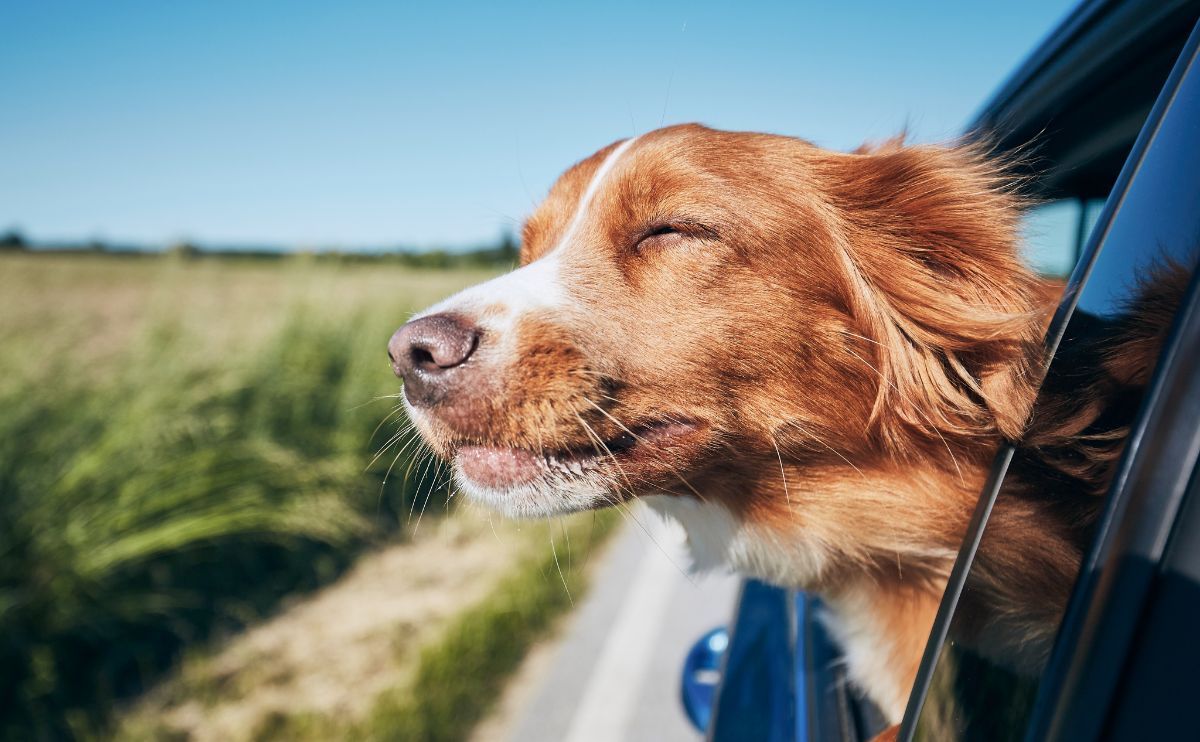
Transporting Your Dog in the Car: What Does the Law Say? #
When looking up how to transport your dog in the car, you may quickly notice one thing: the rules are not the same everywhere.
In the United States, there is no single nationwide federal law that requires every dog to wear a seat belt in a passenger car. However, rules can vary by state or city, and an unrestrained dog may still create legal issues if it distracts the driver, contributes to an accident, rides unsafely in an open truck bed, or is left in a vehicle in dangerous weather conditions.
In Europe, there is no single EU-wide “dog seat belt law” for everyday car journeys either. However, individual countries may have their own road safety or animal welfare rules. In the UK, for example, Rule 57 of the Highway Code clearly states that dogs and other animals should be suitably restrained so they cannot distract the driver or injure themselves or others if the vehicle stops quickly.
For travel across borders, the focus shifts from car restraint to health and identification requirements. The official EU portal explains the rules for travelling with pets and other animals in the EU, including microchip identification, rabies vaccination, and the European pet passport. For dogs entering the United States from abroad, the CDC provides official guidance on the CDC Dog Import Form, while USDA APHIS explains the requirements for bringing pet dogs into the United States.
So, what should you remember in practice? Even when the law does not impose one specific piece of equipment, your dog should travel in a way that is safe for them, safe for you, and safe for everyone else in the car.
The best approach is to make sure your dog:
- cannot climb onto your lap or move to the front seats;
- cannot block your visibility or distract you while driving;
- is protected in case of sudden braking;
- has enough space and ventilation;
- is not exposed to excessive heat or cold;
- cannot be crushed or injured by luggage.
The safest solutions usually include:
- a crash-tested or car-adapted safety harness;
- a secured travel crate or carrier;
- a dog cage fixed in the cargo area;
- a cargo area with a dog guard or separation barrier;
- a clear, ventilated, and comfortable space.
The key rule is simple: your dog should not be free to move around the cabin, and they should never travel in conditions that are uncomfortable, unsafe, or stressful.
Where Should Your Dog Sit in the Car? #
There is no single perfect setup for every dog. The best option depends on your dog’s size, temperament, health, your vehicle, and the length of the journey.
Here are the most common options:
| Location | Best for | What to watch for |
|---|---|---|
| Back seat with safety harness | Small, medium, and large calm dogs | Use a proper car harness, not a leash clipped to the collar |
| Travel crate or carrier | Small dogs, puppies, anxious dogs | It should be stable, well ventilated, and the right size |
| Cargo area with dog guard | Medium to large dogs | The area must be clear, ventilated, and protected from falling luggage |
| Secured dog crate in the cargo area | Medium to large dogs, long trips | The crate must be properly fixed and comfortable |
The most important thing is to prevent your dog from roaming freely inside the vehicle. Even a calm dog can be startled by sudden braking, a horn, a sharp turn, or an unexpected noise.
Harness, Crate, or Dog Guard: Which Equipment Should You Choose? #
To travel safely by car with your dog, three equipment options are especially common: the safety harness, the travel crate, and the dog guard or barrier.
The Safety Harness #
A safety harness is practical if your dog travels on the back seat. It helps keep them in place while still allowing enough movement to sit or lie down comfortably.
However, never attach your dog to the seat belt by the collar. In case of sudden braking, the force would be concentrated on the neck, which can cause serious injury. A properly fitted harness distributes pressure more safely across the chest and shoulders.
For extra peace of mind, you can look for products that have been independently tested. The Center for Pet Safety publishes crash-test research on pet carriers, crates, and harnesses, which can help you compare safer travel equipment.
If your dog is not yet used to wearing a harness, our guide on getting your dog used to a harness can help you introduce it gradually.
The Travel Crate #
A crate or carrier can be a very good option for small dogs, puppies, or dogs who feel reassured in a more enclosed space. It creates a stable, den-like environment with fewer visual stimuli.
To choose the right crate, make sure your dog can:
- stand up;
- turn around;
- lie down comfortably;
- breathe easily;
- remain stable if the vehicle moves suddenly.
A crate that is too small will be uncomfortable. A crate that is too large may also be less secure if your dog is thrown around inside during sudden stops.
The Dog Guard or Separation Barrier #
For larger dogs, the cargo area with a dog guard or separation barrier can be a comfortable solution. It clearly separates your dog’s space from the passenger area and reduces the risk of distraction.
Before leaving, remove anything that could fall, slide, or injure your dog. The cargo area should not become a mix of suitcases, shoes, water bottles, and your dog’s bed.
How to Prepare Your Dog Before a Car Trip #
A dog who only gets in the car to go to the vet may quickly associate the vehicle with something unpleasant. As a result, they may tremble, pant, whine, drool, vomit, or refuse to get in.
The best solution is gradual preparation, especially before a long trip.
Start with simple steps:
- Let your dog get into the parked car.
- Reward them with treats, praise, or calm attention.
- Take a very short drive of just a few minutes.
- End with something positive, such as a walk.
- Gradually increase the length of the trips.
The goal is simple: show your dog that the car does not always mean stress, separation, or a vet visit.
Before departure, avoid giving your dog a large meal right before the drive. A full stomach can make nausea worse, especially in sensitive dogs. If your dog frequently vomits, drools heavily, or seems very uncomfortable during car rides, ask your veterinarian for advice. VCA Animal Hospitals explains that motion sickness in dogs can be linked to both physical discomfort and travel anxiety, and that gradual short trips can help many dogs adjust.
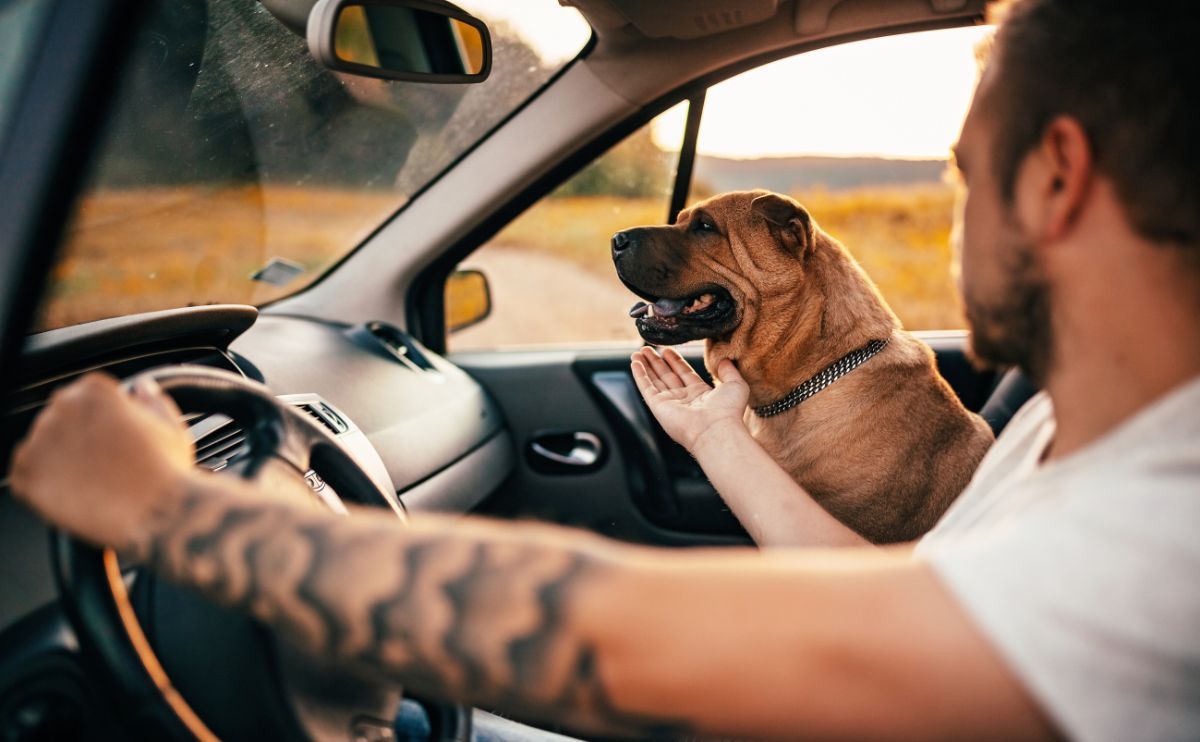
During the Trip: Good Habits to Adopt #
Once on the road, your dog’s comfort depends on three things: stability, temperature, and breaks.
Even if everything seems fine, plan regular stops. For a long journey, a break every two to three hours is a good rule of thumb. This gives your dog time to drink, stretch, relieve themselves, and decompress.
During the trip, remember to:
- keep water within reach;
- avoid loud music;
- maintain a comfortable temperature;
- drive as smoothly as possible;
- avoid letting your dog stick their head out of the window;
- keep the leash accessible before opening the door.
That last point matters. At a rest stop, parking lot, gas station, or highway service area, your dog may be startled by a sound, a smell, another animal, or simply the excitement of getting out. Clip the leash on before opening the door or crate.
If you are preparing for a longer trip, you can also use the checklist in our complete guide to planning a vacation with your dog.
Stressed Dog in the Car: How Can You Help? #
Not all dogs experience car travel in the same way. Some fall asleep within minutes. Others stay alert for the entire trip.
The most common signs of stress include:
- panting;
- trembling;
- whining;
- restlessness;
- excessive drooling;
- vomiting;
- trying to move to the front;
- refusing to get into the car.
To help your dog, make the journey as predictable as possible. Place them in the same spot each time, with a familiar blanket or object. Keep the atmosphere calm and avoid constantly checking on them or overstimulating them.
You can also work on positive association: a few minutes in the car, a reward, then back home. Then short trips to pleasant places. Over time, the car becomes less intimidating.
If your dog is particularly sensitive, observing their reactions over time can also help. At Invoxia, we are especially interested in signals that can reflect a dog’s overall state, such as heart rate variability, a useful indicator to better understand changes related to stress, recovery, or well-being.
How the Biotracker Can Help You Better Understand Your Dog’s Well-Being in the Car #
Even with good preparation, it is not always easy to know how your dog really experiences car trips. Some signs are visible — panting, restlessness, trembling — but others are more subtle. A dog may seem calm while actually feeling tired, stressed, or less comfortable than usual.
This is where a tool like the Invoxia Biotracker can be useful. In addition to GPS location tracking, it helps you observe trends related to your dog’s well-being, including activity, rest, heart rate, respiratory rate, and heart rate variability.
The Biotracker can also detect travel-related movements. This helps put your dog’s data into context: after a car trip, you can see whether your dog recovers normally, sleeps more than usual, or shows a change in activity once you arrive.
It can also help you better understand your dog’s habits over time. For example, if long drives are often followed by lower activity, disrupted rest, or a noticeable change in routine, that may help you adjust future trips: more frequent breaks, cooler departure times, a more comfortable setup, or gradual desensitization to the car.
Of course, the Biotracker does not replace your own observation or veterinary advice. But it adds something valuable: a more objective view of your dog’s daily life. And when you often travel with your companion, better understanding how they move, rest, and recover can make a real difference to their comfort.
In short, the Biotracker can help answer a simple question: “How is my dog really handling this trip?”
Invoxia Biotracker
What if you could better understand your dog’s trips?
GPS tracking, transport movement detection, activity, rest, and health indicators: the Biotracker helps you keep an eye on your dog’s well-being, even on the go.
Discover the BiotrackerHeat in the Car: A Danger You Should Never Underestimate #
Even if you are leaving for “just two minutes,” never leave your dog alone in a parked car. The temperature inside a vehicle can rise very quickly, even when the weather outside feels mild.
Dogs do not regulate heat as efficiently as humans. They sweat very little and mainly cool themselves by panting. In a hot car, this may quickly become insufficient.
The American Veterinary Medical Association’s advice on pets in vehicles is clear: pets should never be left in cars when conditions can become dangerous, and animals should also be properly restrained while driving. The ASPCA also warns that leaving animals in hot cars can lead to fatal heatstroke and may be illegal in many places, as explained in its guide to dogs in hot cars and summer dangers.
That is why you should avoid:
- leaving a dog alone in a parked car;
- relying on a slightly open window;
- parking in direct sun, even briefly;
- travelling during the hottest hours of the day;
- forgetting hydration breaks.
In summer, try to leave early in the morning or in the evening. Use air conditioning sensibly, protect your dog from direct sun, and always keep fresh water available.
To recognize warning signs, our guide on heatstroke in dogs explains what to watch for: excessive panting, weakness, disorientation, vomiting, abnormal gums, or unusual fatigue.
Travelling by Car With Your Dog Across Borders #
If you are crossing a border by car, check the rules of your destination before you leave.
For travel within the European Union, dogs generally need to be microchipped, vaccinated against rabies, and accompanied by a European pet passport. The official EU portal gives detailed guidance on travelling with pets in the EU, including pet passport validity and rabies vaccination requirements.
If you are entering the United States with your dog, the rules are different. The CDC explains how to complete the CDC Dog Import Form, while USDA APHIS provides additional guidance on importing pet dogs into the United States. Requirements may depend on where your dog has been in the previous months, rabies risk, age, microchip status, and vaccination documents.
Before travelling internationally, check:
- microchip requirements;
- rabies vaccination validity;
- pet passport or health certificate requirements;
- country-specific entry rules;
- re-entry rules for your home country;
- parasite treatment requirements, if applicable;
- local dog transport rules once you arrive.
It is also a good time to check that your dog’s identification details and contact information are up to date.
What If Your Dog Escapes During a Break? #
Breaks are essential, but they can also be risky. A stressed, excited, or startled dog can run off very quickly, especially in an unfamiliar place.
Before each stop:
- attach the leash before opening the door or crate;
- check that the harness or collar is properly fitted;
- avoid areas too close to traffic;
- keep your dog close to you;
- do not unleash your dog in an unsecured area.
A GPS tracker can also be reassuring during vacations, long drives, or stops in unfamiliar places. The Invoxia Biotracker 2026 Edition can help you track your dog’s location while also providing advanced health and activity monitoring.
Checklist Before a Car Trip With Your Dog #
Before leaving, take a few minutes to make sure you have everything you need.
To Keep in the Car #
- Safety harness, crate, carrier, or dog guard
- Easily accessible leash
- Fresh water
- Travel bowl
- Familiar blanket or mat
- Treats
- Waste bags
- Towel or wipes
- Vaccination records or health documents
- Pet passport, if travelling in Europe
- Health certificate or import documents, if required
- Contact details for a vet near your destination
To Check Before Departure #
- Your dog is properly secured
- The car is well ventilated
- Luggage cannot fall on your dog
- Your dog’s ID and contact details are up to date
- Breaks are planned
- You avoided a large meal right before the trip
- You checked destination rules for cross-border travel
It may seem like a lot, but once you get used to it, this preparation becomes very quick.
Transporting Your Dog in the Car: Key Takeaways #
To transport your dog in the car safely, three priorities matter most: safety, comfort, and anticipation.
Your dog should not distract the driver or move freely around the cabin. They should be secured with suitable equipment, such as a safety harness, travel crate, carrier, dog cage, or separation barrier.
For the trip to go well, also think about breaks, hydration, temperature, and stress. A dog who is well prepared, comfortably installed, and reassured will experience car rides much better, whether it is a short drive or the beginning of a vacation.
And if you are preparing a full trip with your companion, our guide to going on vacation with your dog will help you plan the rest: destination, accommodation, health, activities, and essentials to bring.
FAQ: Transporting Your Dog in the Car #
Is it mandatory to secure your dog in the car? #
It depends on where you are driving. In the US, dog restraint rules vary by state and locality. In Europe, rules also vary by country. In the UK, Highway Code Rule 57 says dogs and other animals should be suitably restrained so they cannot distract the driver or injure themselves or others if the vehicle stops quickly. Even when not explicitly required, securing your dog is strongly recommended.
How do you transport a dog in the car safely? #
The safest options are a properly fitted safety harness, a secured crate or carrier, a dog cage, or a separation barrier. Your dog should not be able to move freely around the cabin, climb onto the driver, or block visibility.
Where should a dog sit in the car? #
Your dog can travel on the back seat with a safety harness, in a secured crate or carrier, or in the cargo area with a dog guard or properly fixed crate. The best option depends on your dog’s size, temperament, and your vehicle.
Can a dog sit in the front seat? #
It is generally not recommended. A dog in the front seat can distract the driver, be injured by an airbag, or be thrown forward in sudden braking. If there is no other option, the dog should be properly restrained and should never sit on the driver’s lap.
Can you be fined for driving with an unrestrained dog? #
Potentially, yes, depending on where you are. Even in places without a specific dog seat belt law, you may face penalties if your dog distracts you, interferes with safe driving, or is transported in unsafe conditions. Always check local rules before travelling.
What is the best equipment for transporting a dog in the car? #
For a small dog, a carrier or crate is often practical. For a medium-sized dog, a safety harness can work well. For a large dog, a secured crate in the cargo area or a dog guard may be more comfortable. The right choice depends on your dog, your vehicle, and the length of the journey.
How can you calm a stressed dog in the car? #
Use gradual training, short positive trips, a familiar blanket, and a predictable setup. Drive smoothly, keep the atmosphere calm, and take breaks. If your dog shows severe stress, speak with your veterinarian.
Why does my dog drool or vomit in the car? #
Drooling and vomiting may be signs of motion sickness, anxiety, or both. Avoid feeding a large meal right before travel, start with short trips, and ask your vet for advice if it happens often. VCA’s guide to motion sickness in dogs explains why gradual exposure and veterinary guidance can help.
How long can a dog stay in the car during a road trip? #
During a long trip, plan a break every two to three hours so your dog can drink, stretch, relieve themselves, and relax. However, a dog should never be left alone in a parked car when temperatures may become unsafe.
Can you leave your dog alone in the car for a few minutes? #
No, it is best to avoid it entirely. The temperature inside a car can rise quickly, even on mild days, and a dog can suffer from heatstroke faster than many owners expect.
What documents do you need when travelling by car with your dog? #
For domestic travel, bring vaccination records and your dog’s identification details. For travel in Europe, check the official EU rules for travelling with pets. For entry into the United States, check the CDC’s Dog Import Form instructions and USDA APHIS guidance on bringing pet dogs into the US.