

Howling for no reason, a stubborn character, boundless energy, a generally black and white coat, piercing blue eyes… We think you’ve recognized it: the Siberian Husky is truly a one-of-a-kind dog. Originating from the coldest regions of the globe, this Nordic dog has been bred for centuries for its ability to work in extreme climatic conditions. Even today, it fascinates with its wolf-like appearance, piercing gaze, and extraordinary endurance.
According to the American Kennel Club, the Siberian Husky regularly ranks among the most popular breeds, especially in countries with temperate to cold climates, where its physical abilities and sociable temperament are particularly appreciated.
But while the Siberian Husky is a spectacular dog, it remains a demanding breed that requires a suitable lifestyle and a good understanding of its needs.
Origins of the Siberian Husky #
The Siberian Husky finds its origins in Eastern Siberia, where it was raised by the Chukchi people. These dogs lived at the heart of families and were used to pull sleds over long distances, with limited food supply, in extreme temperatures.
In the early 20th century, the Siberian Husky was introduced to Alaska, where it quickly distinguished itself in major sled dog races. Its role in the famous Nome serum run in 1925 greatly contributed to its international fame - a rather crazy story where they simply saved the town of Nome, Alaska.
Physical Characteristics of the Siberian Husky #
The Siberian Husky is a medium-sized, athletic, and perfectly proportioned dog. Its body is designed for endurance rather than brute strength, allowing it to maintain prolonged effort in the cold.
Size and Weight of the Siberian Husky #
| Gender | Height at the withers | Average Weight |
|---|---|---|
| Male | 21 to 23.5 inches | 44 to 60 pounds |
| Female | 19.5 to 22 inches | 35 to 51 pounds |
Coat Color #
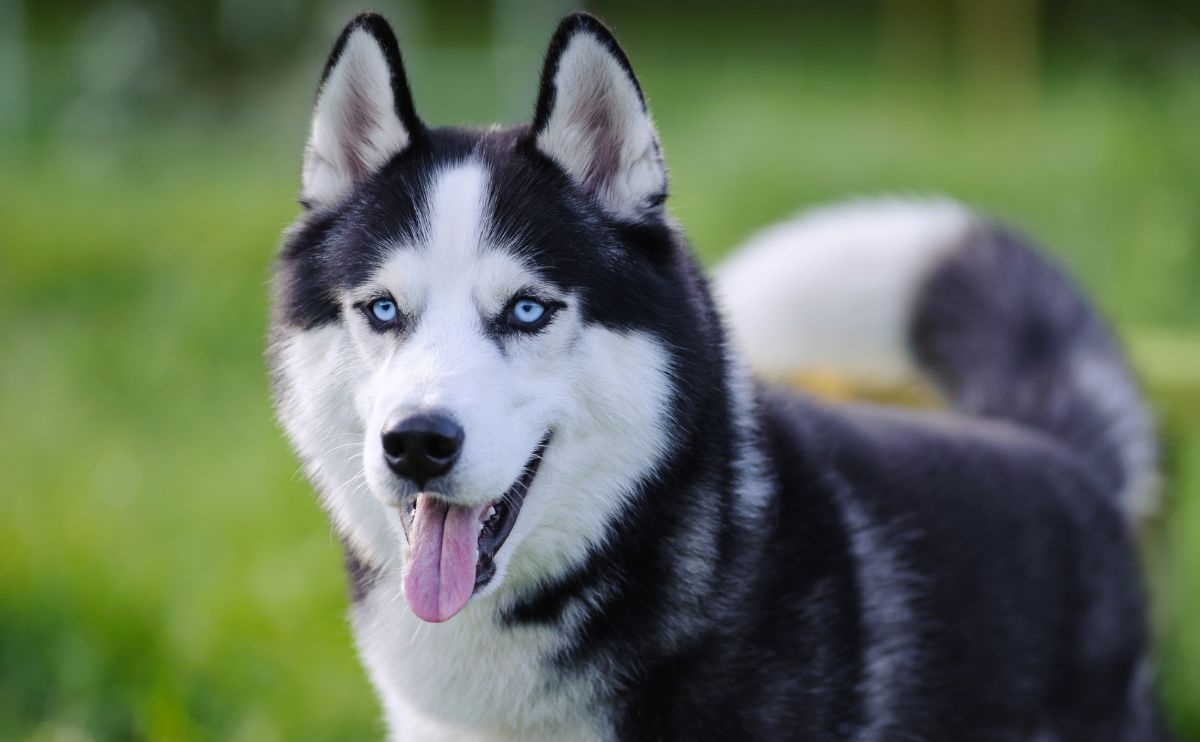
The coat of the Siberian Husky can be black, gray, red, or completely white, always associated with well-defined white markings. Its eyes can be blue, brown, or heterochromatic, an iconic feature of the breed.
Physical Specificities of the Siberian Husky #
The Siberian Husky has a particularly dense double coat. The undercoat provides effective thermal insulation, while the topcoat protects against moisture and wind. Its erect ears and bushy tail complete this natural adaptation to cold climates.
Behavior of the Siberian Husky #
The Siberian Husky is a sociable, playful dog very oriented towards group life. It retains a strong pack instinct and struggles with prolonged solitude.
Behavior of the Siberian Husky with Children #
With children, the Siberian Husky is generally patient and affectionate. It enjoys dynamic interactions, provided that respect rules are clearly established.
Behavior of the Siberian Husky with Other Animals #
The Siberian Husky gets along well with other dogs but may exhibit a predatory instinct towards small animals. Early socialization is essential to promote harmonious cohabitation.
Health of the Siberian Husky #
A hardy breed, the Siberian Husky generally enjoys robust health. However, certain hereditary conditions should be known before adoption.
Life Expectancy of the Siberian Husky #
The average life expectancy of the Siberian Husky is between 12 and 14 years, which is high for a dog of this size.
Common Diseases in the Siberian Husky #
| Disease | Description | Frequency |
|---|---|---|
| Hip Dysplasia | Malformation of the joint that can cause pain, limping, and arthritis | Medium |
| Progressive Retinal Atrophy (PRA) | Hereditary eye disease leading to progressive vision loss | Low to Medium |
| Juvenile Cataract | Lens opacity that can appear at a young age | Low |
| Hypothyroidism | Hormonal disorder causing fatigue, weight gain, and skin problems | Low |
Training the Siberian Husky #
Training the Siberian Husky is a key element of its balance. Intelligent but independent, it requires a consistent and structured approach.
✔️ Positive Training Methods for the Siberian Husky #
- Positive reinforcement (treats, play, encouragement)
- Short and varied sessions
- Motivation through physical activity
✔️ Importance of Early Socialization for the Siberian Husky #
Early socialization allows:
- fostering good relations with peers,
- limiting distrust of strangers,
- reducing escape or destructive behaviors.
✔️ Teaching Cleanliness to the Siberian Husky #
The Siberian Husky generally learns cleanliness quickly if a clear routine is established, with regular outings and immediate rewards.
✔️ Teaching Basic Commands to the Siberian Husky #
Essential commands include:
- sit,
- lie down,
- leash walking,
- recall (particularly important for this runaway breed).
❌ Managing Undesirable Behaviors of the Siberian Husky #
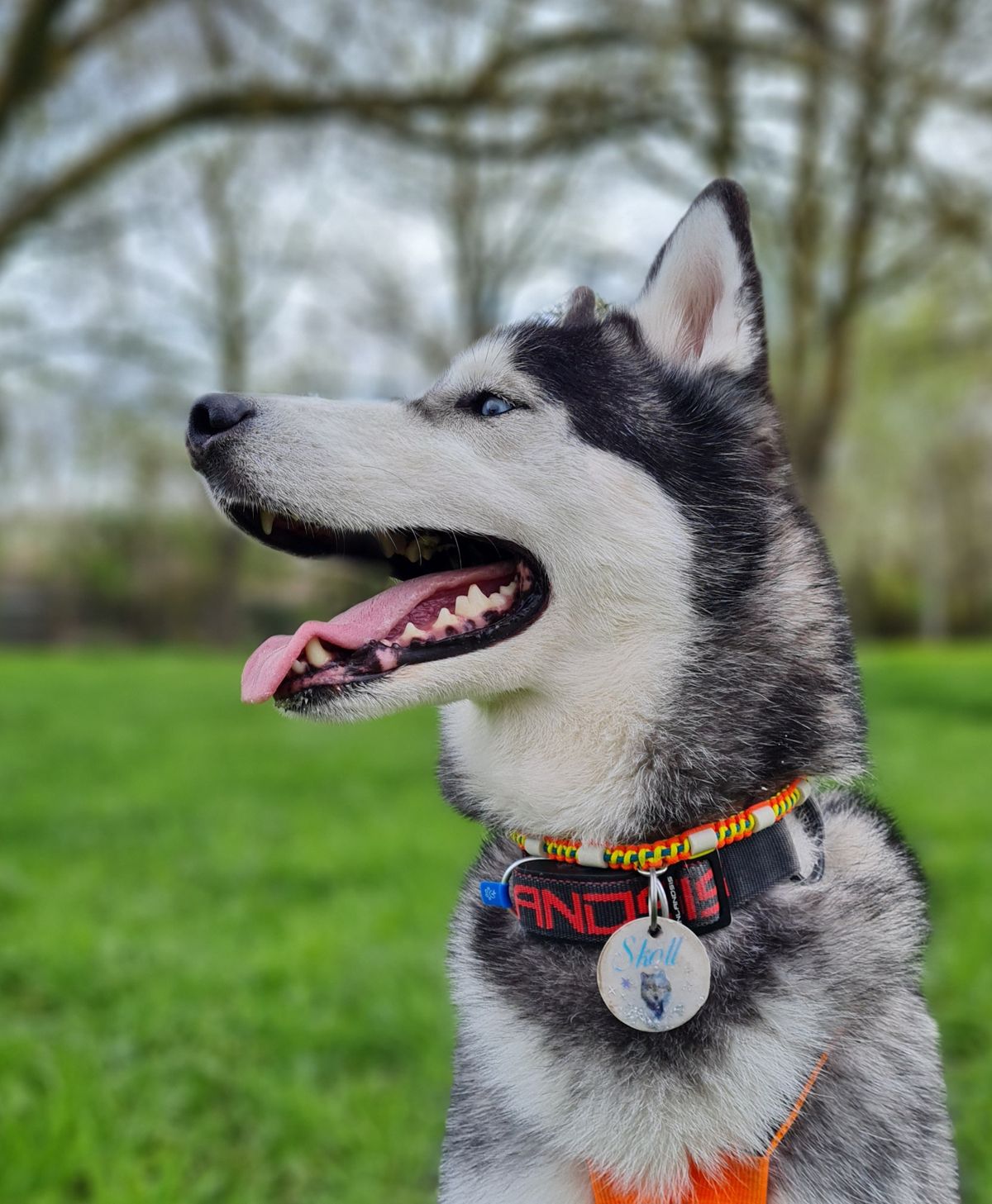
Like many Nordic dogs, the Siberian Husky can develop certain undesirable behaviors if it lacks activity or stimulation. Escaping, destruction, and howling are among the most common.
👉 To limit escapes, it is essential to meet its exploration needs with regular and varied activities while securing its environment. Despite this, its independent instinct may drive it to wander off.
Using a GPS tracker for dogs, like the Biotracker Invoxia, allows you to quickly locate your Husky in case of escape, offering a reassuring solution for particularly adventurous dog owners.
With Live Tracking, follow its every move from your app, and find your dog in less time than it takes for it to run away!
👉 Destruction is often linked to boredom or separation anxiety. It can be reduced by increasing daily physical expenditure, offering occupation toys, and establishing stable routines.
👉 Howling, finally, is a natural form of communication for the Husky. It can be mitigated by gradually teaching solitude and providing sufficient social interaction, rather than reprimanding.
Examples of Training Exercises for the Siberian Husky #
- canicross,
- pulling (sled or cart),
- tracking games,
- long-distance hikes.
Character and Lifestyle of the Siberian Husky #
The Siberian Husky is a winter dog that thrives in an active lifestyle.
Physical Activity and Exercise for the Siberian Husky #
It needs at least 1.5 to 2 hours of daily activity, ideally outdoors.
Character of the Siberian Husky Indoors #
After exertion, the Siberian Husky can be calm indoors while remaining attentive to its environment.
Character with Family and Other Animals #
Affectionate but independent, it enjoys the company of its family without being overly demonstrative.
Ideal Living Environment for the Siberian Husky #
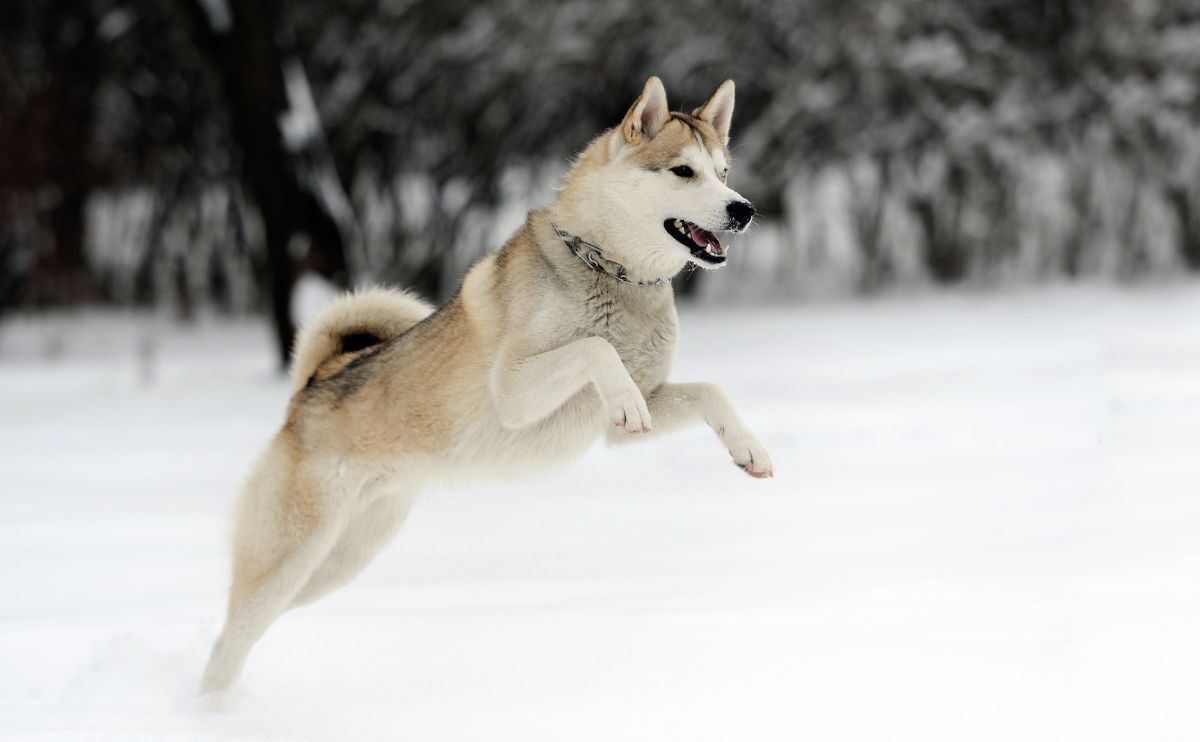
The Siberian Husky is a particularly energetic dog breed. It therefore needs a lot of exercise. Thus, an environment conducive to its well-being is favored:
- House with a well-fenced yard
- Temperate to cold climate
- Active or sporty owners
Grooming and Hygiene of the Siberian Husky #
The dense coat of the Siberian Husky plays a central role in its protection against the cold but requires regular grooming.
Grooming the Coat of the Siberian Husky #
- Brushing 2 to 3 times a week outside of shedding periods
- Daily brushing in spring and fall
- Infrequent baths
❌ Shaving is strongly discouraged, as it may lead to the loss of thermal insulation provided by its double coat.
General Hygiene of the Siberian Husky #
- Regular ear checks
- Nail trimming if necessary
- Recommended tooth brushing
Feeding the Siberian Husky #
The Siberian Husky has an efficient metabolism:
- high-protein diet,
- portions adapted to its activity level,
- vigilance in case of reduced exercise.
Adoption and Cost of the Siberian Husky #
Adopting a Siberian Husky involves a long-term financial commitment.
Price to Adopt a Siberian Husky #
- LOF Breeding: €1,000 to €1,800
- Shelter or association: €250 to €400
Annual Cost for the Care and Maintenance of the Siberian Husky #
| Expense Item | Estimated Annual Cost |
|---|---|
| Food | €600 to €900 |
| Veterinary care | €200 to €400 |
| Health insurance (optional) | €150 to €300 |
| Maintenance, accessories, toys | €150 to €300 |
| Estimated Total Annual Cost | €1,100 to €1,900 |
The Siberian Husky perfectly embodies the winter dog: resilient, enduring, and deeply sociable. However, this breed is not suitable for all households. Its intense need for activity, independence, and escape instinct require an available, consistent, and active owner.
Well understood and properly managed, the Siberian Husky becomes an exceptional companion, capable of forging a strong bond with its family while retaining the free spirit of the great Nordic dogs.