

When you adopt a dog, you never imagine having to face health problems so early. And yet, for some dog parents, worry quickly becomes part of daily life. This is the case for Pixel, a young Australian Shepherd, and her owner, who agreed to share her story and experience with the Invoxia Biotracker.
A sincere testimony, far from alarmist speeches, that highlights an essential issue: how to better understand your dog and live more peacefully, even when health becomes a concern.
Can you introduce yourself and Pixel? #
Hello, I am the dog mom of Pixel, a one-year-old tricolor Australian Shepherd. Pixel is my first dog. She has been part of my daily life since she was very young, and like many dog parents, I consider her a true member of the family.

When did you discover her heart problem? #
We discovered her heart problem when we decided to have her spayed. During the consultation, the vet heard a heart murmur. As a precaution, he advised us to have a cardiac ultrasound.
Following this first examination, we were referred to a specialized veterinary clinic for a second ultrasound, which confirmed the diagnosis.
How did you handle this news as a dog parent? #
It was a very difficult time. Pixel is my first dog, and of course, you never expect this kind of news, especially when she is so young.
The risks associated with this disease made us consider the worst. A phrase from the surgeon still resonates in my head: “Pixel is 10 months old, she’s a baby… but an old baby. The risks are high.”
At that moment, you feel very helpless and extremely worried.
Before using the Biotracker, what stressed you the most daily about Pixel’s health? #
Pixel has always been very playful, especially with her friends. After the announcement of her heart problem, we had to be very careful with her activity: avoid her getting too tired, limit certain games.
What stressed me the most was not knowing if what I was letting her do was suitable for her health condition.
Did you sometimes feel like you were “monitoring without really knowing” if everything was okay? #
Yes, completely. I was constantly watching her, but without any concrete indicators. I asked myself a lot of questions: Is she too tired? Is her heart handling the effort well? Am I making the right choices for her? It was a constant source of stress.
How did you learn about the Biotracker? #
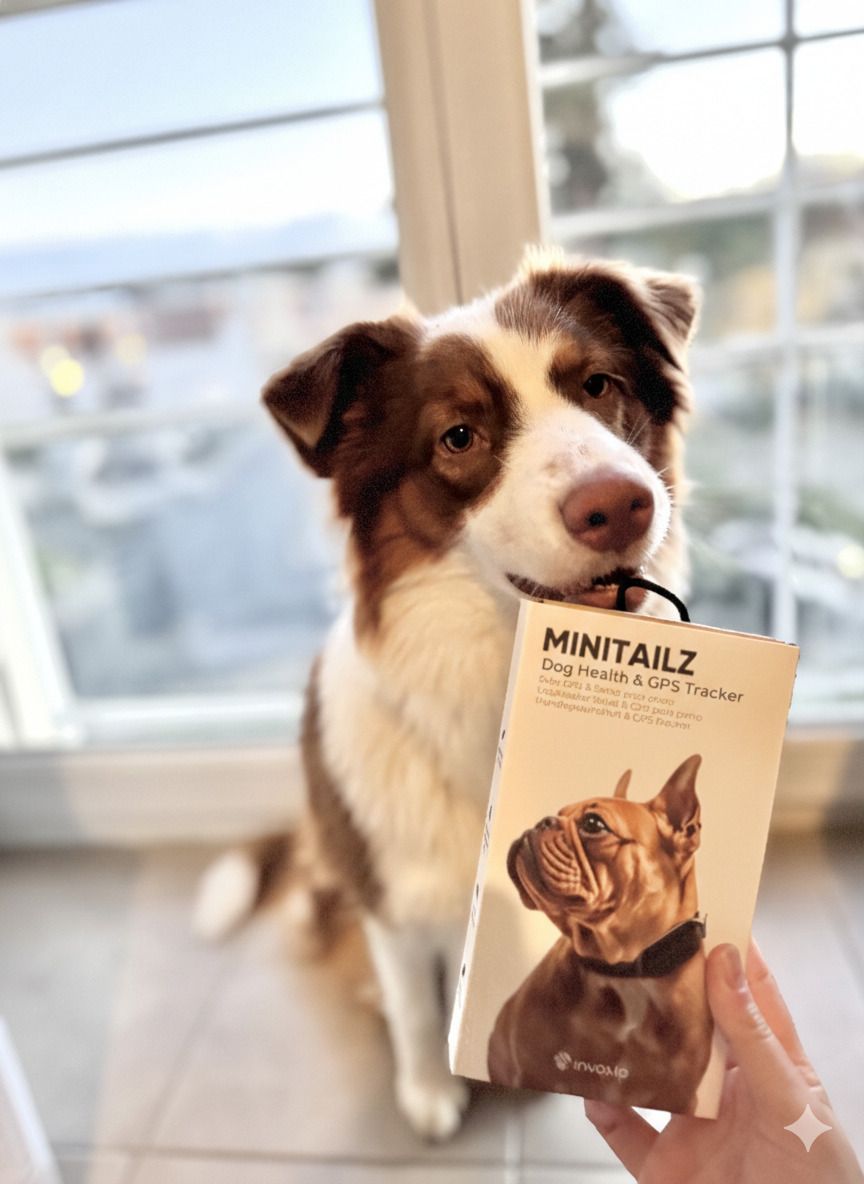
When we learned about Pixel’s heart problem, friends told me about the existence of trackers that allow monitoring certain health indicators in dogs. I started researching on my own and, during my search, I came across the Biotracker.
For Pixel and her dog mom, there was a before and after the Biotracker. She now lives more peacefully knowing she can closely monitor any changes and be alerted when something is wrong.
Why did you turn to the Invoxia Biotracker? #
What reassured me was that the Biotracker is not limited to location. It also allows tracking health data, activity, rest, and especially heart rate.
In Pixel’s context, it was exactly what I needed: a tool to better understand her daily life and feel more at ease.
Today, how do you practically use the application? #
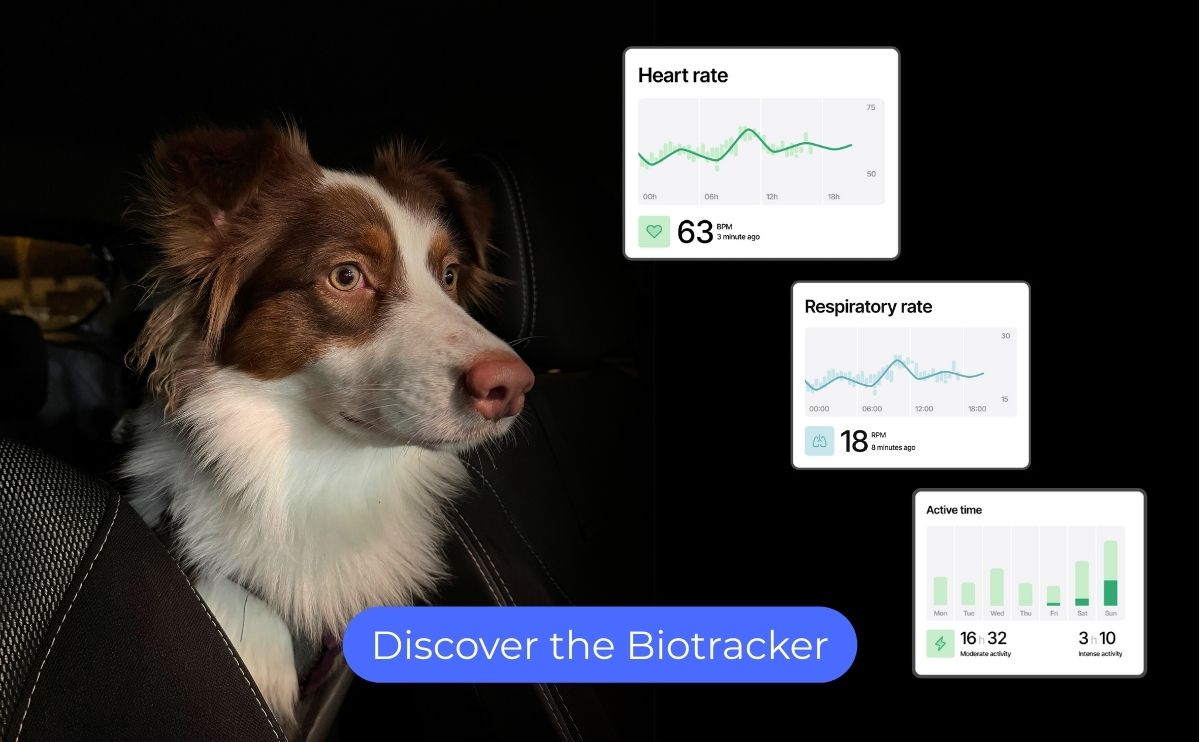
I use the application daily. Almost every evening, I check the daily report generated by the Biotracker to see how Pixel’s day went: her activity level, rest phases, and overall data.
Which data is most useful for Pixel? #
The data I monitor the most are: sleep, barking (we live in an apartment, so knowing she doesn’t bark when she’s alone reassures me a lot), and of course, heart rate, which is an essential point given her medical history.
Do you view this data more as control or as a reassurance tool? #
More as a reassurance tool. I’m not trying to control everything, but to understand and be alerted if something is out of the ordinary.
In a video posted on TikTok, you say the Biotracker “reassures you a lot daily.” Can you explain why? #
The Biotracker reassures me because it allows me to have objective data. Instead of relying solely on my feelings or worries, I have concrete indicators that let me know if everything is okay.
Find all of Pixel’s adventures 👉 @pixel.bergeraustralien
Does it help you let go during walks or when Pixel is more active? #
Yes, clearly! Today, I enjoy moments with Pixel more. I’m more relaxed during walks or games because I know I can check afterward if her activity stayed within a normal range for her.
Has it changed your relationship with worry since her surgery? #
Yes. Since her surgery, the Biotracker helps me transform worry into reasoned vigilance. I’m attentive but much less anxious than before.
Have you ever used Biotracker data as part of her veterinary follow-up? #
I don’t use the Biotracker as a medical tool, but rather as a daily monitoring complement.
To which dog parents would you recommend this type of monitoring? #
I would especially recommend it to worried dog parents who ask themselves a lot of questions daily and need a bit more reassurance. It helps to better understand your dog’s rhythm and feel less uncertain.
What would you say to someone whose dog has a health issue and is hesitant to equip themselves? #
I would tell them that this type of tool doesn’t replace the vet, but it can really help to feel more at ease and better informed daily.
If you had to summarize the Biotracker in one sentence, what would it be? #
A tool that helps me watch over Pixel’s health while allowing me to live our daily life more peacefully.
Pixel’s story reminds us of an essential thing: when your dog’s health becomes a concern, you’re not necessarily looking to “control everything.” You’re mainly looking to regain some peace of mind, day by day. In her case, the Biotracker has never been a medical tool or a substitute for the vet: it’s a daily reference, a way to better understand, better observe, and transform worry into more peaceful vigilance.
And that’s precisely what’s valuable: even without using it directly with her vet, home monitoring can already do a lot. Because having data and histories helps to spot a change, objectify a feeling, and sometimes react faster when something seems “different.” Some stories shared by the community illustrate this very well — like Émilie and Cracotte’s testimony, where monitoring helped alert before the situation clearly manifested in daily life.