

Takoda, a 5-year-old Bullmastiff, had suffered from an elbow malformation since birth. When surgery became necessary, his owner, Jen, used the data collected by the Biotracker to monitor his recovery, communicate more precisely with his veterinary team, and better understand what her particularly stoic dog did not always show.
When a Dog Doesn’t Show Pain, How Do You Know What They Really Feel? #
After surgery, owners need to monitor many elements: appetite, behavior, mobility, the scar, sleep quality, or how the dog bears weight on the operated limb.
But some dogs express very little discomfort.
This is particularly the case with Takoda, a 5-year-old Bullmastiff weighing about 135 pounds. Despite advanced arthritis and significant joint pain, this “gentle giant” often continued to demand his walks and follow his owner as if nothing was wrong.
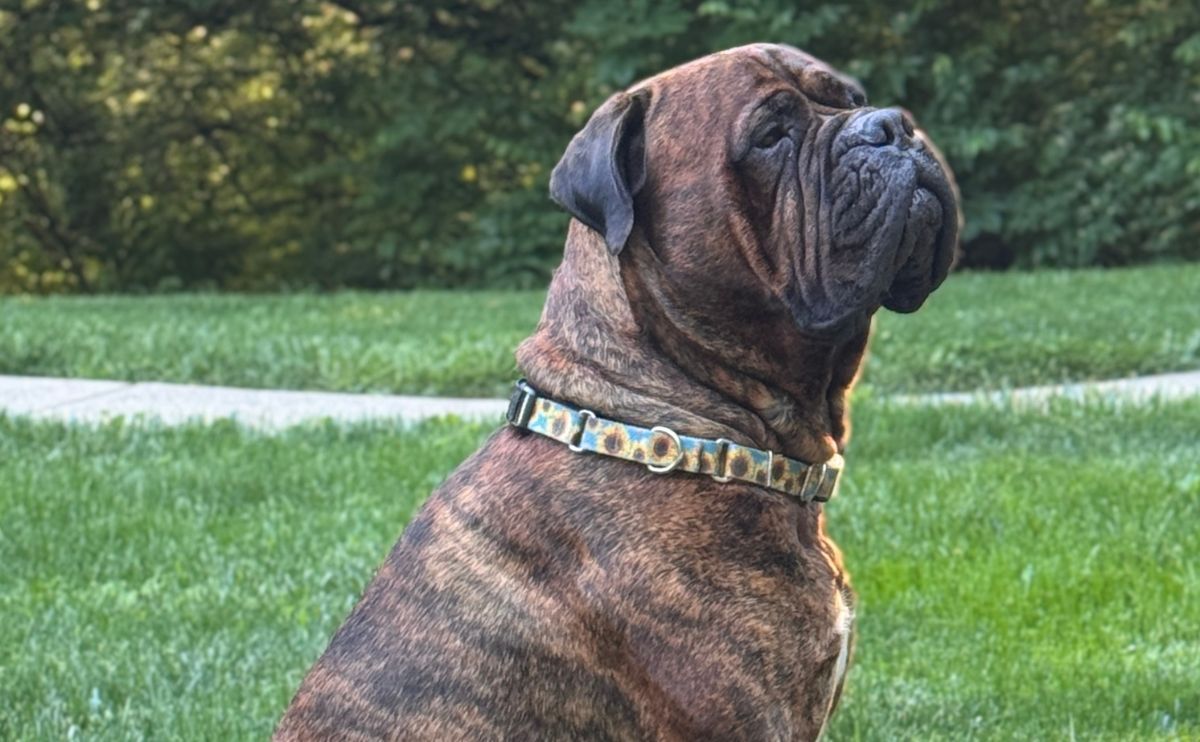
For Jen Chamberlain, who lives with him in Ohio, USA, the health data collected daily by the Biotracker provided new insights into visible signs: resting heart rate, heart rate variability, respiratory rate, deep sleep, and activity.
These indicators alone do not diagnose or precisely measure pain. Heart rate and breathing can also vary due to stress, fear, environment, or other health issues. However, they can complement observations made at home and help identify unusual changes compared to the dog’s usual values.
Jen tells us how she used Takoda’s data before and after his surgery.
Jen’s Testimony, Biotracker User for Takoda #
Can You Introduce Yourself and Tell Us About Your Dog? #
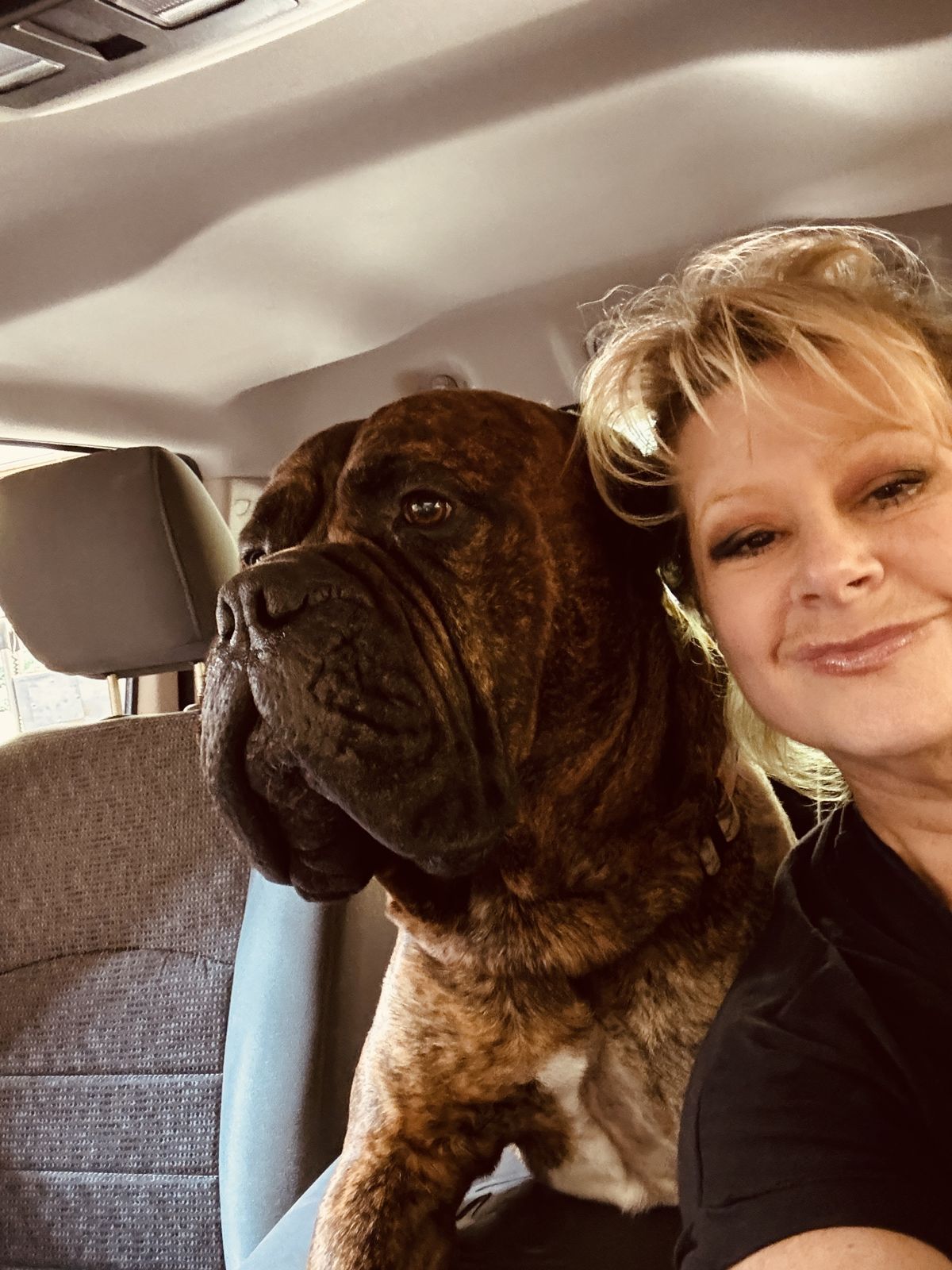
My name is Jen Chamberlain, and my dog’s name is Takoda. He’s a 5-year-old Bullmastiff weighing 135 pounds. Despite his size, Takoda is truly a “velcro dog.” He’s constantly by my side, and we’re both happier when we can be together.
Takoda is incredibly easygoing, very perceptive, and a true “gentle giant.” Fortunately, he’s inherited very little of the stubborn nature often associated with this breed.
He’s my eighth Bullmastiff, so I have a lot of experience with this breed’s behaviors, health and comfort needs.
How Would You Describe Takoda Before His Surgery? #
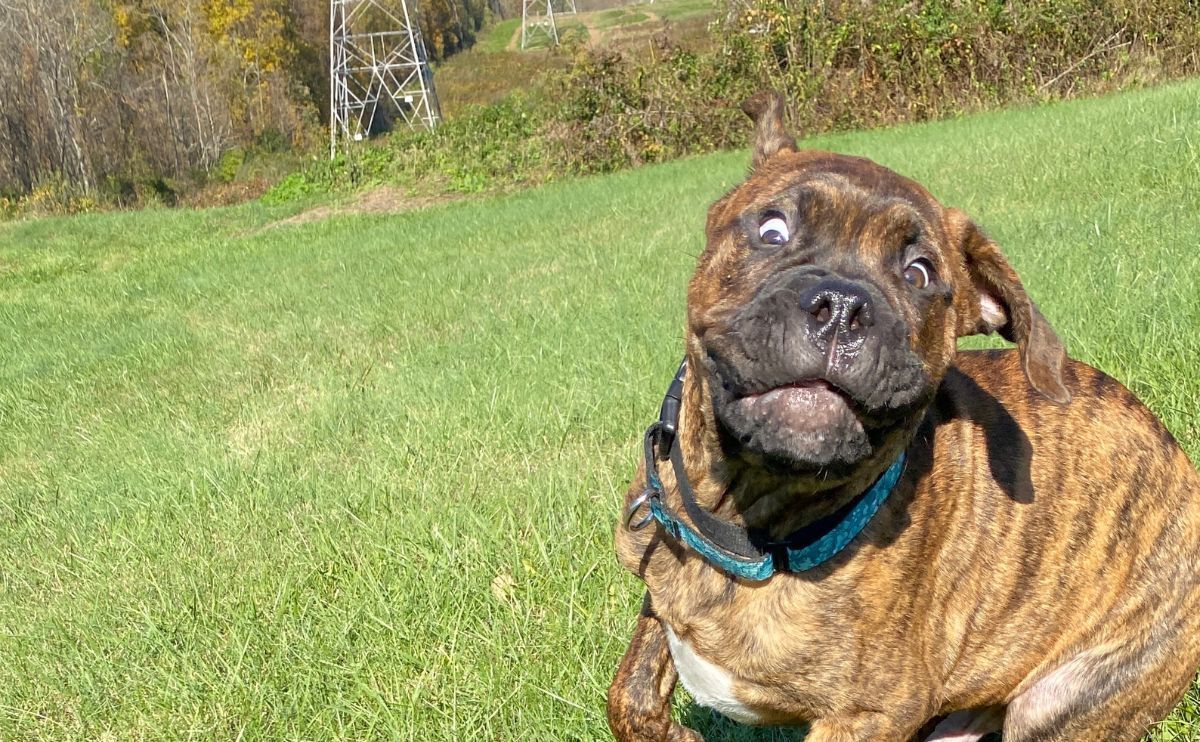
Despite his size, Takoda has lots of energy. He’s still a relatively young dog, who’s even younger in his mind!
We live on a rural, wooded property where he can enjoy several acres. On an ordinary day, he walks trails, goes around the neighborhood to greet neighbors, and takes rides in the backseat of our pickup truck. He loves going absolutely everywhere.
Normally, Takoda walks about 12,000 steps a day.
However, he was born with a structural defect in his left front elbow. I’ve always known he’d face more mobility issues than an average dog, especially given his energetic temperament.
We’ve taken several precautions over the years to limit stress on his leg while allowing him to have a rich and fulfilling life: he’s not allowed to jump, most of his walks are on soft surfaces, and his diet is closely monitored to avoid any excess weight that could overload his joints.
He also wears health tracking devices so I can take a more data-driven approach to monitoring his well-being.
Because of his guardian breed genetics, Takoda naturally hides his discomfort when he’s not feeling well. As his mobility worsened over the past year, he kept going despite the pain, making it difficult to perceive how much he was suffering. That’s partly why having objective data became so important to me.
When he started limping more visibly a few months ago, his veterinarian examined his leg, with X-rays showing that the arthritis in his left front limb had notably progressed, resulting in a recommendation for surgery.
What Type of Surgery Did He Undergo? #
Takoda underwent an arthroscopic “clean-up” procedure, called a debridement, to remove bone fragments present in his joint — one of which had completely detached and was embedded in his muscle — and to reduce significant mechanical friction resulting from the arthritis.
A successful surgery would give him more active, pain-free mobility, hopefully for many more years.
A More Complex Surgical Recovery Than Expected #
How Did His Recovery Go After the Surgery? #
The recovery was quite intensive. I had to closely manage his daily step count and administer various medications to reduce inflammation and pain plus prevent infections. Cold and heat applications, as well as passive mobilization exercises, were also required daily.
To complicate matters, Takoda had a severe gastrointestinal reaction to some of his medications. We had to stop them for several days, leading to a period when his pain was no longer properly managed.
Managing two competing medical issues simultaneously — surgical recovery and gastrointestinal problems — was an immense challenge, especially happening in the first few days following his procedure.
What Worried You the Most During His Recovery? #
My priority concern was ensuring he was comfortable and pain-free as possible. This meant trying to bridge the gap between what I could observe in his behavior versus what was actually happening in his body.
I also needed to ensure his healing was progressing correctly: that he wasn’t overusing his leg, but also not underusing it, so the healing process could be as successful as possible.
Does Takoda Usually Show Obvious Signs of Pain or Discomfort? #
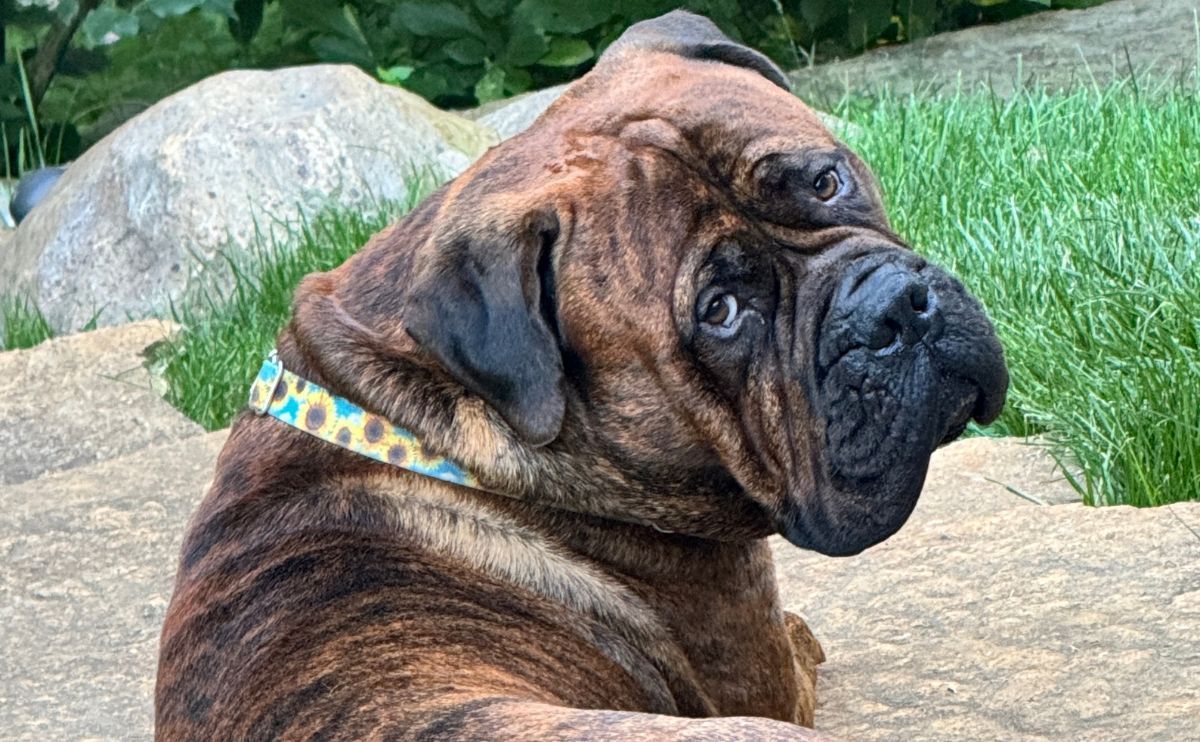
Takoda’s signs of pain are extremely subtle. Like many stoic Bullmastiffs, he doesn’t whine or cry when he’s in pain. His threshold is very high before he shows obvious limping.
When he expresses pain, it can manifest as a slight limp accompanied by a head movement or a stiff gait, as if he had a “wooden leg.”
That’s why the heart rate data provided by Invoxia became indispensable for me.
💡 Key Takeaway
A dog in pain doesn’t necessarily cry. Changes in posture, mobility, activity, appetite, or behavior can be very subtle. Pain assessment relies on a combination of behavioral, physiological, and contextual cues, not just a single measure.
Using the Biotracker During His Recovery #
When Did You Start Using the Biotracker? #
I purchased Takoda’s Biotracker at the beginning of 2024 and have used it daily since then. He wears it every day and it was an essential tool during his recovery.
What Data Did You Prioritize Monitoring? #
I closely monitored his resting heart rate, his heart rate variability (HRV) his breathing rate.
Why Did You Pay Special Attention to His Heart Rate to Monitor His Pain Level? #
Because Takoda hides his pain so well, his heart rate helps me better understand what’s happening in his nervous system. Through my research, I learned that resting heart rate could be a useful physiological signal in the context of chronic stress and pain management.
Specifically, even when a dog is masking pain, its sympathetic nervous system is still engaging in a “fight or flight” response, which can lead to an increased heart rate and decreased HRV.
Since I already had a solid longitudinal data baseline at the start of Takoda’s recovery, I knew what his heart rate looked like when he was truly comfortable and how it changed when he was experiencing chronic pain. Having these baseline values before his surgery made the postoperative data even more useful.
For example, when Takoda’s elbow pain was well-controlled, his resting heart rate remained around 59 beats per minute, and his average HRV was in the high 500 milliseconds.
When his condition worsened last winter, his monthly average rose to 66 beats per minute and stayed there. That represented an increase of six to eight beats, or about 15%, which is significant. His HRV values also decreased by 20 to 25%.
When his painkillers had to be stopped after the surgery due to his gastrointestinal crisis and pain began to resurface, his average heart rate rose to around 77 beats per minute, with peaks reaching 112 beats per minute.
This real-time window into his heart rate showed me that the situation was more challenging than his passive behavior suggested, prompting me to ask his veterinary team if it was possible to resume his painkillers more quickly than I otherwise would have.
Did the Biotracker Help You Feel More Reassured During This Period? #
Absolutely. Having objective data that more precisely indicated his distress levels during his gastrointestinal episode offered a more clinical basis for my discussions with his veterinary team.
Conversely, on days when his data showed improvement, I could truly trust that his care protocols were working, rather than just hoping they were.
That has been a real game changer for me.
Why Monitor Each Dog’s Trends? #
A dog’s physiological values can vary based on age, weight, breed, time of day, environment, or even the season.
A prospective study conducted under the usual living conditions of 703 dogs and published in Frontiers in Veterinary Science notably showed that resting heart rate and respiratory rate were influenced by several individual and environmental factors. It highlights the interest of longitudinal monitoring, allowing comparison of a dog to its own habits rather than an isolated figure.
The Biotracker does not replace a clinical examination or a medical diagnostic device. An unusual variation should be put into perspective with other observed symptoms and discussed with a veterinarian.
The Data Monitored Daily #
What Health or Activity Data Did You Consult Most Often in the App? #
On a daily basis, I mainly check his HRV, average heart rate, and the duration of his deep rest and sleep periods. Beyond these daily checks, I also take a very analytical approach to his overall health.
Each month, I download his reports from the app and integrate them into a personalized Large Language Model I’ve configured specifically for Takoda. This allows me to compare his long-term baseline values with the behaviors I’ve observed over that period, helping me optimize his longer-term care in a more mathematical way.
The AI model also helps me interpret the evolution of his cardiac signature each month and has taught me to analyze the scatter plot, or Poincaré plot: what a healthy dispersion looks like, as opposed to a more compressed and stress-affected representation, all visually showing how his nervous system is dealing with pain.
Because large breeds like Bullmastiffs are more likely to encounter heart problems as they age, I consider monitoring atrial fibrillation as an essential part of Takoda’s long-term health plan.
Important Precaution
Public AI tools should not be used to diagnose, modify treatment, or make decisions on their own. Data and analyses can be used to prepare questions or document an evolution, but their medical interpretation should remain in the hands of a veterinarian.
What Did a “Good Recovery Day” Look Like in the Data? #
A good recovery day for Takoda corresponded to a stable heart rate around 59 beats per minute, an HRV in the high 400 milliseconds, and a respiratory rate around 11 breaths per minute.
He also needed long periods of deep sleep to allow his elbow time to heal. When he’s awake, I watched for obvious moments of playfulness, which have thankfully became more frequent over time after his surgery. This indicated to me that he was truly comfortable and not just enduring his pain.
Did You Notice Any Changes or Trends During His Recovery? #
The most notable trend was the relationship between his gastrointestinal complications and his heart rate. When his gastrointestinal issues were at their peak, his heart rate increased significantly, sometimes reaching 112 beats per minute.
Being able to visualize this stress factor in the data gave me a level of understanding I couldn’t have known just by observing him.
Did the Data Allow You to Adapt His Daily Routine? #
Directly, and on several occasions. Before his surgery, when his heart rate was high, I knew to limit his activity that day and prioritize rest, even when he demanded longer walks — which he always does!
After the surgery, I relied on the data to more confidently introduce small amounts of activity appropriate to each stage of his recovery.
This allowed him to mobilize and exercise his limb without him suffering too much, which is also essential for promoting a positive structural recovery.
More Precise Exchanges with the Veterinary Team #
Did You Share the Biotracker Data with Your Veterinarian? #
Yes. I bring his reports to his regular health check-ups with his veterinarian.
Being able to share and confirm his resting heart and respiratory rates is very useful for discussing his overall condition, rather than relying solely on measurements taken at the clinic, as these can vary significantly or even be influenced by the specific context of the consultation.
I also shared his cardiac signature history with his surgeon before the procedure. They were very impressed that I had this data!
Did Having Objective Data Help You During Your Exchanges with Your Veterinarian? #
It was a massive advantage. Having precise heart rate, respiratory rate, step count, and daily movement data allowed for more fact-based exchanges with his veterinarian. To some extent, it also made it easier to explore diagnostic pathways with improved confidence.
This data also helped a lot with phone-based veterinary consultations. Saying “he seems uncomfortable” doesn’t have the same impact as being able to say: “His resting heart rate has averaged 77 beats per minute for three consecutive days, with peaks at 112.”
My concerns could be considered more precisely and decisions were made more easily, including adjusting his pain medication earlier than might have otherwise been considered.
What Signs Did Your Veterinarian Ask You to Monitor After the Surgery? #
The classic post-surgery elements to monitor included any significant changes to his incision site, his ability to bear weight, his level of limping, his appetite, or to his behavior.
The Biotracker added a continuous physiological layer that supported observable signs. It gave me insight into how his autonomic nervous system was reacting in real-time, even when his outward behavior didn’t fully communicate the extent of his pain.
For example, Takoda will simply never miss a meal, no matter the circumstances. So I can’t rely as easily on a loss of appetite as an indicator of pain.
💡 The Role of Home Data
Veterinary recommendations emphasize the importance of combining owners’ observations with assessments made in the clinic, especially in cases of chronic pain. At home, changes in mobility, posture, sleep, activity, or interaction can complement the information gathered during a consultation.
Experiencing Recovery as an Owner #
What Was the Most Difficult Part for You? #
It’s always heart-wrenching to put a pet through a surgical procedure, knowing they will endure pain and discomfort they can’t anticipate or understand.
I didn’t make this decision lightly, but the data I had from Takoda’s Biotracker gave me more confidence that I was making the right choice.
However, the gastrointestinal crisis Takoda faced after the surgery was the most challenging period. Managing that in the middle of his overall surgical recovery was an extremely delicate balance.
Nevertheless, the Biotracker data again helped me feel like I was navigating this period with actual information rather than relying solely on my instincts.
Did the Biotracker Change How You Experienced This Recovery? #
Absolutely. Instead of constantly wondering if I was doing the right thing, the data — combined with my AI analysis of his monthly reports — allowed me to more mathematically validate that his protocols and habits were working.
Of course, you can never be absolutely certain of what a dog feels. And nothing can remove the emotional weight of seeing a beloved pet in distress.
But compared to other surgeries I’ve unfortunately had to manage with pets in the past, I felt more capable of giving Takoda the best possible chance I could for a positive outcome.
And I sincerely believe Inoxvia contributed to improving the outcome of his recovery.
Was There a Moment When You Felt Especially Glad to Have the Biotracker Data? #
Honestly, I’m grateful to have this Biotracker every day. Before his surgery, there were times when Takoda had significant limping accompanied by a bobbing head movement, which was concerning to see.
But checking the tracker and seeing that his HRV still remained in a good range reassured me: I didn’t need to immediately panic or think it was a new injury.
This allowed me to take a more measured and proactive approach to balancing his daily activity and rest while seeking the best long-term solutions to address the root cause of his pain. Being able to avoid reactive decisions made in panic has been an immense help and a relief.
I sincerely believe that being able to manage his pain more proactively with the Biotracker helped Takoda get through his surgery and recover with less trauma and confusion than he otherwise could have faced.
What Would You Say to an Owner Whose Dog Needs to Recover from Surgery? #
Establish baseline values for your pet before you need them. The value of the Biotracker during Takoda’s recovery was directly proportional to the amount of historical data I had before his surgery.
I knew exactly what his heart rate looked like when he was truly comfortable, so I could immediately recognize when he wasn’t.
If your dog is about to undergo surgery or is living with a chronic illness, start tracking now, not once the crisis has begun.
Also, actively use the data: bring it to your veterinary appointments, mention it during phone consultations, and let it give a quantitative voice to your intuition.
How Is Takoda Doing Today? #
Takoda is now two months post-surgery. His heart rate has returned to the low 60 beats per minute, his gastrointestinal system has stabilized, and his incision has healed perfectly.
Most importantly, Takoda no longer limps when he walks, even though he still has recovery and rehabilitation time left. This means that everything he went through was worth it. Seeing him trot joyfully and effortlessly in his favorite fields brings (happy) tears to my eyes.
Do You Continue to Use the Biotracker Now That His Recovery Is Well Advanced? #
Absolutely. Managing cardiac health, joint pain and arthritis, especially in a giant breed, is a lifelong journey. I’ll continue to use the tracker to monitor his health, in hopes of detecting future flare-ups early.
Health tracking devices can be useful for all breeds, but for giant breeds, I’m especially convinced that they are essential tools for long-term wellbeing.
In One Sentence, What Has the Biotracker Brought You During This Period? #
By giving a data-driven voice to my stoic, gentle giant, the Invoxia Biotracker has given me more confidence — and much greater peace of mind — that I’m providing Takoda with the best quality of life that I can.
#
What Takoda’s Story Reminds Us #
Jen’s experience does not mean that an increase in heart rate necessarily corresponds to pain, nor that a stable value excludes a problem.
Physiological constants can change for many reasons. A dog in pain may even have seemingly normal constants. They should never be interpreted alone or used to modify treatment without veterinary advice.
Takoda’s story mainly shows the value of having individual trends collected over time:
- better knowing your dog’s usual values;
- spotting unusual changes;
- relating data to changes in behavior or mobility;
- keeping a history between consultations;
- communicating more precise observations to your veterinarian.
The Biotracker thus supports the owner in the daily monitoring of their dog, but it never replaces a consultation, clinical examination, or the recommendations of the veterinary team.
Monitoring Your Dog’s Health Daily with the Biotracker #
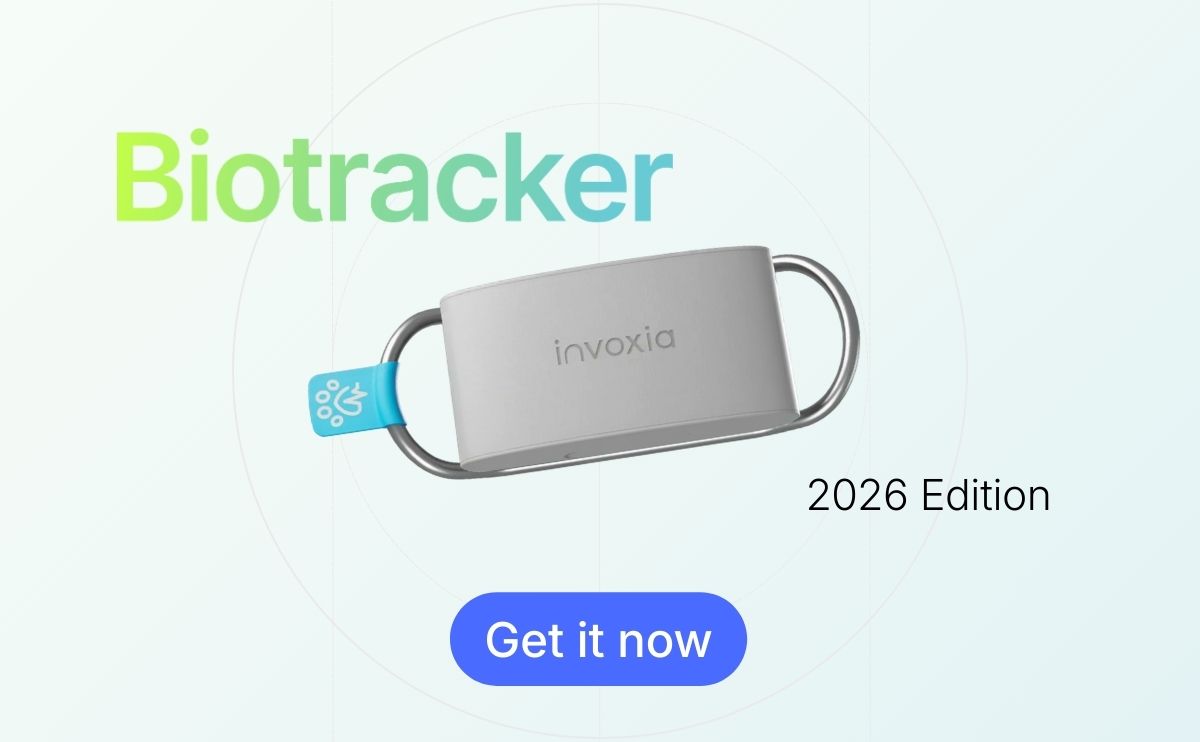
Worn on the collar, the Invoxia Biotracker allows you to track several health, activity, and well-being indicators of the dog in the app:
- resting heart rate;
- resting respiratory rate;
- heart rate variability, or HRV;
- sleep and rest;
- activity and behaviors;
- trend evolution over time;
- GPS location, depending on the chosen plan.
The longitudinal monitoring of resting heart and respiratory rates in the dog’s usual environment is also the subject of scientific work. An international study conducted with 703 dogs equipped with the Biotracker provided new reference data on the influence of age, weight, circadian rhythm, and season on these constants.
Learn More About Your Dog's Health
Track their health trends, sleep, activity, and location from a single app.
The Biotracker is a well-being tracking tool and does not constitute a medical diagnostic device. In case of unusual changes, suspected pain, respiratory difficulty, lethargy, or any other concerning symptoms, quickly contact a veterinarian. Never start, stop, or modify treatment without their advice.
This testimony recounts the personal experience of Jen and her dog Takoda. The results and uses described are specific to them and do not guarantee an identical experience for every dog.