

When temperatures rise, dogs don’t experience heat like we do. They sweat very little, mainly through their paw pads, and primarily regulate their temperature by panting. As a result, a walk that’s a bit too long, a scorching ground, an unplanned trip, or an overly intense play session can quickly become exhausting or even dangerous.
The good news is that with a few simple habits, it’s possible to help your dog better withstand the heat, while still enjoying the summer together.
If you’re also preparing for an upcoming trip, you can complement these tips with our complete guide to going on vacation with your dog and our checklist before going on vacation with your dog.
Hotter Summers: Why We Need to Change Our Habits with Our Dogs #
Protecting your dog from the heat is no longer just a reflex to adopt during a few days of heatwave. It’s a habit that will become increasingly important in the coming years.
Episodes of extreme heat are already more frequent, longer, and more intense due to climate change. The IPCC indicates that warming leads to an increase in the frequency and intensity of hot extremes, while cold extremes decrease.
In Europe, this trend is particularly visible. Copernicus indicates that Europe is the fastest-warming continent, with warming about twice as fast as the global average since the 1980s.
For dogs, this means that the “good summer habits” should no longer be reserved for vacations or exceptionally hot days. Earlier walks, shorter outings, pavement testing, hydration, shade breaks, and recovery monitoring: these actions will become a true prevention routine.
It’s even more important because dogs don’t always clearly show that they’re starting to suffer from the heat. Some slow down, while others continue to play or run despite the discomfort. By better observing their behavior, sleep, activity level, and signs of fatigue, we can adapt their daily routine before the heat becomes a risk.
Why Do Dogs Tolerate Heat Less Well? #
Unlike humans, dogs cannot effectively dissipate heat through sweating. Their main cooling mechanism is panting, which becomes less effective when the air is very hot, humid, or when the dog exerts itself for a prolonged period.
Some dogs are also more sensitive than others: puppies, older dogs, overweight dogs, brachycephalic breeds like bulldogs or pugs, dogs with heart, respiratory, or convalescent conditions need to be particularly monitored. Heatstroke in dogs can progress rapidly and requires immediate attention.
Heat should be taken seriously, even if your dog “seems fine.” A dog can continue to walk, run, or play while already starting to overheat.
1. Adjust Walk Times #
In summer, the best reflex is often the simplest: go out early in the morning or late in the evening, when the air and ground have had time to cool down.
Avoid long walks during the hottest hours, especially between late morning and late afternoon. Even if your dog demands their usual walk, it’s better to shorten the outing or replace the activity with a calm indoor occupation.
During periods of extreme heat, think “useful outing” rather than “long walk.” A short hygiene outing in the shade may suffice.
If you need to travel with your dog, organization is even more important: departure times, regular breaks, access to water, reasonable air conditioning, parking in the shade.
2. Do the Pavement Test Before Each Outing #
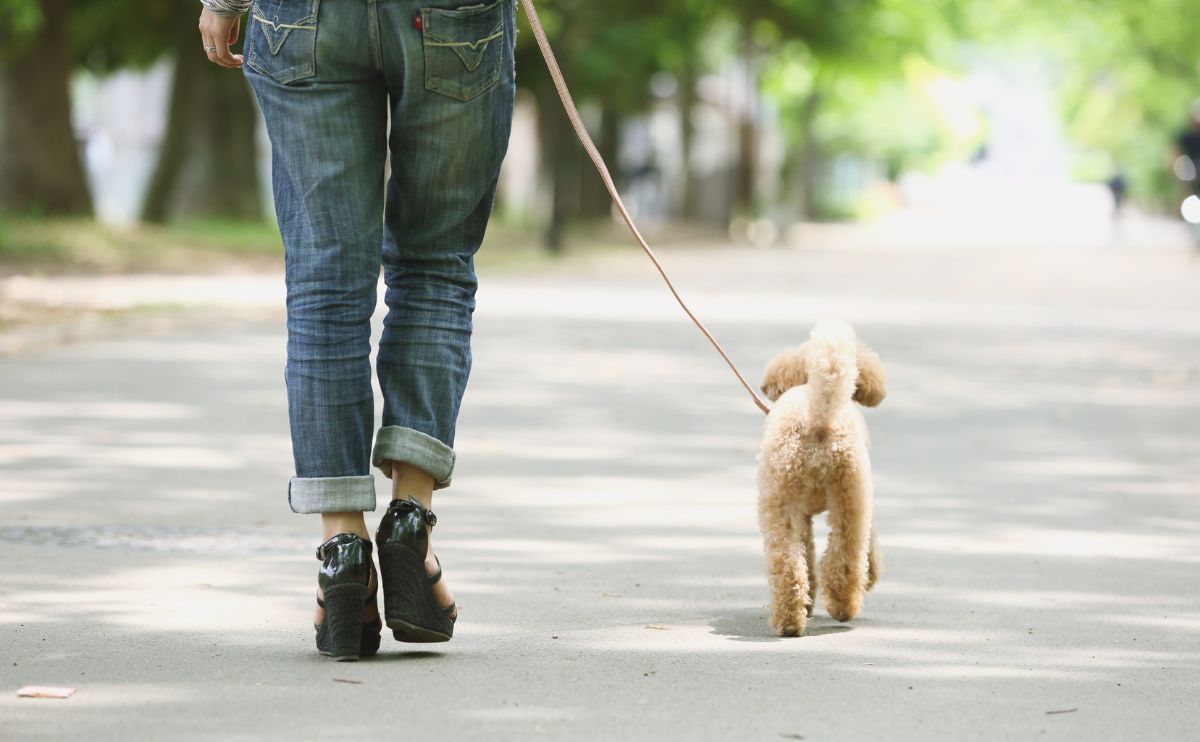
Asphalt, concrete, sand, or metal surfaces can become much hotter than the ambient air. Before letting your dog walk on the sidewalk, place your hand on the ground for 5 seconds. If it’s too hot for you, it’s too hot for their paw pads.
The RSPCA recommends this simple test: if the ground is too hot for your hand, it’s too hot for your dog’s paws. If you can’t withstand 5 seconds of contact with the ground, forget about walking there! Asphalt, sidewalks, and sand can cause painful burns to paw pads.
Prefer:
- shaded paths;
- grass;
- parks;
- wooded areas;
- very short outings if the ground is still hot
If you must walk on a hot surface, suitable booties can help limit direct contact, provided your dog tolerates them well.
3. Always Bring Water, Even for a Short Outing #
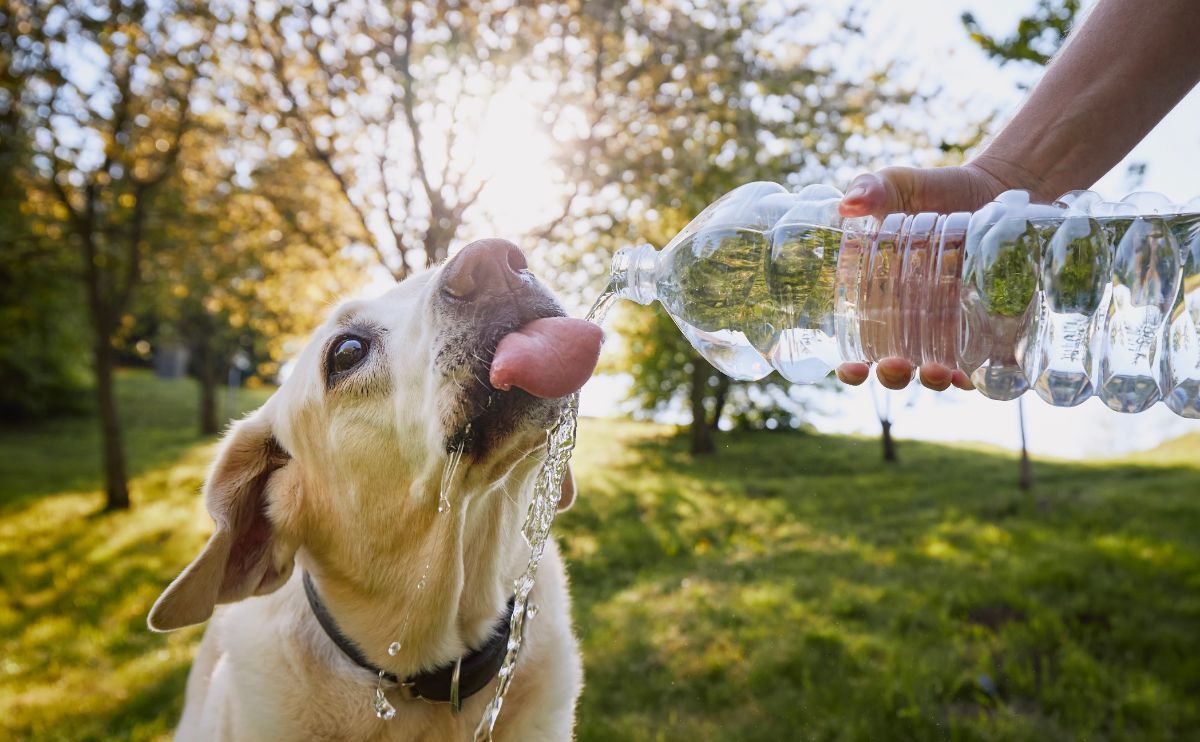
In summer, water should become automatic. Even for a 15-minute walk, take a water bottle and a collapsible bowl. Offer small amounts of water regularly, without waiting for your dog to seem exhausted.
At home, always leave several accessible water points, especially if you have a garden, an upper floor, or multiple rooms. The water should be clean, fresh, but not ice-cold.
4. Create Cool Zones at Home #
During hot days, your dog should be able to choose where to settle. Some prefer tiles, others a dark room, a cooling mat, or a ventilated corner.
You can help by:
- closing shutters during the hottest hours;
- airing early in the morning and late in the evening;
- allowing access to a cool room;
- using a cooling mat;
- avoiding placing their bed in direct sunlight;
- installing a fan without directing it continuously on them
The goal is not to cool them down abruptly, but to offer them several comfortable options. If your dog often changes rooms, lies on the tiles, or seeks dark corners, they may simply be trying to better regulate their temperature.
5. Reduce the Intensity of Play #
A dog can continue to play even when they start to overheat. This is especially true for very active dogs, young dogs, herding dogs, sports dogs, or those who love to chase a ball.
In summer, replace intense games with calmer activities:
- licking mats;
- search games;
- chewing;
- hidden treats;
- mini training sessions indoors;
- occupational toys
The goal is to stimulate them mentally without unnecessarily raising their body temperature.
And if your dog is naturally stressed by changes in routine, trips, or vacations, the heat can exacerbate their discomfort. You can find our tips in the article managing dog stress while traveling.
6. Never, Ever Leave Your Dog in a Car #
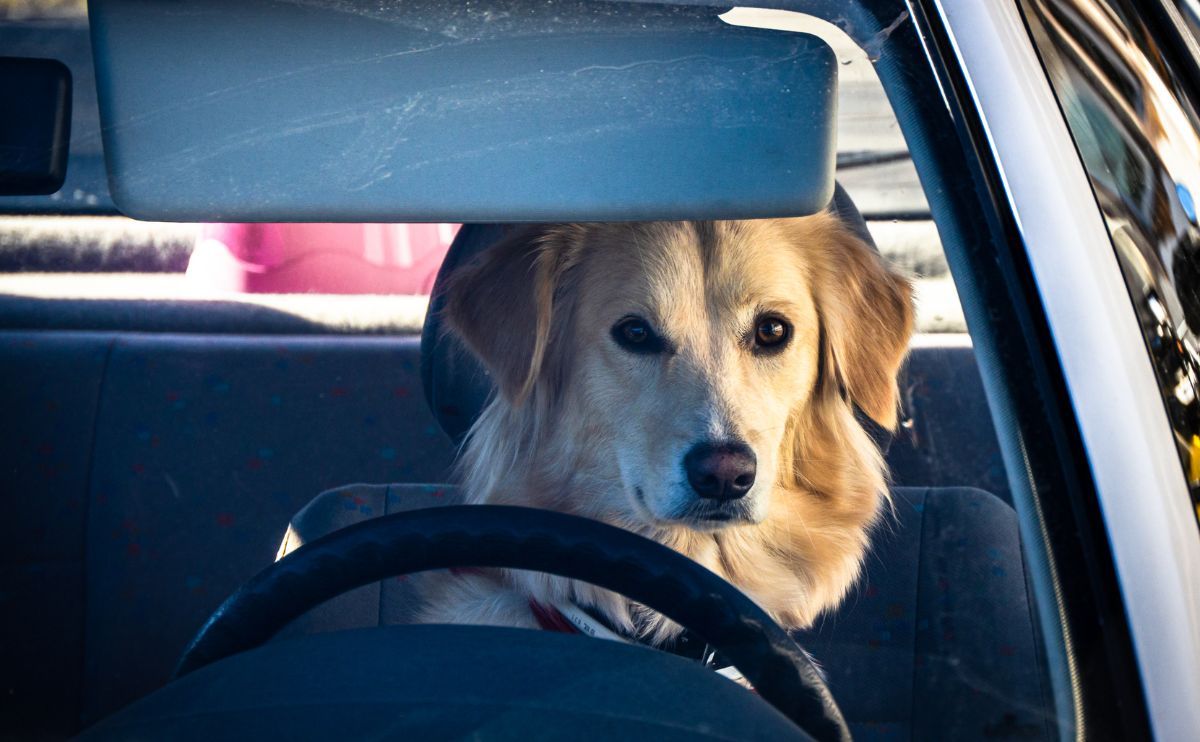
Even a few minutes can be dangerous. A car can heat up very quickly, even in the shade or with the windows slightly open. During hot periods, the rule is simple: never leave your dog alone in a car.
If you need to run an errand, leave your dog at home. If you’re traveling with them, plan for breaks, shade, water, and ventilation. Also, avoid trips during the hottest hours, especially if your dog is elderly, sick, stressed, or brachycephalic.
7. Cool Down Without Causing Thermal Shock #
To help your dog cool down, you can moisten certain areas with cool, but not ice-cold, water: paws, belly, inner thighs, or chest.
Avoid ice baths or abrupt temperature changes. In case of suspected heatstroke, act quickly, move the dog to a cool place, start gradual cooling, offer small amounts of water, and contact a veterinarian.
You can also use:
- a damp towel;
- a cooling mat;
- a ventilated room;
- access to shade;
- a shallow pool if your dog likes water.
8. Monitor Warning Signs #
Heat can become dangerous if your dog can no longer regulate themselves. Some signs should prompt you to stop the activity immediately and seek help.
Signs to watch for:
- very intense panting;
- excessive drooling;
- unusual fatigue;
- unstable gait;
- agitation or confusion;
- very red gums;
- vomiting;
- refusal to move;
- weakness or malaise.
In case of doubt, it’s better to contact a veterinarian quickly. Some signs can also be confused with other health issues. To better identify them, consult our guide on symptoms to know in dogs.
9. Consider Your Dog’s Profile #
Not all dogs react the same to heat. A very active young border collie, a bulldog, a senior dog, or a dog with heart issues won’t have the same recovery abilities.
Be even more vigilant if your dog:
- is elderly;
- is overweight;
- has a flat muzzle;
- has a heart or respiratory condition;
- is recovering from surgery;
- is on medication;
- has previously struggled with heat;
- is very excitable on walks;
- has a very dense coat.
The most vulnerable dogs may need their routine completely adapted during the summer: very short outings, shifted schedules, reduced activity, increased monitoring, and rest in a cool room.
10. Use Well-being Data to Better Understand Your Dog #
Heat isn’t always immediately visible. Some dogs slow down, while others continue to run despite the discomfort. This is where well-being tracking can become a real daily guide.
With the Invoxia Biotracker, you can track indicators like activity, sleep, resting heart rate, or resting respiratory rate. These data don’t replace veterinary advice, but they can help you better spot habit changes, recovery drops, or periods when your dog seems less able to handle their environment.
In summer, this can be particularly useful for:
- comparing their activity level from day to day;
- spotting poorer recovery after a hot day;
- tracking their sleep during heatwaves;
- keeping an eye on their rest data;
- adjusting walks according to their actual condition.
To better understand the importance of resting tracking, you can also read our article dedicated to heart rate variability in dogs.

Common Mistakes to Avoid When It’s Hot #
Even with good intentions, some habits can put a dog in difficulty.
To avoid:
- maintaining the long daily walk “as usual”;
- making your dog run alongside a bike;
- throwing the ball in direct sunlight;
- walking long on asphalt;
- leaving the dog in the car;
- waiting for them to stop on their own;
- using ice water in case of discomfort;
- underestimating humidity;
- believing a very sporty dog is at no risk;
- forgetting that the ground can remain hot even when the air starts to cool.
In summer, it’s always better to prioritize prevention. Skipping a walk is not a problem. Forcing an outing when it’s too hot can become one.
FAQ: Dog and Heat #
How do I know if my dog is too hot? #
A dog that’s too hot may pant heavily, slow down, drool more than usual, seek shade, refuse to move, or seem disoriented. If the signs worsen, stop the activity, place them in a cool area, and contact a veterinarian.
Is it serious not to walk your dog when it’s very hot? #
No. During extreme heat, it’s sometimes safer to replace a long walk with a very short outing and calm activities at home. Safety comes before routine.
What time should I walk my dog in summer? #
The ideal is to go out early in the morning or late in the evening when the air and ground are cooler. Avoid the hottest hours of the day, especially late morning and afternoon.
How can I protect my dog’s paw pads? #
Do the hand test on the ground for 5 seconds. If the ground is too hot for your hand, it’s also too hot for their paw pads. Prefer grass, shade, short outings, or suitable booties if necessary.
Can you wet your dog when it’s hot? #
Yes, but with cool, not ice-cold, water. You can moisten the paws, belly, or chest to help them cool down gradually.
Which dogs are most sensitive to heat? #
Puppies, older dogs, overweight dogs, brachycephalic dogs, dogs with heart, respiratory, or convalescent conditions are more vulnerable to high temperatures.
Why does my dog sleep more when it’s hot? #
Heat can increase fatigue and reduce the desire to move. If your dog sleeps more but remains alert, eats, drinks, and behaves normally, it may simply be an adaptation to the temperature. However, sudden fatigue, intense panting, weakness, or unusual behavior should alert you.
In Summary: The Best Reflexes to Help Your Dog Cope with Heat #
To protect your dog in summer, remember these reflexes: go out during cool hours, avoid hot asphalt, always bring water, reduce play intensity, create cool zones at home, and monitor unusual signs.
With increasingly hot summers, these actions are no longer just occasional advice: they become a true prevention routine. Each dog has their own heat tolerance. By observing their behavior, adjusting their outings, and tracking their well-being data with the Biotracker, you can help them have a more comfortable, safer, and more serene summer.