

Dog Microchip: How It Works, What It Does, and Why It’s Not a GPS Tracker #
“My dog is microchipped, so I can track them if they run away.”
It’s one of the most common misunderstandings among dog parents.
In reality, a dog microchip does not let you locate your dog in real time. It is a permanent form of identification that contains a unique ID number linked to your contact details in a pet microchip registry.
That makes it extremely useful if your dog is found by a veterinarian, animal shelter, rescue organization, or animal control officer.
But a microchip does not work like a GPS tracker. It does not send a signal, show your dog’s position on a map, or alert you when your dog leaves home. To follow your dog’s location in real time, you need a GPS dog tracker.
In this guide, we’ll explain what a dog microchip is, how it works, what it can and cannot do, why it remains essential, and how to combine it with a GPS tracker to better protect your dog in case they get lost.
Track my dog in real time with Biotracker
What is a dog microchip? #
A dog microchip is a tiny electronic transponder implanted under your dog’s skin, usually between the shoulder blades. It is about the size of a grain of rice and contains a unique identification number.
That number is connected to your contact details through a pet microchip registry. If your dog is found, a vet clinic, shelter, rescue group, or animal control team can scan the chip and use the ID number to help identify your dog and contact you.
In other words, a microchip answers one essential question: who does this dog belong to?
It does not answer another very important question: where is my dog right now?
That’s the difference many dog owners miss when comparing a microchip, ID tag, AirTag, and GPS dog tracker.
How does a dog microchip work? #
A microchip is a passive device. It does not contain:
- a battery;
- GPS technology;
- a SIM card;
- a real-time location system;
- an active transmitter.
It only works when a specific scanner is passed close to your dog’s skin. This scanner can read the microchip’s unique ID number.
The person scanning the chip can then use that number to look up the associated microchip registry and find the owner’s contact details, provided the microchip has been properly registered and the information is up to date.
A microchip is therefore very useful once your dog has been found by someone. However, it does not allow you to follow your dog remotely.
Is microchipping mandatory for dogs in the United States? #
In the United States, dog microchipping rules can vary depending on the state, city, shelter, rescue organization, airline, or travel situation. There is no single federal rule requiring every owned dog in the U.S. to be microchipped in all circumstances.
That said, microchipping is widely recommended by veterinarians and animal welfare organizations because it greatly improves the chances of reuniting lost dogs with their families.
It can also be required in specific situations, including some adoption processes, local regulations, or international travel. If you are bringing a dog into the United States, always check the current CDC and USDA requirements before traveling, as dog import rules may include identification and documentation requirements.
You can read more from the American Veterinary Medical Association’s microchipping FAQ and the CDC’s guidance for bringing dogs into the United States.
A microchip is not a GPS tracker, but it remains one of the most important ways to identify your dog if they are found.
Is a microchip useful for traveling with your dog? #
Yes. If you travel internationally with your dog, microchipping is often part of the required documentation process.
Rules vary depending on the destination country, your dog’s vaccination status, and whether you are entering or returning to the United States. For example, the CDC requires dog owners to follow specific import rules when bringing dogs into the U.S., and the USDA also provides pet travel information for privately owned dogs.
Before traveling, always check:
- whether your dog’s microchip is readable;
- whether the microchip number matches your documents;
- whether your dog’s rabies vaccination records are valid;
- whether the destination country has specific entry requirements;
- whether you need health certificates or additional paperwork;
- whether your contact details in the microchip registry are up to date.
You can check current requirements on the CDC dog import page and the USDA APHIS pet travel page.
Who implants a dog microchip? #
A dog microchip is implanted by a veterinarian or another qualified professional, depending on local rules and available services.
The procedure is quick and usually done during a routine appointment. The microchip is inserted under the skin using a special applicator. Once implanted, the chip typically stays in place for your dog’s lifetime.
After the chip is placed, it must be registered with your current contact information. This step is essential. A microchip that is not registered, or that is linked to outdated contact details, is much less useful if your dog gets lost.
Does microchipping hurt a dog? #
Microchipping is generally quick. It may cause brief discomfort, similar to an injection, but it does not require ongoing maintenance once implanted.
If you adopt a dog who is already microchipped, you usually do not need to have another microchip implanted. What matters most is making sure the registration has been transferred to you and that your contact details are correct.
How much does a dog microchip cost? #
The cost of microchipping a dog can vary depending on the vet clinic, shelter, rescue organization, location, and whether registration is included.
Some shelters and animal welfare organizations offer low-cost microchipping events. Veterinary clinics may include microchipping as part of a wellness visit, puppy appointment, or adoption package.
Even though the price can vary, microchipping is a small step that can make a big difference if your dog ever gets lost.
Can a dog microchip track location? #
No. This is the most important point to remember: a dog microchip cannot track your dog’s location.
A microchip cannot:
- show your dog’s position on a map;
- send a lost-dog alert;
- track your dog’s movements in real time;
- tell you which street or neighborhood your dog is in;
- work through a mobile app like a GPS tracker.
A microchip does not “track” your dog. It only identifies them when scanned with a compatible reader.
If your dog runs away, the microchip will not tell you where they went. It can only help someone contact you after your dog has been found, scanned, and matched to your registry information.
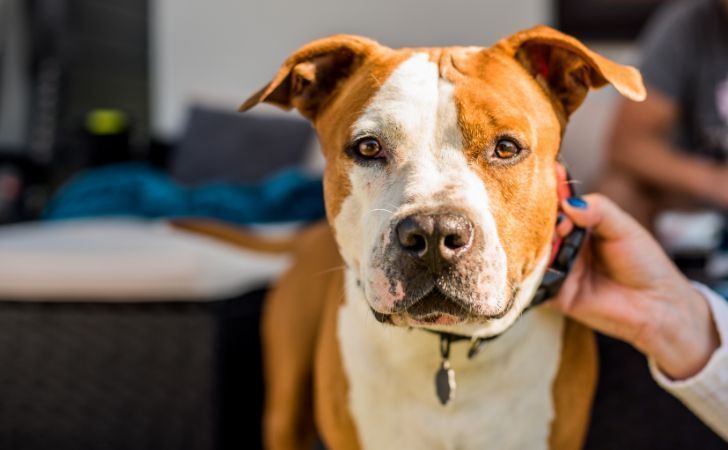
Why do people search for a “GPS microchip for dogs”? #
Many dog owners search for a GPS microchip for dogs because they imagine an implanted chip that can locate a pet in real time.
But that is not how pet microchips work.
An implanted microchip is passive: it is used for identification.
A GPS tracker is active: it attaches to your dog’s collar, uses a battery, receives location data, and sends that information to an app.
So the idea of an implanted GPS microchip for dogs is usually a misunderstanding between two very different technologies:
- the microchip, implanted under the skin, used for identification;
- the GPS tracker, worn on the collar, used for location tracking.
If your goal is to find your dog quickly if they run away, a GPS tracker is what you need in addition to a microchip.
What should I do if my microchipped dog gets lost? #
If your dog is lost, the microchip can help identify them, but it will not locate them for you. You need to act quickly.
You should:
- report your dog missing to the microchip registry;
- make sure your contact details are up to date;
- contact local shelters, veterinarians, rescue groups, and animal control;
- notify neighbors and people in the area where your dog disappeared;
- share a recent photo of your dog on local lost-pet groups;
- keep checking the area where your dog was last seen, especially if they are nervous or newly adopted.
The AVMA also recommends keeping your microchip registration information current and checking that the microchip can still be read during routine veterinary visits. You can find more information in the AVMA microchipping FAQ.
If your dog is wearing a GPS tracker, you can also open the app, check their location, and start looking for them immediately instead of waiting for someone else to find them.
This is where the difference between identification and location tracking becomes essential.
Why should you keep microchip contact details up to date? #
A microchip is only useful if the information connected to it is accurate.
If your dog is found but your phone number, email address, or home address is outdated, it may be much harder for a shelter, vet clinic, or animal control officer to reach you.
Update your microchip registry information whenever you:
- move;
- change phone numbers;
- change email addresses;
- transfer ownership;
- adopt a dog already registered to someone else.
It is a simple step, but an important one. A microchip linked to old contact details loses much of its value.
Microchip, ID tag, and GPS tracker: three different layers of protection #
The best way to protect your dog from getting lost is to combine several layers of safety.
A microchip provides permanent identification if your dog is found and scanned.
An ID tag makes it easy for a neighbor or passerby to call you immediately, without a scanner.
A GPS dog tracker lets you locate your dog yourself, in real time, as soon as they move away or leave a safe zone.
These solutions do not replace each other. They work together.
The microchip supports official identification. The ID tag enables quick human contact. The GPS tracker helps you act fast.
GPS dog tracker: the solution for real-time location #
Unlike a microchip, a GPS tracker is an active device. It attaches to your dog’s collar and sends location data to a mobile app.
With a GPS dog tracker, you can usually:
- see your dog’s position on a map;
- receive alerts if they leave a safe zone;
- start live tracking if they run away;
- check their route history;
- better understand their daily movements.
The Invoxia Biotracker goes beyond a standard GPS dog tracker. It helps you follow your dog’s location, but also several well-being insights that can help you better understand their habits.
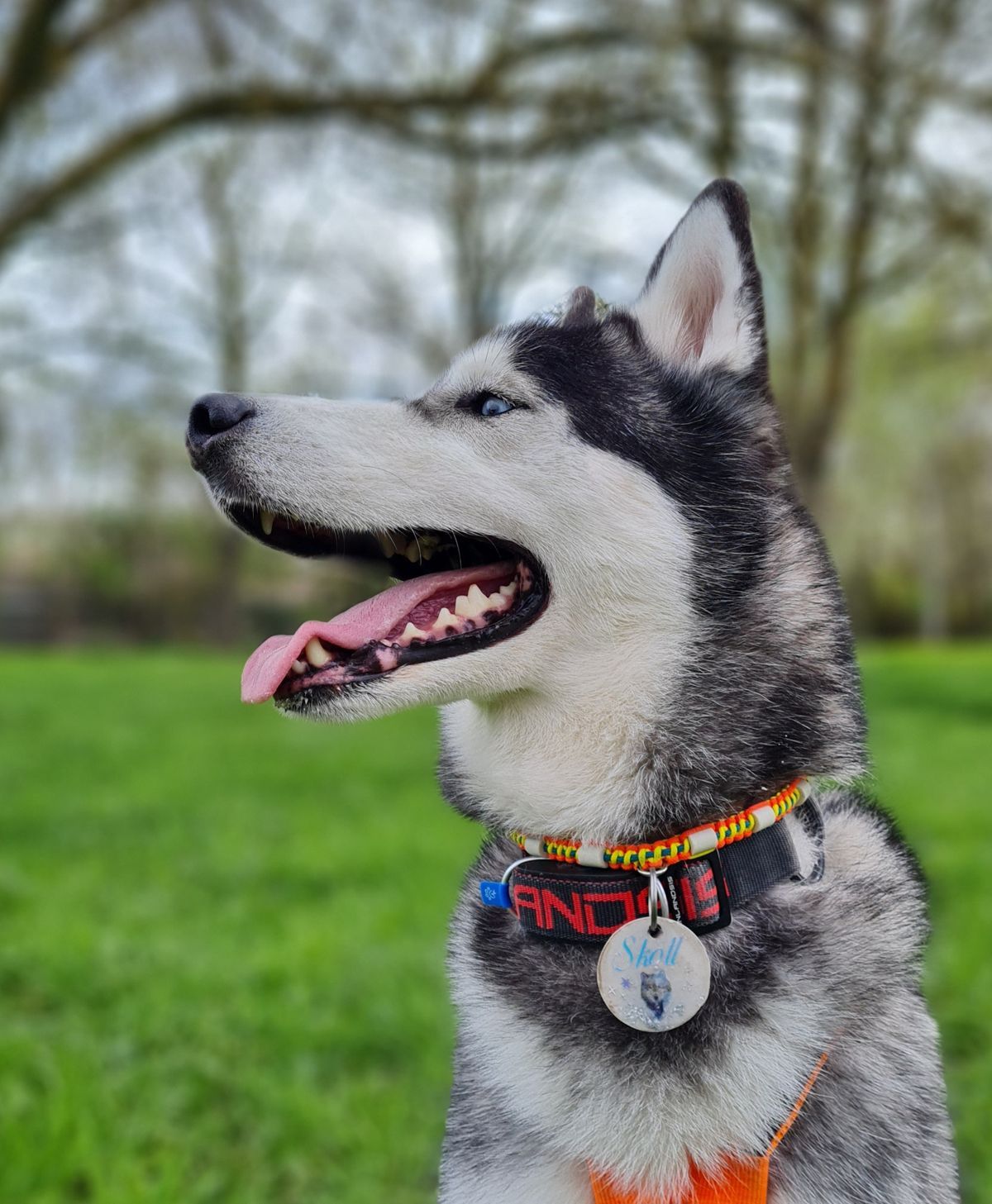
Dog microchip vs GPS tracker: comparison table #
| Feature | Dog microchip | Invoxia Biotracker GPS |
|---|---|---|
| Permanent identification | Yes | No |
| Real-time location | No | Yes |
| Position on a map | No | Yes |
| Escape alerts | No | Yes |
| Safe zones | No | Yes |
| Live tracking | No | Yes |
| Route history | No | Yes |
| Works without someone else finding your dog | No | Yes |
| Commonly recommended for lost-pet recovery | Yes | Yes |
| Requires battery charging | No | Yes |
| Implanted under the skin | Yes | No |
| Attached to the collar | No | Yes |
| Health and activity insights | No | Yes |
The conclusion is simple: a microchip identifies, a GPS tracker locates.
A microchip is essential, but it does not replace a GPS tracker if you want to actively find your dog in case they run away.
What about an AirTag for dogs? #
An AirTag or another Bluetooth item finder may seem convenient, but it is not a true GPS dog tracker.
It relies on nearby compatible devices to help update location. It was not designed specifically to track a moving pet, especially in rural areas, forests, mountains, or places with fewer people nearby.
An AirTag may help in some urban situations, but it does not offer the same level of tracking as a dedicated GPS tracker:
- no true GPS live tracking;
- no dog-specific escape alerts;
- dependence on nearby compatible devices;
- variable accuracy depending on the environment.
To better understand the differences, read our comparison: AirTag for dogs vs Invoxia Biotracker.
Why combine a microchip and GPS tracker? #
A microchip and a GPS tracker solve different problems.
A microchip is essential if your dog is found and taken to a shelter, vet clinic, or animal control. It helps identify your dog and connect them to you.
A GPS tracker helps before that happens. It lets you look for your dog immediately as soon as you notice they have moved away.
This is especially useful for:
- dogs who tend to escape;
- nervous dogs or recently adopted dogs;
- dogs who panic during thunderstorms or fireworks;
- dogs traveling in unfamiliar places;
- hunting dogs or highly adventurous dogs;
- dogs living near roads, forests, or open land.
If your dog is already microchipped, that’s excellent. But it does not mean you can locate them in real time if they disappear.
For more advice, read our guide on how to find a lost dog and our article about dog breeds that are more likely to run away.
Beyond location: Biotracker also helps monitor well-being #
A modern GPS tracker can do more than show your dog’s location. The Invoxia Biotracker also provides activity and well-being insights.
It can help you follow:
- heart rate;
- respiratory rate;
- daily activity;
- walking, running, playing, and resting periods;
- barking;
- sleep;
- daily and weekly reports.
These insights do not replace your observations or your veterinarian’s advice. But they can help you notice changes in your dog’s habits more easily.
For example, lower activity, less stable sleep, or changes in breathing patterns can be useful signals to monitor, especially for senior dogs, recovering dogs, or dogs followed for a health condition.
Discover the Invoxia Biotracker
Should you choose a microchip, ID tag, or GPS tracker? #
You do not really need to choose between them, because they each play a different role.
If you want permanent identification, your dog should be microchipped.
If you want someone nearby to contact you quickly, an ID tag is still very useful.
If you want to locate your dog yourself, receive alerts, and act immediately if they run away, you need a GPS dog tracker.
The best protection is simple: microchip + ID tag + GPS tracker.
Summary: a dog microchip does not replace a GPS tracker #
A dog microchip is essential for identification. It is permanent, reliable, and extremely useful if your dog is found by someone else.
But it does not tell you where your dog is.
To locate your dog in real time, follow their movements, or receive an escape alert, you need a dedicated GPS tracker.
The microchip protects your dog’s identity. The GPS tracker helps protect their safety day to day. Together, they offer more complete protection.
FAQ: dog microchip #
Can a dog microchip track location? #
No. A dog microchip only identifies your dog through a unique ID number. It does not contain GPS, does not send a signal, and cannot show your dog’s position on a map. To locate your dog in real time, you need a GPS dog tracker.
My dog is microchipped. Can I find them if they run away? #
A microchip can help someone contact you if your dog is found and scanned by a vet clinic, shelter, rescue group, or animal control. But it will not show you where your dog is while they are missing.
Is there such a thing as an implanted GPS microchip for dogs? #
A standard implanted dog microchip is not a GPS device. It is passive and used for identification. To track your dog’s location, you need a GPS tracker attached to the collar or harness.
Is microchipping required for dogs in the United States? #
There is no single federal rule requiring every owned dog in the U.S. to be microchipped in all circumstances. Requirements can vary by location, adoption process, and travel situation. However, microchipping is widely recommended and may be required for certain travel or import situations.
Who can scan a dog microchip? #
A dog microchip can be scanned by many vet clinics, shelters, rescues, and animal control teams. The scanner reads the microchip number, which can then be used to look up the associated registry.
Does a microchip need to be charged? #
No. A dog microchip has no battery. It is passive and only responds when scanned by a compatible reader.
What should I do if my microchip contact details are outdated? #
Update them as soon as possible with the microchip registry. If your dog gets lost, your current contact details are what allow someone to reach you.
Can an AirTag replace a microchip? #
No. An AirTag is not official identification and does not replace a microchip. It also does not replace a true GPS dog tracker, because it relies on nearby compatible devices rather than dedicated GPS tracking.
What is the best way to avoid losing a dog? #
The best protection is to combine a microchip for permanent identification, an ID tag for quick contact, and a GPS tracker for real-time location.