

Updated on August 5, 2026
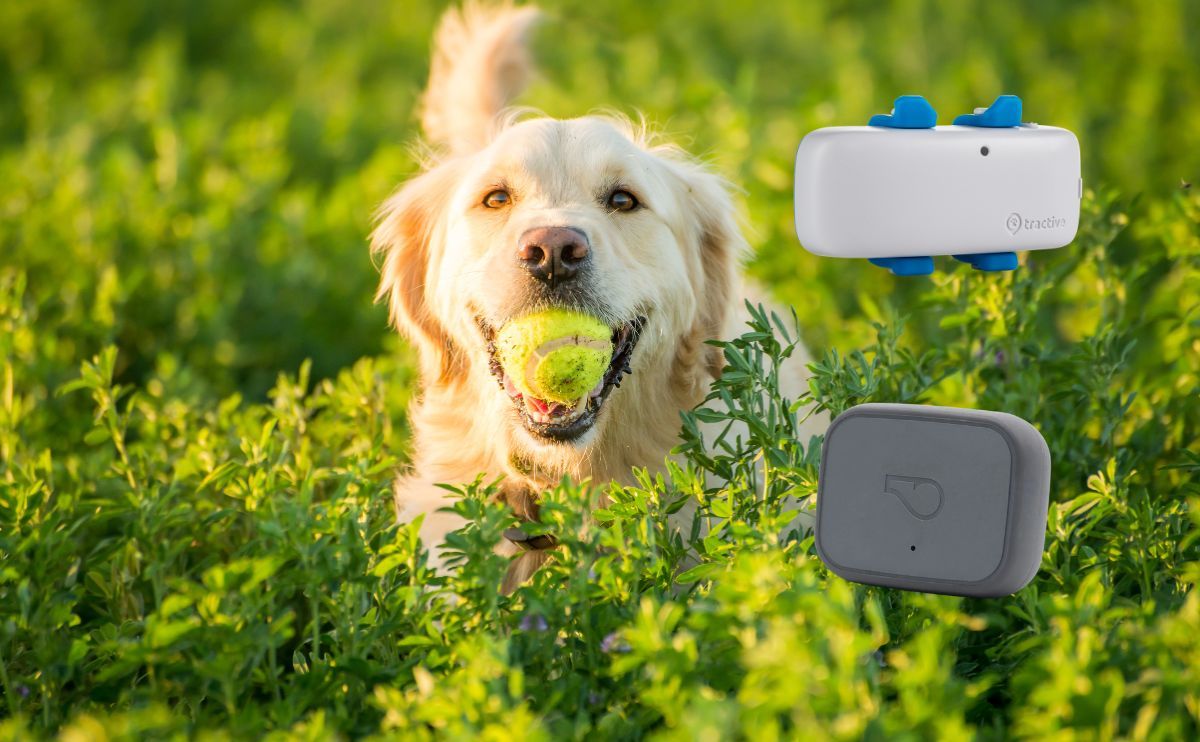
If you use a GPS tracker or a connected collar for your dog, you may have seen the news: Tractive has acquired Whistle, one of the historical brands in the sector in the United States. An operation that reshapes the map of the “pet tech” market — and that prompts many dog owners to wonder if their current tracker will continue to work, and especially, what really exists outside of this duopoly.
We’ll explain what happened, what it concretely implies, and why at Invoxia we made very different design choices with the Biotracker.
What happened #
The Austrian company Tractive, specialized in GPS for dogs and cats and which recently added some health indicators to its devices, announced the acquisition of Whistle, the brand of connected trackers previously owned by Mars Petcare. The operation was finalized at the end of July 2025.
Whistle, founded in 2012, was considered one of the pioneers in the sector in the United States, with products like the Whistle Go Explore or the Whistle Fit. Since 2013, the two brands had developed in parallel on two continents: Tractive in Europe, Whistle in the United States. Their merger ends a decade of direct competition between two of the historical players in the sector.
Direct consequence for dog owners equipped with a Whistle: the devices stopped working at the end of August 2025. Users had until the end of September 2025 to request a replacement tracker from Tractive, with a transfer of their prepaid subscription months and, for some, free service months during the transition.
A market in full consolidation #
This acquisition does not come out of nowhere: it illustrates a fundamental dynamic of the connected objects sector for animals. The global “pet wearables” market is estimated at several billion euros in 2026, with double-digit growth forecasts for the coming years, driven by the increasing humanization of pets and the demand for preventive health monitoring.
In this context, several underlying trends emerge:
- Health tracking is progressing faster than pure GPS. The diagnostic and medical monitoring segment shows significantly higher growth than the historical localization segment, indicating that owners’ expectations are evolving.
- Dogs remain the main driver of the market, far ahead of cats, which explains the intensity of competition in this specific segment.
- Acquisitions and mergers are multiplying. After years of fragmentation among many small brands, the sector is entering a phase of consolidation where a few players are seeking to reach a critical size — at the risk, for users, of having to change ecosystems overnight if their brand is absorbed or abandoned.
What it concretely changes for you #
If you had a Whistle collar, the question no longer really arises: the brand has disappeared and the devices are out of service. But even if you were not directly affected, this news says a lot about the direction the connected objects market for animals is taking:
- Market consolidation. Two historical players are now one, reducing the number of independent choices available.
- Dependence on an ecosystem. When a tracker brand disappears or changes hands, it is the users who inherit the migration — change of app, account, sometimes equipment.
- A focus that remains centered on localization. Historically, both Tractive and Whistle were first built as GPS trackers, before adding health functions.
It is this last point that particularly interests us at Invoxia, because it is where the Biotracker made a different choice from the start.
Why the Biotracker takes the problem the other way around #
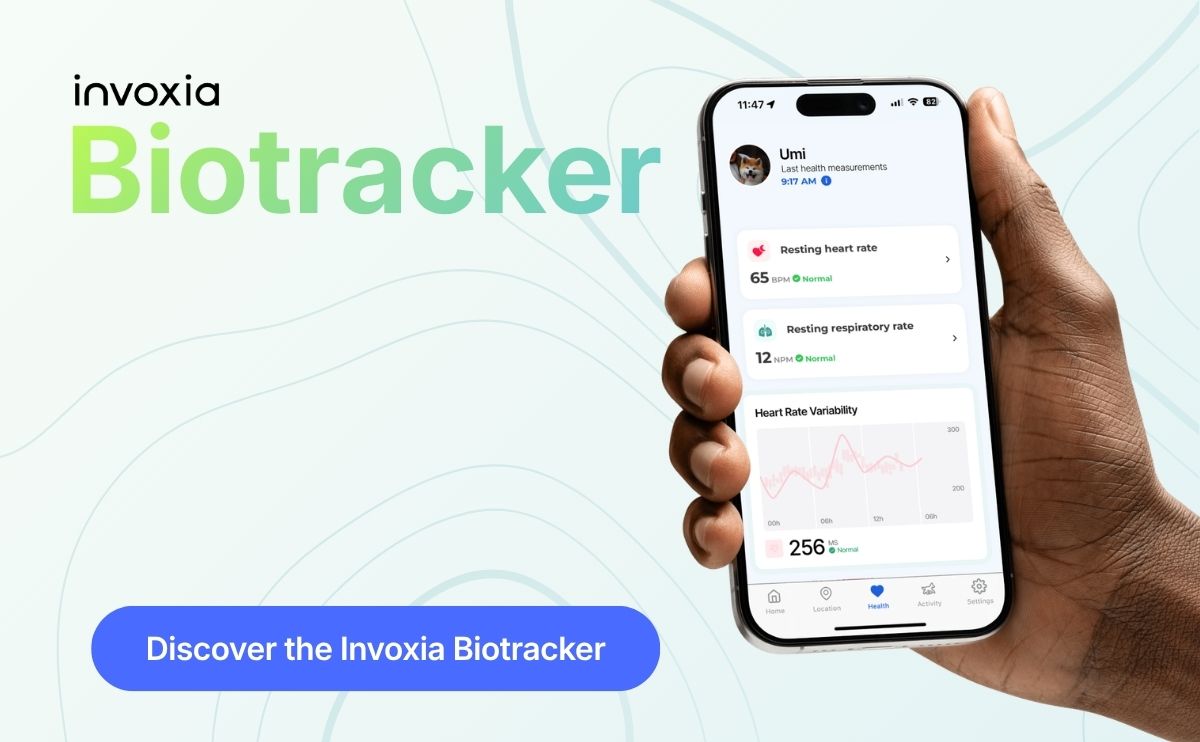
The Biotracker was not designed as “a GPS with added health tracking.” It was conceived as the first health collar for dogs, with integrated GPS — meaning that continuous physiological monitoring (activity, sleep, heart rate, respiratory rate) is at the heart of the product, and localization comes as a complement.
Concretely, this translates into:
- A daily sleep score, which allows you to spot restless nights or gradual changes long before a visible symptom appears.
- Continuous cardio-respiratory monitoring at rest, to obtain reliable and comparable measurements over time rather than values distorted by effort or stress.
- Health data that accumulates over time, to provide a real trend and not just a snapshot.
But the real difference doesn’t stop there. The Biotracker was built with four assets that are not found elsewhere on the market, including among GPS-first players.
1. Detection of atrial fibrillation (AFib) risk #
Thanks to its exclusive Heartprint™ technology, the Biotracker creates a unique cardiac signature for each dog — a visual imprint of the beats that allows for the detection of unusual changes in frequency and rhythm. The Biotracker is the only dog tracker in the world capable of detecting early signs of atrial fibrillation, even at an asymptomatic stage, with 92% detection sensitivity and 99% accuracy in heart rate measurement.
Heart diseases are among the leading causes of mortality in adult and senior dogs and often develop silently for several months before the first visible signs — hence the interest in continuous detection at home rather than occasional consultation.
2. A complete veterinary dashboard (Biotrack) #
The Biotracker is not just a tool for the owner: it feeds Biotrack, a telemonitoring platform designed for veterinary practice. The veterinarian finds alerts prioritized by AI, heart and respiratory rate curves, post-operative monitoring (early detection of edema, pain or immobility, respiratory decline), and chronic disease monitoring with objective trends between visits, rather than relying on the owner’s impressions. All curves and arrhythmia patterns can be exported in PDF and shared directly with the veterinarian, facilitating the dialogue between home monitoring and professional care.
3. Scientific studies that validate (and use) the Biotracker #
The Biotracker is based on clinical research conducted by Prof. Valérie Chetboul, veterinary cardiologist at the National Veterinary School of Alfort, in connection with Inserm — a study conducted on several hundred dogs monitored directly at home, in their real living conditions. Published in Frontiers in Veterinary Science, it notably showed that a progressive increase in resting heart rate could be detected several weeks before the appearance of the first respiratory signs of pulmonary edema related to heart failure — we tell you about this study in detail in our article on dog heart rate and this groundbreaking study.
The product development is also supervised by a scientific council including researchers from Cornell University and the University of Washington, specialists in veterinary cardiology and canine longevity. A rare level of scientific validation for a consumer connected object.
4. Ask Your Dog: a chatbot to interact with your dog’s data #
The Biotracker sends you an automatic daily report at 8 p.m., summarizing in natural language your dog’s sleep, activity, and constants. Ask Your Dog goes further: it’s a chatbot that allows you to ask specific questions about your dog, at any time, based directly on their health and activity data — a bit like being able to query a health record that answers you. The principle is not to translate barks, but to translate data, so that the owner can delve into a specific point without having to interpret curves themselves.
This positioning is not anecdotal in the current context: as the market consolidates around a few GPS-first players, having made the opposite choice from the design — health first, localization second — becomes a real structural difference, not just marketing. It is this choice that has guided the product’s evolution to the Biotracker 2026 Edition, which pushes health monitoring even further while strengthening the localization part.
Why sleep is an underestimated health indicator #
Sleep is not just a moment of rest for a dog: it is also one of the rare moments when its body is stable enough to observe reliable constants. Veterinary medicine researchers point out that resting respiratory rate is an early indicator of certain cardiac and pulmonary pathologies, partly because dogs tend to mask their discomfort as long as they are awake and active.
Sleep is also a recognized marker of aging and cognitive decline in senior dogs: more frequent awakenings or more fragmented sleep are documented clinical signs, just as in humans. In other words, a dog that sleeps less well than before is not just “less fit”: it is often one of the very first measurable signals of a health change, long before a symptom becomes visible to the naked eye or in consultation.
This is precisely what the sleep score of the Biotracker seeks to capture: not an isolated value, but a trend over time, specific to each dog, that allows you to spot a change before it becomes a problem.
Biotracker vs Tractive/Whistle: the comparison at a glance #
| Historical approach (Tractive / Whistle) | Biotracker | |
|---|---|---|
| Originally designed for | Animal GPS localization | Continuous health monitoring of the dog |
| Sleep | Added as a complementary function | Daily score at the heart of the product |
| Cardio-respiratory | Recent function, complementing GPS | Continuous monitoring at rest, for reliable and comparable measurements over time |
| AFib detection | Not available | Only tracker in the world to detect atrial fibrillation risk (92% sensitivity) |
| Dedicated veterinary platform | No | Biotrack: AI-prioritized alerts, post-op and chronic disease monitoring, PDF export |
| Published scientific validation | Not communicated | Clinical study by Prof. Valérie Chetboul (National Veterinary School of Alfort / Inserm), published in Frontiers in Veterinary Science |
| Data restitution | Classic curves and alerts | Automatic daily report (8 p.m.) + Ask Your Dog chatbot for specific questions |
| Positioning | GPS tracker with health option | Health collar with integrated GPS |
This table does not say that a classic GPS tracker is useless — localization remains an essential and reassuring function. It mainly shows that two design philosophies coexist in the market, and that the choice depends on what you are looking for in priority: finding your dog, or understanding how it is doing.
Should you change trackers after this news? #
If your dog already wears a Biotracker, this news changes nothing for you: the device, the app, and the monitoring continue to function normally, independently of market movements.
If you are considering a change following the discontinuation of another device, the real question to ask yourself is not “which GPS to choose,” but “do I want a tool that tells me where my dog is, or a tool that also tells me how it is doing.” The Biotracker answers both, but starting from the latter.
Frequently Asked Questions #
Will my Whistle collar continue to work? No, Whistle trackers were deactivated at the end of August 2025 following the acquisition by Tractive. A migration to the Tractive platform was offered to affected users.
Is the Biotracker affected by this acquisition? No, Invoxia is an independent company, not related to Tractive or Whistle. The Biotracker continues to evolve according to its own product roadmap.
What is the real difference between a classic GPS tracker and the Biotracker? A classic GPS tracker focuses primarily on localization, sometimes with a few additional activity metrics. The Biotracker reverses the logic: it continuously monitors your dog’s sleep, heart rate, and breathing, with integrated GPS as a complement.
Is sleep monitoring reliable for detecting a health problem? The sleep score does not replace a veterinary diagnosis, but it allows you to spot trend changes over time (more restless nights, more frequent awakenings) that may warrant discussing with your veterinarian.
Why is the dog tracker market consolidating so much right now? The connected objects sector for animals is experiencing strong growth, driven by the demand for preventive health monitoring. This growth attracts acquisitions and mergers between brands, notably to reach a critical size in the American market.
What is the difference between a GPS for dogs and a health collar for dogs? A GPS for dogs primarily answers the question “where is my dog?” A health collar like the Biotracker also answers the question “how is my dog doing?” by continuously monitoring physiological indicators such as sleep, heart rate, and breathing.
Does the Biotracker also work as a GPS? Yes. The GPS is integrated into the Biotracker and allows you to locate your dog in real-time, but it complements health monitoring rather than being the sole argument.
Can the Biotracker really detect a heart problem? Yes. Thanks to its Heartprint™ technology, the Biotracker is the only dog tracker in the world to detect early signs of atrial fibrillation, even before symptoms appear, with 92% sensitivity. This data does not replace a veterinary diagnosis, but it allows you to spot a problem much earlier.
What is Biotrack, the platform for veterinarians? Biotrack is the professional dashboard associated with the Biotracker. It allows veterinarians to remotely monitor their patients with AI-prioritized alerts, heart and respiratory rate curves, post-operative monitoring, and chronic disease monitoring, with data exportable in PDF for consultations.
Is the Biotracker validated by scientific studies? Yes. It is based on a clinical study conducted by Prof. Valérie Chetboul (National Veterinary School of Alfort, in connection with Inserm), published in Frontiers in Veterinary Science, as well as a scientific council bringing together researchers from Cornell and the University of Washington.
What is the Ask Your Dog feature? Ask Your Dog is a chatbot that allows you to ask specific questions about your dog based on their real health and activity data. This is distinct from the daily report, which is automatically sent to you every day at 8 p.m. with a summary of your dog’s day.