

When looking for GPS in Europe, one question often comes first: “Will my GPS tracker work everywhere in Europe?”
In reality, the answer depends on two very different things.
First, there is positioning: the tracker needs to determine where it is using satellite signals. Then, there is communication: the tracker needs to send that location to your mobile app.
This second step is what makes the difference between a tracker that is genuinely useful in everyday life and a device that only works under certain conditions.
A GPS tracker for Europe should not only be able to “pick up GPS”. It also needs network coverage in Europe that matches the way you actually move: Spain, Germany, Belgium, Switzerland, Italy, Portugal, France, cross-border journeys, holidays, road trips or professional use.
At Invoxia, this question is central: a GPS tracker needs to protect your belongings in real life, not just on paper. That is why Invoxia GPS trackers combine location tracking, connectivity designed for connected objects and a mobile app, helping you keep track of a vehicle, bag, suitcase or piece of equipment depending on your needs.
GPS in Europe: location and network are not the same thing #
The word “GPS” is often used to describe anything that tracks a position. But in practice, a tracker relies on three different layers.
| Element | Role | Example |
|---|---|---|
| GPS, Galileo or GNSS satellites | Allow the tracker to calculate its position | The tracker knows it is on a street, on a road or near a car park |
| Communication network | Allows the tracker to send its position | The location is sent to the app |
| Mobile app | Allows the user to view the data | You receive an alert or open the map |
A tracker may be able to calculate its position, but not send it immediately if the network it relies on is not available in that location.
This is why GPS coverage in Europe is not only about satellites. It also depends on the network used by the tracker: Bluetooth, mobile network, LoRa, Sigfox, LTE-M or another IoT technology.
Does GPS work everywhere in Europe? #
Satellite positioning covers Europe. Modern trackers can use several GNSS constellations, such as the American GPS system or Galileo, the European satellite navigation system.
Galileo helps compatible devices determine their position with enhanced accuracy compared with other available systems. Its High Accuracy Service is designed for applications that require even more precise positioning, using Galileo signals and corrections available via the internet.
But satellite coverage alone does not guarantee a perfect experience.
Location quality can be affected in situations such as:
- underground car parks;
- tunnels;
- closed garages;
- basements;
- metal trunks or containers;
- dense buildings;
- narrow or enclosed areas;
- forests or mountain areas;
- indoor environments.
In these cases, the tracker may take longer to obtain a position or use additional location methods, depending on the model.
Why the network is the real issue for a GPS tracker in Europe #
The role of a GPS tracker is not just to know where it is. Its real value is being able to send that information to you at the right time. And if it is used for anti-theft protection, it also needs to alert you quickly.
This is especially important in the event of:
- suspicious movement;
- exit from a security zone;
- car, motorbike, bicycle or equipment theft;
- lost luggage;
- cross-border travel;
- professional asset tracking;
- long-distance journeys.
A tracker used in only one country does not have the same requirements as a tracker placed in a suitcase travelling between Madrid, Berlin, Lisbon and Milan. Similarly, a car that regularly moves across Europe needs a network technology designed for mobility.
To protect a vehicle, bag, suitcase or piece of equipment, the question is not only: “Can the GPS get a signal?” The real question is: “Can the tracker communicate from wherever my property is?”
That is what separates an autonomous GPS tracker from a simple proximity tag. The tracker needs to detect movement, locate the item and send the information to the user through the app.
The main types of GPS trackers in Europe #
Not all trackers use the same network. This often explains the differences in price, battery life, accuracy, responsiveness and coverage.
Bluetooth trackers like AirTags #
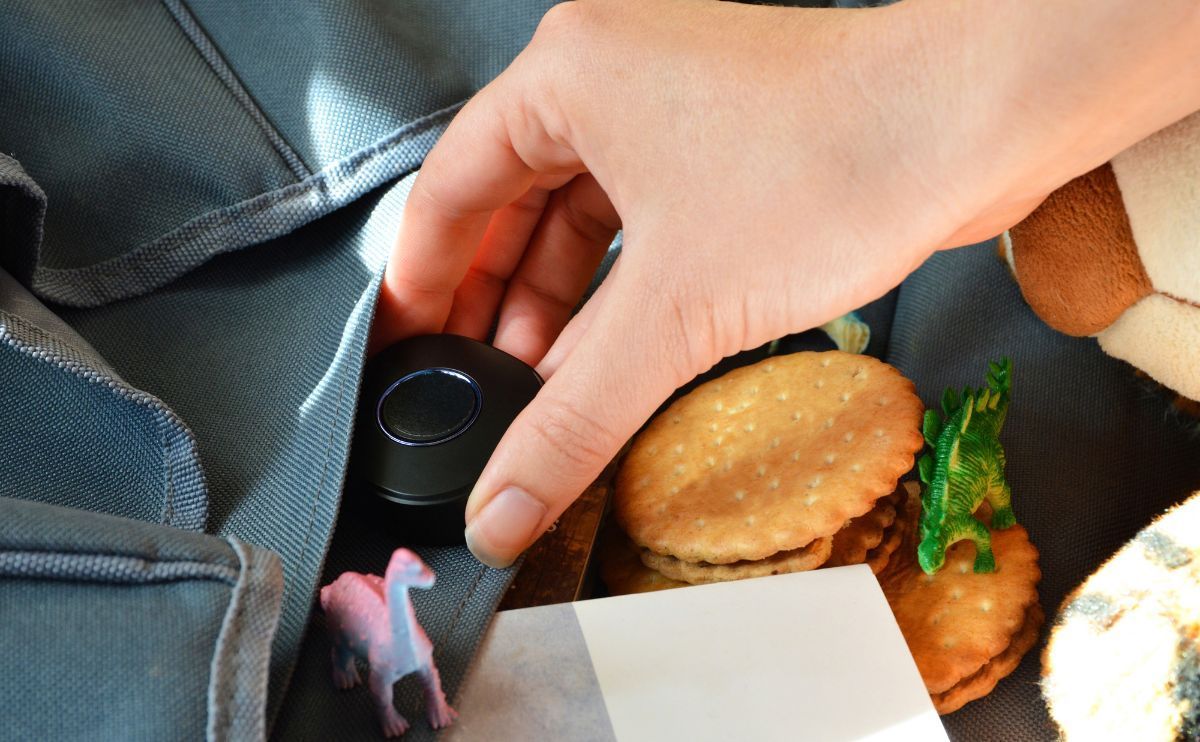
Bluetooth trackers, such as AirTags, do not work like true autonomous GPS trackers.
They rely on Bluetooth and on a network of compatible devices nearby. Apple explains, for example, that AirTag helps users keep track of personal items such as keys or bags through the Find My app.
This can be very useful for finding an item in a busy environment: an airport, train station, city centre, office, building or shop. But it is not the same logic as an autonomous GPS tracker.
Their main advantage is simplicity: compact size, good battery life and low cost. Their main limitation is that they depend on compatible devices being nearby.
For a suitcase in a busy airport, that can be helpful. For a stolen motorbike moved to an isolated area, it is much less reliable.
GPS trackers with a standard SIM card #
Some trackers use a standard SIM card, like a smartphone. They connect to mobile networks depending on their compatibility: 2G, 3G, 4G or 5G.
This technology can offer good coverage, especially in urban areas, but it also has several limitations:
- often higher energy consumption;
- shorter battery life;
- a SIM card or mobile plan to manage;
- variable performance depending on roaming agreements;
- network compatibility to check by country;
- dependence on locally available mobile networks.
This type of tracker can be suitable for some use cases, especially when the device is permanently powered. But for an autonomous object you want to hide in a car, suitcase, bag or professional equipment, battery life quickly becomes a decisive factor.
Low-power LoRa or Sigfox trackers #
Low-power networks were designed for connected objects. Their goal is to send small amounts of data while consuming very little energy.
For a GPS tracker, this creates a good balance between battery life, discretion and regular tracking.
These networks are particularly suited to:
- protecting a parked vehicle;
- tracking a bicycle;
- protecting a bag or valuable item;
- movement alerts;
- everyday use;
- national or European use, depending on available coverage.
The Invoxia GPS Tracker Classic follows this approach. During installation, the selected country determines the IoT network used. Invoxia Support specifies, for example, that the GPS Tracker Classic uses LoRa Orange in mainland France, Sigfox in much of Europe outside France and Switzerland, and Swisscom in Switzerland for eligible trackers.
This approach is interesting for battery life and simplicity, but actual coverage should always be checked in the areas where the tracker will be used. The official Sigfox Coverage map, for instance, can be used to view covered areas by country.
LTE-M trackers #
LTE-M is a cellular technology designed for connected objects. It relies on mobile networks, but with an approach better suited to autonomous devices: lower power consumption, mobility, long-range coverage and better integration with IoT use cases.
Orange Business presents LTE-M as a technology dedicated to connected objects, with a map that can be used to check LTE-M reception quality by area. Orange also explains that LTE-M is designed for IoT projects requiring low energy consumption and the ability to connect large numbers of objects.
For a GPS tracker in Europe, LTE-M is particularly relevant when the object or vehicle needs to move across several countries.
It is well suited to use cases such as:
- cars or motorbikes travelling across Europe;
- vans, campervans or professional vehicles;
- suitcases or valuable bags;
- transported professional equipment;
- cross-border journeys;
- more frequent tracking in the event of an emergency.
The Invoxia GPS Tracker Pro uses 4G LTE-M and offers international coverage in more than 40 countries, including much of Europe. It is therefore better suited to European or international use than a tracker designed mainly for local use.
OBD trackers for cars #
OBD trackers plug directly into a vehicle’s diagnostic port. They can be useful for certain automotive uses: fleet tracking, diagnostics, vehicle data reporting or activity monitoring.
But for anti-theft protection, they have an obvious drawback: they are usually placed in a known and accessible location. An informed thief can spot them more easily than an autonomous GPS tracker hidden elsewhere in the vehicle.
They can therefore be relevant for fleet management or vehicle monitoring, but they are less discreet for anti-theft use.
Comparison table: which GPS tracker offers the right coverage in Europe? #
| Type of tracker | Main technology | Coverage in Europe | Strengths | Limitations | Recommended use |
|---|---|---|---|---|---|
| Bluetooth tracker like AirTag | Bluetooth + community network | Depends on compatible devices nearby | Compact, simple, affordable | Not truly autonomous, less reliable in isolated areas | Keys, bags, small items, luggage in busy areas |
| GPS tracker with standard SIM | 2G/3G/4G/5G mobile network depending on model | Varies by operator, plan and roaming | Good mobile coverage depending on country | Often shorter battery life, SIM management, compatibility to check | Vehicles, occasional tracking, powered use |
| LoRa/Sigfox tracker | Low-power IoT networks | Varies by country and available network | Very good battery life, discreet, suitable for objects | Coverage must be checked locally, lower data frequency | Bicycle, parked car, bag, everyday use |
| LTE-M tracker | Cellular IoT network | Well suited to multi-country use, depending on operator coverage | Strong balance of coverage, mobility, battery life and responsiveness | Depends on LTE-M deployments and manufacturer service | Europe, travel, vehicles, luggage, cross-border use |
| OBD tracker | Mobile network + OBD port | Varies by model and plan | Quick installation, possible vehicle data | Less discreet, can be removed easily | Fleet, diagnostics, non-hidden vehicle tracking |
The best choice depends less on the word “GPS” than on the actual use case.
For local use and long battery life, a low-power tracker can be highly relevant. For regular travel across Europe, an LTE-M tracker will often be more suitable.
At Invoxia, this difference can be seen between the GPS Tracker Classic, designed for discreet use and long battery life, and the GPS Tracker Pro, better suited to European travel, vehicles that move regularly and more intensive tracking needs.
Which network coverage should you choose for your use case? #
To protect a car #
If your car is mainly used in one country, a low-power GPS tracker may cover the essentials: movement alerts, security zones, location tracking and long battery life.
This is especially useful when a vehicle remains parked for several hours or several days in the same place. In a car park, on a quiet street or near home, a movement alert can make the difference between a theft detected quickly and a disappearance noticed too late.
Reducing risk is not only about locking the vehicle properly. Everyday habits also matter: where you park, whether valuables are visible, routines and short stops. These small mistakes that make theft easier can make a vehicle or object more vulnerable.
For this type of use, the GPS Tracker Classic can be a relevant solution if the main goal is to protect a vehicle or object locally, with a good balance between battery life, discretion and alerts.
For a motorbike or scooter #
A motorbike or scooter can be moved quickly, sometimes in a van or to another region. In this case, network coverage becomes essential.
An autonomous and discreet GPS tracker is often more relevant than a visible device. For regular trips or travel abroad, it is better to choose a model that maintains strong service continuity between countries.
On a two-wheeler, discretion is just as important as coverage. A tracker that is easy to spot is also easier to remove.
If the motorbike regularly travels across borders or is parked in different countries, a tracker with wider coverage, such as the GPS Tracker Pro, becomes more relevant.
For a suitcase in Europe #
A suitcase can move through several countries in just a few hours: Spain, Germany, Portugal, Italy, the United Kingdom, France or international connections.
A Bluetooth tracker may be enough to help find a suitcase in a busy airport, but an autonomous GPS tracker works differently: it can send its location through its own compatible network, without relying only on nearby phones.
For a journey by train, plane or car, the right choice depends on the level of tracking you need. A simple tag can provide reassurance in a dense environment. A real suitcase tracker becomes more relevant if you want to track valuable luggage across several stages.
The GPS Tracker Pro can be particularly suitable for travellers who want to keep an eye on their luggage in Europe, especially during multi-country trips.
For a van, campervan or road trip #
A van or campervan often crosses many different areas: motorways, car parks, mountains, rural areas, campsites and borders.
In this context, LTE-M is particularly interesting because it is designed for mobile connected objects and long-distance use. It provides better support for multi-country journeys than a tracker limited to a national network.
This is also a use case where battery life matters. The tracker needs to remain active throughout the trip, without requiring constant recharging or a visible installation.
For travel in Europe, the GPS Tracker Pro can help track a vehicle or valuable item across more than 40 covered countries, with connectivity designed for mobility.
For professional equipment #
Camera equipment, tools, construction equipment, instruments, goods or packages: network coverage needs to be assessed according to the places the item will actually pass through.
For professional use, the key points to check are:
- covered countries;
- update frequency;
- battery life;
- position sharing;
- location history;
- ability to trigger more frequent tracking in the event of a problem.
A GPS tracker can be useful in a vehicle, in a crate, in a package or directly attached to transported equipment. But the more the object moves, the more important network coverage becomes.
For companies, tradespeople, photographers, technicians or field teams, an Invoxia GPS tracker for professionals can help keep control of sensitive equipment without complex installation or a standard SIM card to manage.
Why coverage can vary from one European country to another #
Even in Europe, there is no single uniform network coverage for all trackers.
Each technology depends on several factors:
- operator deployments;
- roaming agreements;
- availability of the network used;
- signal strength;
- urban density;
- terrain;
- buildings;
- indoor or outdoor environment;
- tracker configuration;
- tracker model.
The same tracker may work very well in a large city and update its position more slowly in an isolated rural area or an underground car park.
That is normal: network coverage is never an absolute guarantee for every square metre. It needs to be checked according to the areas where the tracker will actually be used.
For Invoxia trackers, support also recommends checking network coverage before purchase or installation, especially depending on the country, technology used and exact area.

GPS tracker for Europe: questions to ask before buying #
Before choosing a tracker, it is better to think in terms of use rather than technology.
1. Which countries will I use it in? #
One country only? Several neighbouring countries? All of Europe? Travel outside Europe?
The more countries involved, the more important international coverage becomes.
2. Does the object move often? #
A bicycle parked near home does not have the same needs as a suitcase, motorbike or professional vehicle.
3. Do I need frequent location updates? #
For preventive use, a few regular positions may be enough. In the event of theft or emergency, a higher update frequency becomes much more useful.
4. Is battery life a priority? #
The more a tracker communicates, the more energy it consumes. Low-power networks often provide better battery life, while LTE-M can offer a better balance between mobility, coverage and responsiveness.
5. Does the tracker need to remain discreet? #
For anti-theft use, discretion is essential. A tracker that is easy to spot is also easy to remove.
This is especially true in the face of more organised theft methods, where thieves may try to neutralise visible devices quickly. Protection does not rely only on GPS technology, but also on installation, discretion and the tracker’s ability to remain active despite real-world constraints, including GPS jamming.
GPS Tracker Classic or GPS Tracker Pro: two different coverage approaches #
At Invoxia, the two solutions do not answer exactly the same need.
The GPS Tracker Classic is designed for long battery life, discreet placement and everyday use. It uses low-power networks, with network configuration depending on the country selected during installation.
It is particularly relevant for:
- local or national use;
- bicycles;
- parked cars;
- bags;
- valuable items;
- everyday protection;
- long battery life.
The GPS Tracker Pro is designed for uses requiring wider coverage and better continuity while travelling. Thanks to LTE-M, it is better suited to European, international or more intensive use cases.
It is particularly suitable for:
- cars travelling across Europe;
- motorbikes;
- luggage;
- professional equipment;
- vans or campervans;
- cross-border journeys;
- more frequent tracking in case of suspicious movement.
For more general use, the choice between battery life, location frequency and type of item protected also depends on the tracker’s format, installation and desired level of tracking. An autonomous GPS tracker is often more relevant when you want to protect property without relying on a permanent power supply.
What to remember about GPS coverage in Europe #
A GPS tracker in Europe does not rely only on satellites. GPS or Galileo allows it to calculate a position, but the network allows it to send that position to the app.
This combination determines the real user experience.
In summary:
- GPS locates;
- the network transmits;
- coverage varies depending on technology;
- Bluetooth depends on nearby devices;
- low-power networks support longer battery life;
- LTE-M is highly relevant for multi-country use;
- standard SIM trackers can be effective but often consume more power;
- OBD trackers are practical but less discreet;
- the right choice depends first on where and how you use the tracker.
If your tracker mainly stays in one country, a low-power solution may be perfectly suitable. If you travel often or your vehicle moves across Europe, a GPS tracker with international coverage, such as the GPS Tracker Pro, will usually make more sense.
With Invoxia, the goal is simple: to help you track what really matters, with a discreet, autonomous solution adapted to your needs. Whether you want to protect a car, motorbike, bicycle, bag, suitcase or equipment, the right tracker depends above all on your journeys and the level of coverage you need.
FAQ: GPS in Europe and network coverage #
Does a GPS tracker work everywhere in Europe? #
Not automatically. Satellite positioning covers Europe, but the tracker also needs a compatible network to send its location to the app. Coverage therefore depends on the model, the network used and the countries travelled through.
What is the difference between GPS and network coverage? #
GPS allows the tracker to calculate its position. The network allows it to send that position to your smartphone. Without an available network, the location may not be sent immediately.
Which GPS tracker should I choose for travelling in Europe? #
For regular travel in Europe, it is better to choose a GPS tracker with international coverage, ideally based on a technology designed for mobile connected objects, such as LTE-M.
Is an AirTag a GPS tracker for Europe? #
No. An AirTag is a Bluetooth tag that relies on Apple’s Find My network. It can be very useful for locating objects in busy areas, but it does not work like an autonomous GPS tracker with its own communication network.
Is LTE-M suitable for a GPS tracker in Europe? #
Yes. LTE-M is particularly suitable for mobile connected objects. It combines cellular coverage, better energy efficiency than standard mobile uses and the ability to support multi-country travel, depending on available coverage.
Does the GPS Tracker Classic work in Europe? #
The GPS Tracker Classic uses low-power networks depending on the country selected during installation: LoRa Orange in mainland France, Sigfox in much of Europe outside France and Switzerland, and Swisscom in Switzerland for eligible trackers.
Is the GPS Tracker Pro better suited to European trips? #
Yes. The GPS Tracker Pro is better suited if you need international coverage, cross-border travel or more frequent tracking. It uses 4G LTE-M and covers more than 40 countries, including much of Europe.
Why doesn’t my GPS tracker always update its position? #
This may be due to a weak GPS signal, unavailable network, underground car park, dense building, isolated area or energy-saving mode. Update frequency also depends on the settings selected.
What GPS coverage do I need for a car in Europe? #
For a car mainly used in one country, a low-power tracker may be enough. For a car that travels across several European countries, an LTE-M tracker is generally more suitable.
What GPS coverage do I need for a suitcase in Europe? #
For a suitcase, coverage depends heavily on the journey. In a busy airport, a Bluetooth tag can help. For more autonomous tracking across several countries, a GPS tracker with international coverage is more relevant.