

Do you notice your dog shaking for no apparent reason? This behavior can be impressive, even worrying. However, in many cases, shaking in dogs is harmless.
But not always… Sometimes it’s one of the symptoms that should alert you in your dog, and lead you to consult your veterinarian.
A dog that shakes can also be a sign of a health problem, sometimes subtle at first. The difficulty is that dogs express their pain very little. Shaking can then be one of the first visible signals.
In this article, we explain in detail why a dog shakes, how to distinguish a benign cause from a medical problem, and especially when to consult.
Why is my dog shaking? #
Shaking in dogs corresponds to involuntary muscle contractions. They can be occasional or persistent, localized or generalized.
Several factors can explain why a dog shakes:
- a normal reaction (cold, emotion, excitement)
- discomfort or pain
- an underlying illness
It is therefore the overall context that helps understand the cause.
Benign causes: when a dog shakes without severity #
In many situations, a dog that shakes does not require any particular intervention… but some simple actions can help.
Cold #
This is one of the most common causes. As with humans, a dog’s body shakes to produce heat.
Dogs most affected:
- small sizes
- short-haired dogs
- dogs not used to low temperatures
A dog that shakes in winter or after a walk in the rain is generally not worrying.
💡 What to do concretely?
Gradually warm your dog: dry them if they are wet, offer them a warm place, and avoid drafts. For sensitive dogs, a coat can clearly make a difference during outings.
Stress, fear, or anxiety #
A dog that shakes may simply be stressed.
Common situations:
- visit to the veterinarian
- thunderstorm or fireworks
- car transport
- separation
In this case, shaking is often accompanied by other signs: panting, low ears, curled posture.
💡 What to do concretely?
The ideal is to reduce the source of stress and offer a reassuring environment: a quiet place, familiar objects, a calming presence. No need to overreact, as this can reinforce their anxiety. If episodes are frequent, support from a behavior professional may be useful.
Excitement #
Some dogs shake when they are very stimulated.
For example:
- before a walk
- at mealtime
- when they reunite with their human
This type of shaking is brief and disappears quickly.
💡 What to do concretely?
Encourage calm before exciting moments: asking for a “sit” before giving the bowl or going out helps gradually reduce these reactions.
Sleep and dreams #
A dog that shakes while sleeping is generally dreaming.
You may observe:
- paw movements
- muscle contractions
- small sounds
This is a normal phenomenon, especially in puppies.
💡 What to do concretely?
Nothing in particular. Just avoid waking them abruptly.
Medical causes: when shaking should alert #
When shaking becomes unusual, frequent, or persistent, it can be a sign of a health problem.
Pain #
A dog that shakes may be in pain.
Unlike humans, dogs do not verbalize their pain. Shaking can therefore be a key indicator.
Possible causes:
- injury
- joint pain (arthritis)
- abdominal pain
A dog in pain may also:
- be less active
- avoid contact
- change posture
💡 What to do concretely?
Limit efforts, observe their behavior closely, and avoid any self-medication. A consultation is necessary to identify the cause and effectively relieve the pain.
Today, some physiological indicators also allow for further detection of pain. For example, heart rate variability (HRV) can reflect a state of stress or discomfort.
Tools like the Invoxia Biotracker allow tracking these data over time and more easily identifying abnormal variations that may indicate underlying pain.

Hypoglycemia #
Hypoglycemia is common in:
- puppies
- small dogs
It can cause:
- shaking
- weakness
- disorientation
👉 It is a veterinary emergency if symptoms are severe.
💡 What to do in the meantime?
You can apply a small amount of sugar (like honey) on the gums to quickly raise blood sugar, then consult without delay.
Poisoning #
A dog that suddenly shakes may have ingested a substance or a toxic food:
- chocolate
- certain plants
- household products
In these cases, shaking is often accompanied by other symptoms, such as vomiting, excessive salivation, or even an advanced state of agitation.
💡 What to do concretely?
Immediately remove the toxic source and contact a veterinarian urgently. Do not try to make your dog vomit without professional advice.
Neurological diseases #
Some nervous system disorders can cause shaking:
- epilepsy
- generalized tremor syndrome
- brain disorders
In these cases, shaking can be intense and uncontrollable.
💡 What to do concretely?
Secure the environment (avoid falls, stairs) and consult quickly. Do not attempt to physically restrain your dog during a seizure.
Infections and fever #
A dog that shakes and seems lethargic may have a fever. This can be related to an infection or an inflammatory disease.
💡 What to do concretely?
Keep your dog calm, monitor their general condition (appetite, energy), and consult to identify the cause.
Metabolic disorders #
Some internal imbalances can cause shaking:
- kidney failure
- hormonal disorders
- electrolyte imbalances
💡 What to do concretely?
These situations cannot be managed at home. Note the symptoms and consult for an assessment.
How to know if the shaking is serious? #
A dog that shakes is not necessarily sick. However, some elements should alert you.
Worrying signs #
Consult quickly if your dog:
- shakes suddenly and intensely
- shakes for no identifiable reason
- shows a loss of balance
- seems tired or lethargic
- refuses to eat
- has vomiting or diarrhea
- has persistent shaking
The evolution over time is also a key indicator.
My dog shakes: when to consult a veterinarian? #
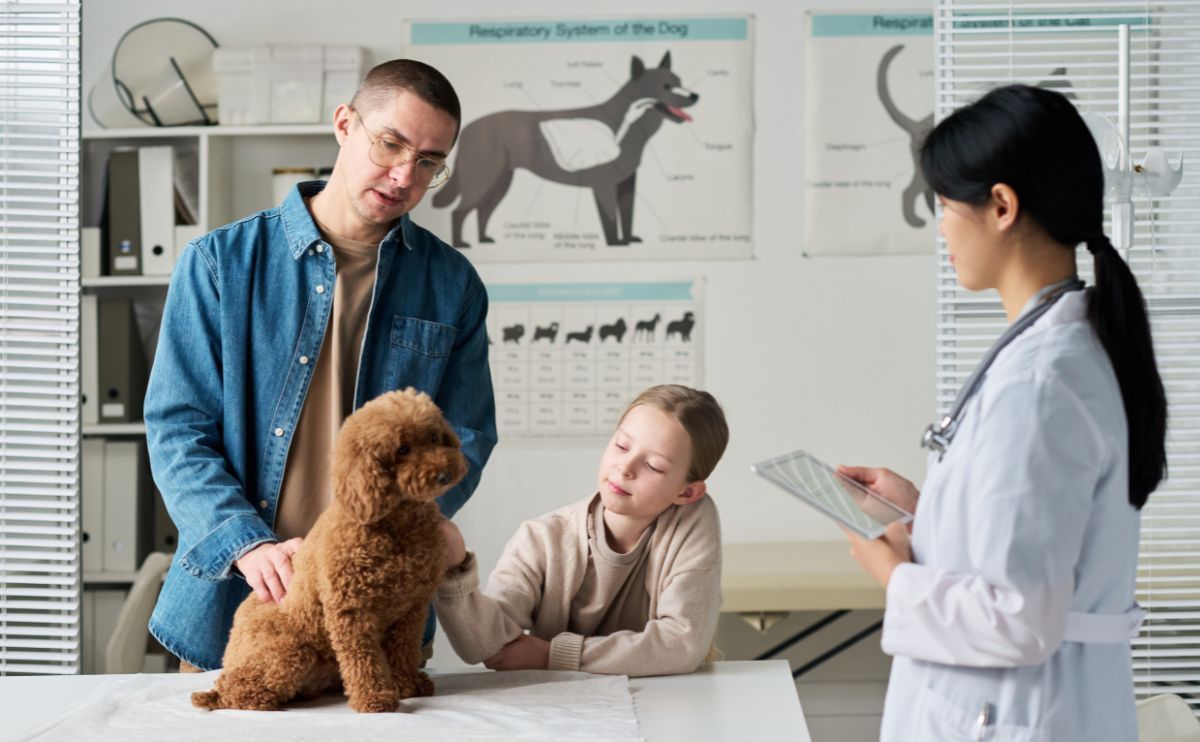
As soon as the shaking is out of the ordinary, it is recommended to consult.
In practice:
- occasional shaking → often benign
- repeated shaking → to be monitored
- shaking + other symptoms → consultation necessary
In case of doubt, it is always better to seek veterinary advice.
Why these symptoms often go unnoticed #
Dogs have a natural instinct that drives them to hide their weaknesses. Result: signs often appear late.
Shaking can be part of these weak signals not to be overlooked. Moreover, they often fit into a set of small changes that are difficult to notice daily.
Better understand your dog through data #
Today, it is possible to go beyond observation. Some indicators allow for earlier detection of anomalies:
- activity level
- sleep quality
- heart rate
- breathing
An unusual variation can be the first sign of a problem.
This is notably the goal of the Biotracker, a tool designed to track these data daily and help better understand the health status of your dog over time.
By tracking these data over time, it becomes easier to:
- spot a subtle change
- understand unusual behavior
- provide precise information to the veterinarian
FAQ – Dog shaking: the most common questions #
Why is my dog shaking for no reason? #
There is often a reason, even if it is not immediately visible: stress, cold, excitement, or the beginning of a health problem.
My dog shakes at rest, is it normal? #
It can be normal if they are sleeping or dreaming. If it happens regularly outside of sleep, it should be monitored.
My dog shakes and pants #
This can be related to stress, heat, or pain. If it persists, consult.
My dog shakes and won’t eat #
This is an important warning sign. A consultation is recommended quickly.
My dog shakes from the cold, what to do? #
Make sure they are warm, dry them after a wet walk, and adjust their outings if necessary.
Can a dog shake from fear? #
Yes, it is a common reaction to a stressful situation.
Why does my dog shake while sleeping? #
It is generally related to dreams. No danger in most cases.