

Spring and pets go hand in hand.
Days get longer, nature comes back to life, and walks become longer. Our companions regain energy, explore more, and seem almost revived.
But behind this renewal, spring is also a sensitive transition period for pets. Temperature, parasites, environment, physical activity: everything changes within a few weeks.
During these periods of change, the body must adapt. Ultimately, spring is one of the riskiest times of the year for dogs, due to the combination of parasites, allergens, and increased activity.
Understanding what spring really changes for pets — and especially for dogs — helps anticipate risks and fully enjoy the season.
🌿 Why spring changes animals’ balance #
The transition from winter to spring is not just a weather change. It is a biological shift.
With rising temperatures and humidity:
- parasites become active again
- pollen spreads massively
- physical activity increases
- metabolism adapts to light and seasonal rhythms
In animals, this seasonal transition can lead to:
- increased sensitivity to infections
- allergic reactions
- fatigue linked to renewed activity
- sometimes invisible physiological changes
Spring is not a threat. It is a phase of adjustment.
⚠️ Spring dangers for animals #
🕷 Ticks: the number one spring risk #
As soon as temperatures exceed 45°F (7°C), ticks proliferate. They can be found in tall grass, forests, parks, and even some urban gardens.
In dogs, they can transmit diseases such as:
- babesiosis
- Lyme disease
- ehrlichiosis
The tricky part? Symptoms are not always immediate. A simple drop in energy or mild fever can appear several days later.
Carefully checking your dog after every walk in spring remains one of the simplest… and most effective habits.
💡 Even though, out of more than 1,000 tick species worldwide, only a few carry diseases, the probability is not zero.
In France, up to 20% of ticks may carry bacteria responsible for Lyme disease depending on the region according to INRAE, making it a real risk even during short walks.
🐛 Pine processionary caterpillars: an underestimated seasonal danger #
In spring, some wooded areas become risky. Pine processionary caterpillars, found near pine and cedar trees, can cause severe reactions upon contact.
In curious animals — especially dogs — a simple lick can be enough to trigger severe inflammation.
Vigilance during walks is essential, especially in affected areas.
💡 Pine processionary caterpillars represent a well-documented risk: their urticating hairs contain a toxin (thaumetopoein) capable of causing severe inflammatory reactions.
It is mainly the orange and whitish urticating hairs that pose a real problem for dogs according to I-CAD. Each year, many veterinary cases are reported in spring in affected areas.
🌸 Toxic spring plants for dogs #
In spring, many plants become accessible again during walks or in gardens. Some of them, although very common, can be toxic to dogs.
Among the most common:
- lily of the valley
- oleander
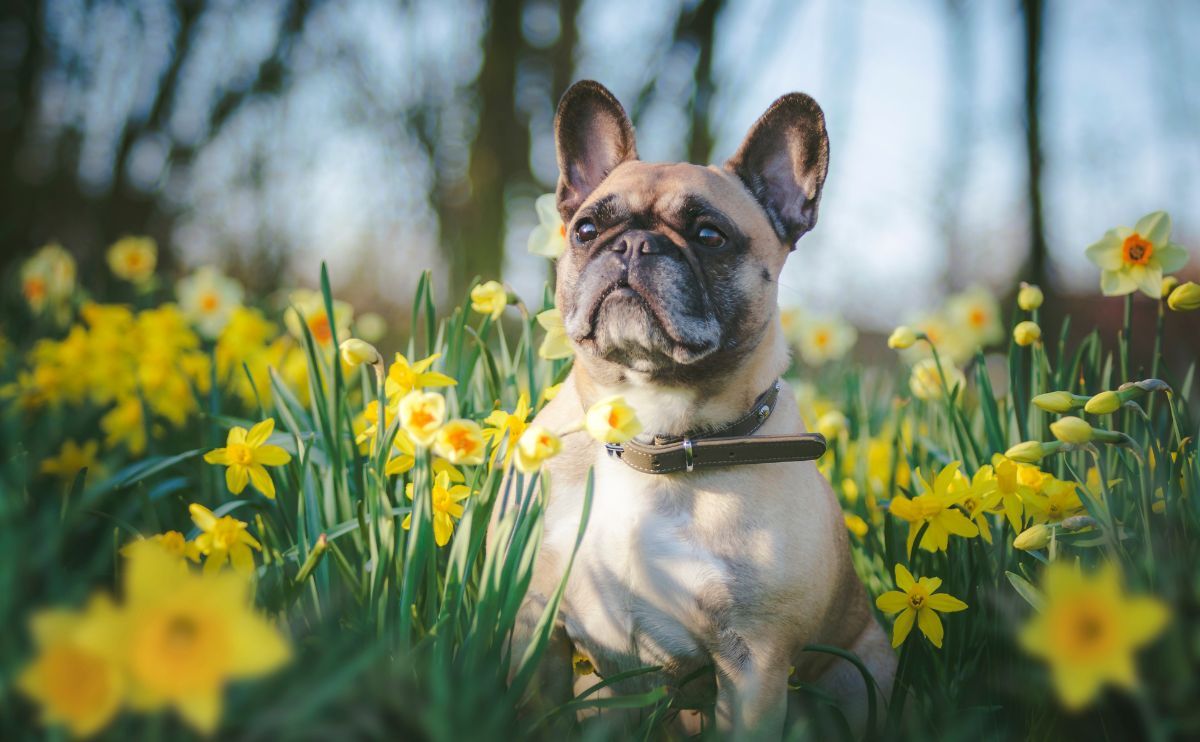
- daffodils and narcissus
- tulips (especially the bulb)
In dogs, ingestion can cause:
- digestive issues (vomiting, diarrhea)
- heart problems in more severe cases
- lethargy or disorientation
The risk is higher because dogs naturally explore their environment with their mouths, especially after winter.
Extra caution is recommended in gardens, parks, and outdoor areas.
💡 Some very common spring plants can be toxic to dogs, even in small amounts.
Lily of the valley, for example, contains compounds that can affect the heart, while tulip and daffodil bulbs are often responsible for digestive issues in dogs.
👉 If you suspect ingestion, contact your veterinarian immediately.
🌼 Seasonal allergies and respiratory issues #
Spring also means pollen. Some animals develop itching, redness, ear infections, or respiratory discomfort.
The signs are sometimes subtle:
- sneezing
- excessive licking
- unusual fatigue
- reduced enthusiasm
It is often the progression over time that helps identify a seasonal allergy rather than an isolated episode.
🌾 Foxtail and vegetation #
With spring vegetation also come grass awns. These small dry spikes can lodge in ears, between paw pads, or in nostrils.
A dog suddenly shaking its head after a walk should always be checked carefully.
🔎 Subtle spring signs you might not notice #
In spring, not all dangers are visible. Some imbalances develop gradually, without obvious symptoms.
A slightly increased fatigue.
A slower recovery after a walk.
A decrease in activity level without apparent reason.
A higher physiological stress.
These variations are sometimes invisible to the naked eye… but they can appear in the data.
Monitoring resting heart rate, respiratory rate, activity level and heart rate variability (HRV) helps identify abnormal trends before clinical signs become visible.
In spring, monitoring behavior and physiological indicators helps detect pain, increased stress, or imbalance earlier.
🐶 Spring and dogs: increased vigilance #
If spring affects all animals, dogs are particularly exposed.
They go out more, resume sometimes intense physical activity, and explore their environment enthusiastically. After a calmer winter, this can put strain on:
- cardiovascular system
- respiratory system
- joints
Unusual shortness of breath, slower recovery, or persistent fatigue can go unnoticed if you don’t pay attention to trends.
Observing your dog in spring is not about worrying. It’s about learning to read small signals before they become problems.
🌸 Benefits of spring for animals #
Fortunately, spring is also a great opportunity for animal health.
It is the ideal season to:
- gradually restart physical activity
- improve cardiovascular condition
- mentally stimulate your dog with new environments
- manage weight after winter
Many dogs regain a more stable balance when they benefit from a gradual rhythm.
Spring then becomes a season of vitality, curiosity, and stronger connection with their human. It is the perfect time to start (or resume) activities such as canicross or agility.
✅ How to effectively protect your pet in spring #
Spring prevention relies on simple but consistent habits.
This includes proper parasite protection, checking the coat and paws after walks, and gradually adapting activity intensity.
But beyond visible actions, it is essential to monitor:
- resting heart rate
- respiratory rate
- energy variations
- recovery after effort
Because spring is a season where imbalances can develop silently.
📊 Spring and pets: moving toward a preventive approach #
Traditionally, we react when symptoms appear. However, spring is precisely when physiological changes begin.
Tracking trends over time helps detect:
- abnormal increase in respiratory rate
- gradual decrease in activity
- slower recovery
- subtle behavioral changes
Monitoring these indicators does not replace a veterinarian. It simply helps you act earlier, with more peace of mind.
🌼 Summary #
Spring and animals are inseparable. It is a season of renewal, exploration, and renewed energy.
But it is also:
- parasite season
- allergy season
- a period of physiological adjustments
Supporting your dog in spring means allowing them to fully enjoy this time… safely.
Observe, anticipate, adapt. So that every walk remains a moment of pleasure — and never a source of concern.
❓ FAQ: spring dangers for dogs #
Here are the most common questions dog owners ask in spring:
What are the main spring dangers for dogs? #
The main spring dangers for dogs are ticks, pine processionary caterpillars, seasonal allergies, and grass awns. These risks appear with warmer temperatures and vegetation.
When are ticks active? #
Ticks become active when temperatures exceed around 45°F (7°C). In practice, this usually corresponds to early spring, with peak activity between April and June.
How can I tell if my dog has spring allergies? #
A dog may have seasonal allergies if they show signs such as:
- itching
- excessive licking
- redness
- unusual fatigue
These symptoms often appear gradually and return each year at the same time.
What should I do if my dog has a grass awn? #
A grass awn can cause significant pain and complications. If your dog shakes its head, licks excessively, or limps after a walk, it is recommended to consult a veterinarian quickly.
Can health issues be detected before symptoms appear? #
Yes, some changes can be detected early by observing trends:
- decreased activity
- faster breathing
- slower recovery
Regular monitoring of these indicators helps act earlier, before visible symptoms appear.