

Choosing a GPS tracker seems simple until you start comparing product specifications: Bluetooth or GPS, SIM card or low-power network, subscription included or not, battery life measured in days or months. Six criteria are enough to help you find your way, and they mainly depend on what you want to recover: a car, motorcycle, bicycle, motorhome, or luggage.
1. Bluetooth or GPS: the first choice to make #
A Bluetooth tracker determines its location using a signal picked up by your phone, or by another user’s phone on the same network. According to Test-Achats, its range is usually 131 to 230 feet, with a maximum of around 394 feet, and its location is only updated when it comes within range of a phone. This makes it suitable for keys or a bag, but less suitable for a moving vehicle or one in a remote area.
A GPS tracker calculates its location using satellites, then sends it over a mobile or low-power network: it has no actual range limit, provided it has network coverage. Test- Achats recommends GPS without a SIM card for recovering a stolen vehicle, bicycle, or motorcycle, describing it as more reliable than Bluetooth for distant objects. In both cases, reception may be unavailable or reduced inside buildings, underground, or in heavily wooded areas.
2. The network: SIM card or low-power network #
A GPS tracker sends its location through one of these two channels:
- A SIM card, using a 4G or LTE-M mobile network. LTE-M is a technology derived from 4G, designed for connected devices with low power consumption. It depends on mobile operators: coverage may vary from one area to another.
- A low-power network such as LoRa or Sigfox. It sends small amounts of data over long distances, without a SIM card. To understand these technologies, you can explore low-power networks such as LoRa and Sigfox, or compare LTE-M and low-power networks for a GPS tracker.
This criterion also matters for the device’s lifespan: a tracker limited to the 2G network will no longer be able to send its location once that network is shut down in your area. Before buying an older or secondhand model, check whether your GPS tracker will still work after the 2G shutdown.
3. The subscription: what is included, and what renews #
A GPS tracker has operating costs: according to Test-Achats, the network that carries its location data is paid for through a subscription, even for a device without a SIM card. The real question is therefore not “with or without a subscription,” but how long it is included and how much it costs afterward.
At Invoxia, the subscription is included with your purchase:
- the GPS Tracker Classic costs €99 with a 1-year subscription included, or €129 with 3 years;
- the GPS Tracker Pro Max costs €179 with 1 year included, then renews at €7.95 per month, €19.95 for 3 months, or €59.85 per year.
To put these figures into perspective over several years, you can compare the real cost of a GPS tracker without a subscription: the purchase price alone does not tell you how much you will have paid after three years.
4. Battery life: from a few days to several months #
Battery life depends on the technology and how often the location is updated. According to Test-Achats, a Bluetooth tracker often lasts one to three years, a GPS tracker with a SIM card lasts a few days, and a GPS tracker without a SIM card lasts up to 6 months. Invoxia models advertise:
- 3 to 6 months for the GPS Tracker Classic, depending on location update frequency;
- up to 6 months for the GPS Tracker Pro Max, on a single charge.
Long battery life is especially important for a vehicle that stays parked: a motorcycle stored for winter, a motorhome, or a boat. A tracker that shuts down without warning is useless on the day of a theft.
5. Water resistance and size #
A tracker installed on a vehicle or bicycle is exposed to rain, mud, and splashes. On a product specification sheet, the IP67 rating means the device is fully protected against dust (6) and can withstand immersion in up to 3.3 feet of water for 30 minutes (7), based on laboratory testing, according to OfficeEasy. The GPS Tracker Classic is rated IP67 and weighs just 27 g.

6. Useful theft alerts #
A tracker’s main purpose is to help you recover an item, but alerts are what notify you in time. Before buying, check whether the device offers:
- suspicious movement alerts, to notify you as soon as the vehicle moves without you: both the Classic and Pro Max offer these;
- virtual zones, to receive a notification when the device enters or leaves an area: the Pro Max lets you set these up;
- a way to share information with the authorities: in the event of theft, the Pro Max generates a report you can share with them.
Which GPS tracker suits your needs? #
The right model depends less on the brand than on how you plan to use it. Here is how to apply the six criteria.
For a car #
The key criteria are suspicious movement alerts and a network that requires no setup. The GPS Tracker Pro Max has a built-in SIM card and sends alerts if suspicious movement is detected while parked: there is nothing to configure on the network side.
For a motorcycle #
Motorcycles present two challenges: they often remain parked for weeks, and the device must withstand water and dust. Long battery life and water resistance are therefore the two key criteria. To review suitable models, you can compare GPS trackers for motorcycles or explore Invoxia GPS trackers for motorcycles.
For a motorhome #
A motorhome stays parked for long periods, sometimes far from home: battery life and network coverage matter a great deal. To understand how to secure a recreational vehicle, you can protect your motorhome from theft with a GPS tracker.
For luggage or travel #
A Bluetooth tracker is enough to find a nearby bag, but not luggage lost on the other side of the world: that requires a GPS tracker, whose range is not limited by a nearby phone.
For a bicycle #
A bicycle is exposed to rain and splashes: water resistance and device weight are the first two criteria to consider. The GPS Tracker Classic is rated IP67 and weighs 27 g.
Classic or Pro Max: the summary #
| Criterion | GPS Tracker Classic | GPS Tracker Pro Max |
|---|---|---|
| Price | €99 (1 year included) or €129 (3 years included) | €179 (1 year included) |
| Network | Low-power: LoRa in mainland France (excluding Corsica), Sigfox abroad | LTE-M, built-in SIM card |
| Advertised battery life | 3 to 6 months depending on location update frequency | Up to 6 months |
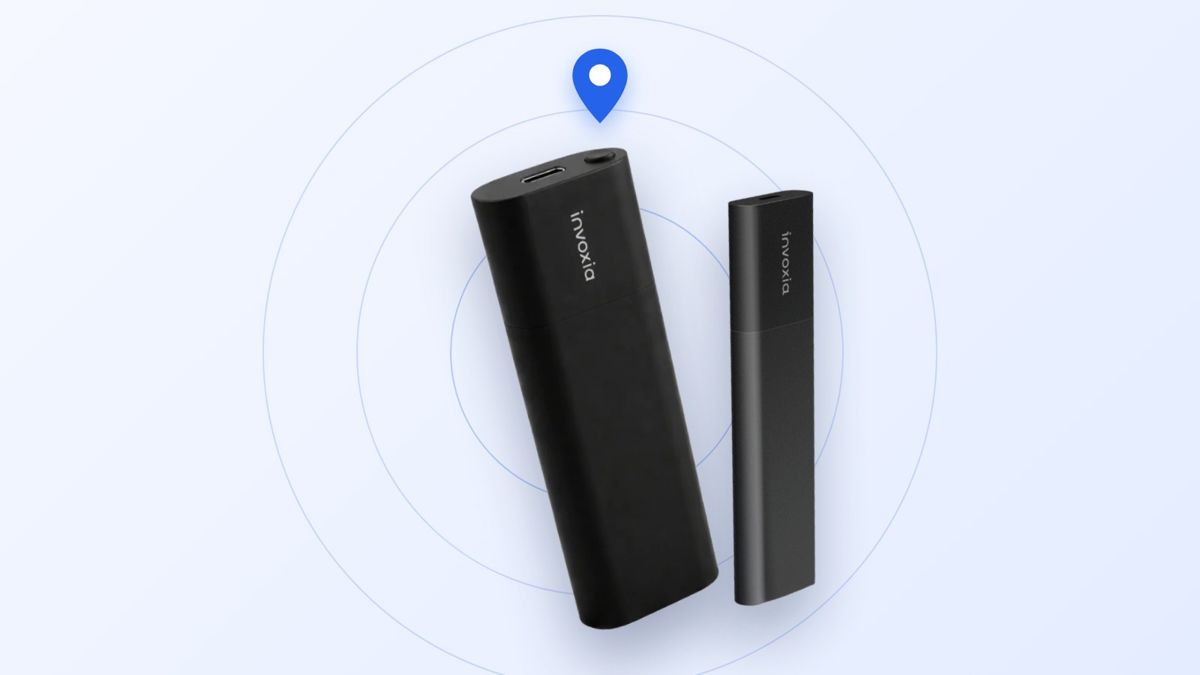
| Water resistance and weight | IP67, 27 g | IP67, 70 g |
| Alerts | Suspicious movement | Suspicious movement, virtual zones, theft report |
To explore a specific point before deciding, you can learn more about GPS trackers or compare the best GPS trackers of 2026. And if you are considering another manufacturer, you can compare PAJ GPS and Invoxia.
FAQ: choosing a GPS tracker #
What is the difference between a GPS tracker and a Bluetooth tracker? #
A Bluetooth tracker determines its location using a nearby phone, with a range of roughly a hundred feet or so, whereas a GPS tracker calculates its location using satellites and sends it over a mobile or low-power network, with no actual range limit. For a vehicle, GPS is the right type.
Does a GPS tracker work without a subscription? #
The network that carries location data has a cost, so a GPS tracker uses a subscription, whether it has a SIM card or not. At Invoxia, it is included with your purchase: 1 or 3 years for the GPS Tracker Classic depending on the version, and 1 year for the GPS Tracker Pro Max, after which it renews.
How much does a GPS tracker cost? #
At Invoxia, the GPS Tracker Classic costs €99 with a 1-year subscription included or €129 with 3 years, and the GPS Tracker Pro Max costs €179 with 1 year included. To know what you will actually pay, you need to add the cost of subsequent years.
Does a GPS tracker work inside a building? #
GPS reception may be unavailable or reduced inside buildings, underground, or in heavily wooded areas, as Test-Achats points out.
What does IP67 mean on a GPS tracker? #
IP67 indicates that the device is fully protected against dust and can withstand immersion in up to 3.3 feet of water for 30 minutes during laboratory testing. This protects against rain and splashes, but it is not designed for prolonged immersion.
Will an old GPS tracker still work after the 2G shutdown? #
Not if it is limited to the 2G network: the 2G shutdown in mainland France will be completed in December 2026, and a tracker that only uses this network will no longer be able to send its location. A 4G, LTE-M, LoRa, or Sigfox tracker does not depend on 2G.
Which GPS tracker should I choose for a motorcycle parked all winter? #
A model with long battery life and water resistance: the GPS Tracker Classic advertises 3 to 6 months and an IP67 rating, while the GPS Tracker Pro Max offers up to 6 months on a single charge.