

Going on vacation with your dog is often a chance to share new moments together: walks, discoveries, road trips, a change of scenery, and new places to explore. But for some dogs, travel can also become a real source of stress.
Car, train, or plane rides, unfamiliar accommodations, new sounds, unusual smells, heat, crowds, other animals, loss of familiar routines… Everything that feels exciting to us can be unsettling for a dog. And when a dog is stressed, their reactions can be unpredictable: restlessness, panting, trembling, refusing to move forward, barking, disrupted sleep… or even trying to run away.
On vacation, that stress can quickly become a safety issue. An open door, an unlocked gate, fireworks, a highway rest stop, or a sudden noise can be enough to panic a dog and trigger an escape.
In the U.S., loud events are a major risk factor for lost pets. According to the ASPCA, nearly one in five lost pets goes missing after being scared by fireworks, thunderstorms, or other loud noises. This makes vacation periods, holiday weekends, and unfamiliar environments especially important moments for prevention.
So how can you tell if your dog is stressed while traveling? How can you help them feel safer? And most importantly, how can you reduce the risk of your dog running away during vacation?
Keep my dog safer on vacation with the Biotracker
Why can dogs get stressed while traveling? #
For us, vacation often means rest, freedom, and a change of scenery. For a dog, it can also mean a sudden loss of familiar cues.
At home, your dog knows their territory, their smells, their schedule, their resting spots, everyday sounds, and the people around them. When traveling, everything can change at once: the ride, the breaks, the environment, the temperature, the sounds, the smells, where they sleep, and even meal or walk times.
Even a usually calm dog can feel disoriented in a new environment.
Travel stress may be more common in:
- dogs who are not used to traveling;
- puppies or young dogs still learning;
- recently adopted dogs;
- dogs sensitive to noise;
- dogs who have had a bad experience in the car, on a train, or in boarding;
- senior dogs;
- dogs who are very attached to their routine;
- dogs who tend to run when they are scared.
This does not necessarily mean there is a training issue. A stressed dog is often trying to feel safe again. The goal is not to force them to “get used to it” all at once, but to help them understand what is happening, step by step.
To prepare the full trip, you can also read our complete guide: Vacation with your dog: the complete guide to traveling stress-free.
Signs your dog is stressed while traveling #
Not all dogs show stress in the same way. Some become very restless, while others freeze or seem almost “too quiet.” Some signs appear during the journey, while others only show up after arrival or in the days that follow.
Common signs of travel stress in dogs include:
- unusual panting;
- trembling;
- whining;
- repeated barking;
- restlessness;
- difficulty settling down;
- refusing to get into the car;
- excessive drooling;
- vomiting;
- diarrhea;
- loss of appetite;
- more restless sleep;
- needing to stay close to their owner;
- excessive alertness;
- repeated lip licking;
- frequent yawning;
- attempts to escape.
Some of these signs can also be linked to motion sickness, heat, or a health issue. If your dog often vomits in the car, seems lethargic, has trouble breathing, refuses to drink, or behaves in a truly unusual way, it is best to ask your veterinarian for advice.
Stress can also affect recovery. A dog who seems calm on the outside may sleep less, recover more slowly, or stay alert for longer after a journey or a highly stimulating day.

That is why it is important to observe their overall behavior: their attitude, sleep, appetite, activity level, breathing, and ability to relax.
Why stress increases the risk of your dog running away on vacation #
A dog does not always run away because they want to “go on an adventure.” When traveling, they may be trying to escape a situation that scares them or that they do not understand.
A sudden noise, storm, fireworks, crowd, another dog, busy road, open door, or poorly secured yard can trigger panic. And in an unfamiliar place, a stressed dog may run without being able to find their way back.
On vacation, several situations can increase the risk of escape:
- arriving at an unfamiliar rental or hotel;
- a yard described as “fully fenced” but not truly secure;
- an open door or patio door;
- a highway rest stop;
- a parking lot;
- a crowded beach;
- a busy market or street;
- fireworks;
- a storm;
- a sudden noise;
- other dogs or wildlife nearby;
- an off-leash walk in an unfamiliar place.
The issue is that a lost dog on vacation does not have the same landmarks as they do at home. They do not know the roads, smells, dangers, or return points. If they panic, they may run far, hide, or fail to respond to recall, even if they usually come back perfectly.
That is why prevention is essential. Before trying to calm a stressed dog, you need to secure the moments when the risk of escape is highest.
Keep my dog safer on vacation with the Biotracker
Before leaving: prepare your dog gradually #
The best way to reduce travel stress in dogs is not to wait until departure day.
If your dog is not used to traveling, start several days or weeks ahead with very simple steps. The goal is to make the trip, carrier, harness, or car feel more familiar.
For example, you can:
- leave the crate or travel bag accessible at home;
- place a blanket with a familiar smell inside;
- reward your dog when they approach it;
- take short drives of just a few minutes;
- end each drive with something pleasant, like a walk;
- gradually increase the duration;
- avoid making the car associated only with vet visits.
Keep some routines stable during vacation too: their usual food, bed, favorite toy, familiar blanket, and meal times whenever possible. These may seem simple, but they help your dog find continuity in a new environment.
Before leaving, also make sure your dog’s microchip information and ID tag are up to date. If your dog goes missing while traveling, current contact details can make it much easier for a shelter, veterinarian, or animal control officer to reach you quickly.
During the journey: reduce sources of stress #
During the trip, the goal is to make the environment as calm, stable, and predictable as possible.
When traveling with your dog in the car, place your dog in a secure space: a safety harness, fixed carrier, suitable crate, or trunk area separated by a barrier. A dog moving freely in the car can get injured, distract the driver, or become even more panicked.
To reduce stress during the journey:
- avoid large meals right before leaving;
- keep the temperature comfortable;
- bring fresh water;
- take regular breaks;
- avoid loud music;
- drive smoothly;
- keep the leash within reach;
- attach your dog before opening the car door;
- never leave your dog alone in the car.
Breaks are often risky moments. At a highway rest stop, a dog can be startled by a truck, motorcycle, smell, another animal, or simply the excitement of getting out after several hours on the road. Before opening the door, always make sure your dog is attached and that their harness fits properly.
If your dog is highly stressed in the car or suffers from motion sickness, ask your veterinarian for advice before departure. Some dogs may need behavioral support, adapted treatment, or personalized recommendations.
On arrival: secure the new environment #
Arrival is a key moment. Your dog is discovering a new place, often after several hours of travel. They may be tired, excited, tense, or disoriented. Before letting them explore, take a few minutes to check the environment.
Pay special attention to:
- gates;
- fences;
- gaps under fencing;
- patio doors;
- balconies;
- stairs;
- access to the road;
- unsecured pools or bodies of water;
- places where your dog could get stuck;
- potentially dangerous plants or products.
Even if the accommodation says “fenced yard,” never assume it is truly secure for your dog. A small dog can slip under a gate. An athletic dog can jump a fence. A stressed dog can push a door, scratch, squeeze through a gap, or react very quickly to a noise.
During the first few hours, keep your dog on a leash or long line, even in the yard, while they discover the space. Let them sniff, observe, drink, and settle. Avoid starting the stay with a long, highly stimulating outing, a crowd, or too many introductions at once.
A dog often needs time to adjust before fully enjoying a new environment.
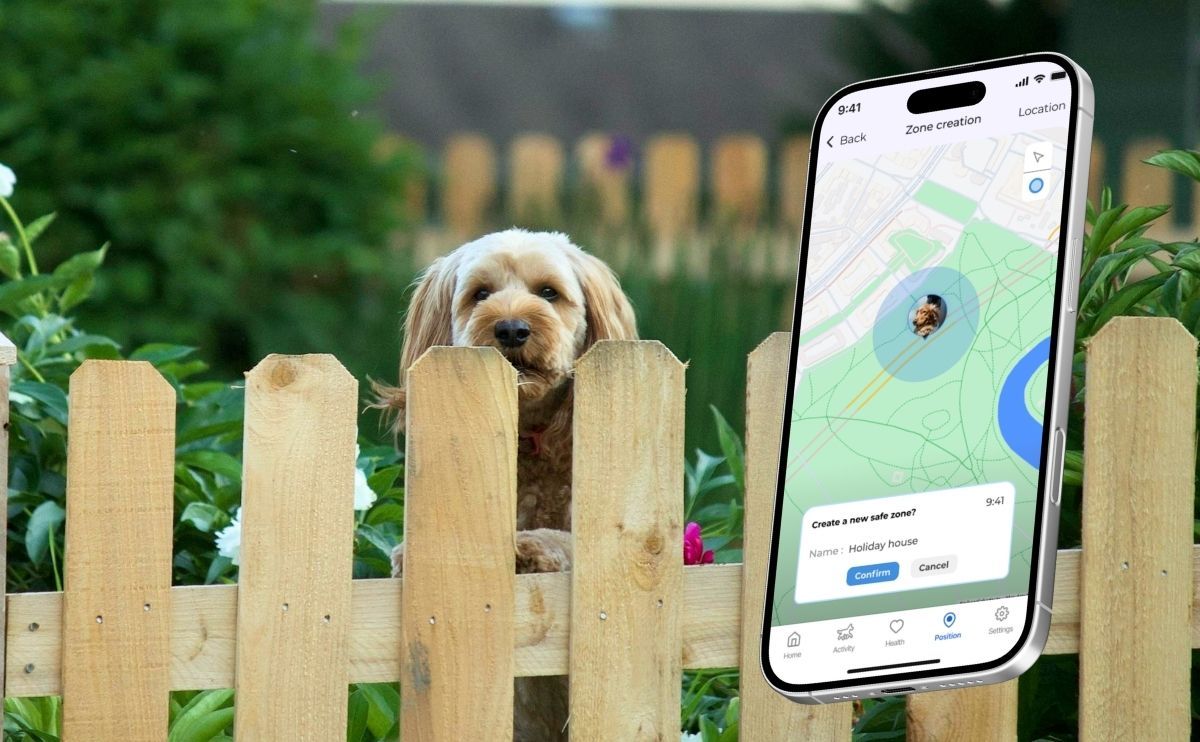
💡 If you use a GPS dog collar or tracker, remember to create a safe zone at each highway rest stop and around your vacation accommodation.
Fireworks, storms, crowds: high-risk moments #
Some situations are especially stressful for dogs on vacation. Fireworks, storms, festivals, night markets, outdoor concerts, or very busy campgrounds can all be challenging.
Sudden sounds can trigger panic. A dog may pull hard, slip out of their collar, jump a fence, or run off without responding to recall.
According to the AAHA, animal control services in the United States report a 30% to 60% increase in lost pets around July 4 celebrations. Combined with the ASPCA finding that nearly one in five lost pets goes missing after being scared by loud noises, this makes fireworks and storms key moments to prepare for.
Before a risky evening, plan ahead:
- walk your dog before the festivities begin;
- keep them indoors;
- close doors, windows, and blinds;
- create a calm space with their bed;
- leave soft background noise on if it helps;
- avoid taking them to watch fireworks;
- make sure they wear an ID tag with your phone number;
- make sure their microchip information is up to date;
- activate GPS tracking if they are equipped.
Never punish a dog for being scared. Do not force them to “face” the noise either. The goal is to reduce the intensity of what they perceive and help them feel safe.
Microchip, ID tag, GPS: 3 layers of protection #
To avoid your dog running away on vacation, you should not rely on just one solution. The most effective approach is to combine several layers of protection.
1. Microchip information #
Before leaving, make sure your dog’s microchip registration is up to date with your current phone number, email, and address. If you are traveling, add any temporary contact information when your registry allows it.
If your dog runs away, accurate information makes the process easier and increases your chances of being contacted quickly if your dog is found.
2. ID tag #
An ID tag does not replace a microchip, but it can speed up the return of a dog found by someone nearby. Add at least a readable phone number, ideally with the country code if you are traveling abroad.
It is a small detail, but on vacation, it can save precious time.
3. Real-time GPS #
A GPS tracker lets you act immediately if your dog moves away. This is especially useful on vacation because you are in an environment your dog does not know.
With the Invoxia Biotracker, you can track your dog’s location in real time, set up safe zones, and receive an alert if they leave the defined area. While traveling, this can be especially helpful around a vacation rental, campsite, holiday home, or during walks in unfamiliar places.

How the Biotracker can help during vacation #
The Invoxia Biotracker is not only useful if your dog runs away. It can also help you better understand how they are experiencing vacation.
When traveling, some dogs seem calm on the outside but recover less well, sleep less, or stay alert for longer. Continuous tracking helps you observe trends over time: activity, rest, heart rate, respiratory rate, and heart rate variability.
This data does not replace your own observations or veterinary advice. But it can help you spot changes more easily compared with your dog’s usual behavior.
For example, after a long journey, a hot day, or a very stimulating outing, you can see whether your dog is recovering normally. If they sleep less, remain restless, show a strong drop in activity, or if certain indicators change in an unusual way, it may encourage you to adapt the schedule: a calmer day, a shorter walk, more frequent breaks, or a less stimulating environment.
On vacation, the Biotracker helps with two complementary needs:
- safety, thanks to real-time GPS and virtual fences;
- well-being monitoring, thanks to activity, rest, and health indicators.
This can be especially valuable for sensitive dogs, senior dogs, anxious dogs, very active dogs, or dogs who travel often.
What to do if your dog escapes on vacation #
Even with good preparation, there is no such thing as zero risk. If your dog escapes, the most important thing is to act quickly and stay organized.
First steps to take:
- stay calm;
- avoid running after them if it could make them run farther;
- call them in a calm voice, without shouting;
- activate GPS tracking if your dog is equipped;
- return to the last place where they saw you;
- alert people nearby;
- contact local veterinarians, shelters, and animal control services;
- report your dog as missing to their microchip registry;
- share a recent photo with the location, time, and your phone number;
- monitor nearby roads without putting yourself in danger.
If your dog has a particularly strong tendency to run away, you can also read our dedicated article: Runaway dogs: breeds most likely to run away and how to prevent it.
The point is not to say that all stressed dogs are escape artists, or that only certain breeds run away. But on vacation, even a usually calm dog can run off because of fear, a sudden noise, or an unfamiliar environment.
Anti-stress and anti-escape checklist before vacation #
Before leaving, make sure you have:
- up-to-date microchip information;
- an ID tag with your phone number;
- a properly fitted harness;
- a sturdy leash;
- a long line for new environments;
- a familiar bed or blanket;
- your dog’s usual food;
- a travel bowl;
- fresh water;
- a first-aid kit;
- contact details for a local veterinarian;
- adapted parasite protection;
- a charged GPS tracker;
- safe zones configured;
- a plan for breaks during the trip;
- accommodation checked and secured.
Once you arrive, take time to do another safety check: yard, gate, fence, balcony, road access, windows, terrace. The first few hours in a new place often require the most vigilance. And to help you feel more prepared before departure, our dog vacation checklist is available.
Key takeaways #
A dog who is stressed while traveling does not need to be forced or overstimulated. They need familiar cues, planning, safety, and time to adapt.
To help them enjoy a calmer vacation, prepare them gradually, keep their routines as stable as possible, secure the journey, and always check the new environment before letting them explore.
Stress can also increase the risk of running away, especially in an unfamiliar place or after a sudden noise. That is why microchip information, an ID tag, a leash, secured fences, and real-time GPS form a true protection strategy.
With the Invoxia Biotracker, you can keep an eye on your dog’s location, receive alerts if they leave a safe zone, and track certain well-being indicators during the trip. So you can enjoy vacation with more peace of mind, while staying attentive to how your dog is really feeling.
Travel with more peace of mind with the Invoxia Biotracker
FAQ: dog stress while traveling #
How can I calm a stressed dog while traveling? #
The most effective approach is to get your dog used to travel gradually before departure, keep familiar cues, secure their travel space, and plan calm breaks. Avoid forcing or scolding them. If the stress is intense, ask your veterinarian for advice.
Why does my dog tremble in the car? #
Trembling can be linked to stress, fear, motion sickness, or a negative association with the car. If it happens on every trip, work on gradual habituation and speak with a veterinarian.
Can my dog run away because they are stressed? #
Yes. A dog may run from a noise, unfamiliar place, crowd, another animal, or situation they do not understand. On vacation, this risk increases because your dog does not have their usual landmarks.
Should I let my dog off leash on vacation? #
Only in an authorized, secure, and familiar place. During the first few days in a new environment, it is better to use a long line. Even a dog with strong recall can be surprised by a smell, noise, or animal.
Is a GPS tracker for dogs useful on vacation? #
Yes, especially in an unfamiliar environment. Real-time GPS helps you quickly locate your dog if they move away, and virtual fences can send an alert if they leave a defined area.
What should I do if my dog is afraid of fireworks on vacation? #
Keep them indoors, close doors and windows, create a calm space, walk them before the festivities begin, and avoid taking them to the event. Also check their microchip information, ID tag, and GPS before the evening.
When should I see a veterinarian about travel stress? #
Consult a veterinarian if your dog vomits often, refuses to drink, seems lethargic, has trouble breathing, panics systematically, or if stress prevents them from traveling normally. A veterinarian can help distinguish stress, motion sickness, and health issues.