

A dog that spins in circles, destroys cushions, or pulls on the leash every time you go out. We sometimes think of a character or training problem. But in most cases, the answer is much simpler: they are not expending enough energy.
Physical and mental activity is one of the fundamental pillars of canine well-being. Not a luxury, not an option. A daily need, as essential as food or sleep.
But “exercising your dog” doesn’t mean the same thing whether you have a Border Collie or a French Bulldog. And misjudging — too little or too much — can have real consequences on health.
This guide covers everything you need to know: how much, when, how, what to avoid — and how to ensure your dog truly gets what they need.
Why Exercise is Essential for Your Dog #
An insufficiently active dog is not just a slightly lazy dog. It’s a dog that compensates in other ways.
The consequences of a lack of activity are well documented:
- weight gain and canine obesity (affecting between 25 and 40% of dogs in France)
- destructive behaviors linked to boredom
- anxiety, hypersensitivity, hyperactivity
- weakening of the cardiovascular and muscular systems
Conversely, a well-exercised dog is calmer at home, easier to live with, and often healthier in the long term. It’s no coincidence that behavioral veterinarians cite lack of activity as one of the primary causes of behavioral problems in dogs.
How Much Exercise Per Day for My Dog? #
It’s one of the most common mistakes: believing that an hour of walking per day suits all dogs. When in fact, it really depends on the breed.
Breeds with High Exercise Needs (1.5 to 2+ hours per day) #
These breeds have been selected for centuries for physically intense tasks. Without adequate expenditure, they quickly become unmanageable.
| Breed | Origin | Daily Needs |
|---|---|---|
| Border Collie | Herding Dog | 2h minimum, with mental work |
| Malinois / Belgian Shepherd | Working Dog | 1.5-2h, canine sport recommended |
| Siberian Husky | Sled Dog | 1.5-2h, natural endurance |
| Jack Russell Terrier | Terrier Hunting | 1h, high intensity |
| Labrador / Golden Retriever | Game Retrieval | 1-1.5h, balance endurance/play |
For these breeds, physical activity alone is not enough. Mental stimulation must be combined — otherwise, the dog remains unsatisfied, even after two hours of walking.
Breeds with Moderate Needs (45 to 60 min per day) #
Boxer, Australian Shepherd, Springer Spaniel, Beagle, Cocker Spaniel… These dogs enjoy regular outings and games, without requiring such intense daily commitment.
Breeds with Low Needs (20 to 30 min per day) #
Here, it’s mostly small dogs. French Bulldog, Pug, Bichon, Basset Hound, Pekingese… Ultimately, size matters, and the smaller it is, the less exercise it generally requires.
⚠️ Warning: low needs do not mean zero needs. These breeds — often brachycephalic, with flat skulls — have reduced respiratory capacities. Intense efforts are discouraged, especially in hot weather. But short and regular outings remain essential for their balance.
Age Also Changes the Game #
- Puppy (0-12 months): the rule of 5 minutes per month of age is a good base. A 4-month-old puppy → 20 minutes max of imposed exercise per outing. Growth plates are fragile: no repeated jumps, no long runs, no hard surfaces.
- Adult (1-7 years): you can go full throttle, but adapt to their breed and characteristics.
- Senior (7 years and older): gradually reduce intensity. Swimming and slow walks become the best allies to preserve joints.
The Best Activities for Your Dog #
Walking and Hiking #
It’s the basic activity. Accessible to all, essential for all. A good walk is not just about moving forward — it allows the dog to explore, smell, observe. It’s also a mental stimulation in its own right.
Some principles to get the most out of it: vary the routes, let the dog sniff freely (at least a third of the time), and prefer natural surfaces to hard ones for the joints.
The question of leash versus complete freedom depends on the location, breed, and recall level. We have detailed everything you need to know about walking on a leash or off-leash in a dedicated guide.
Free Play and Recall #
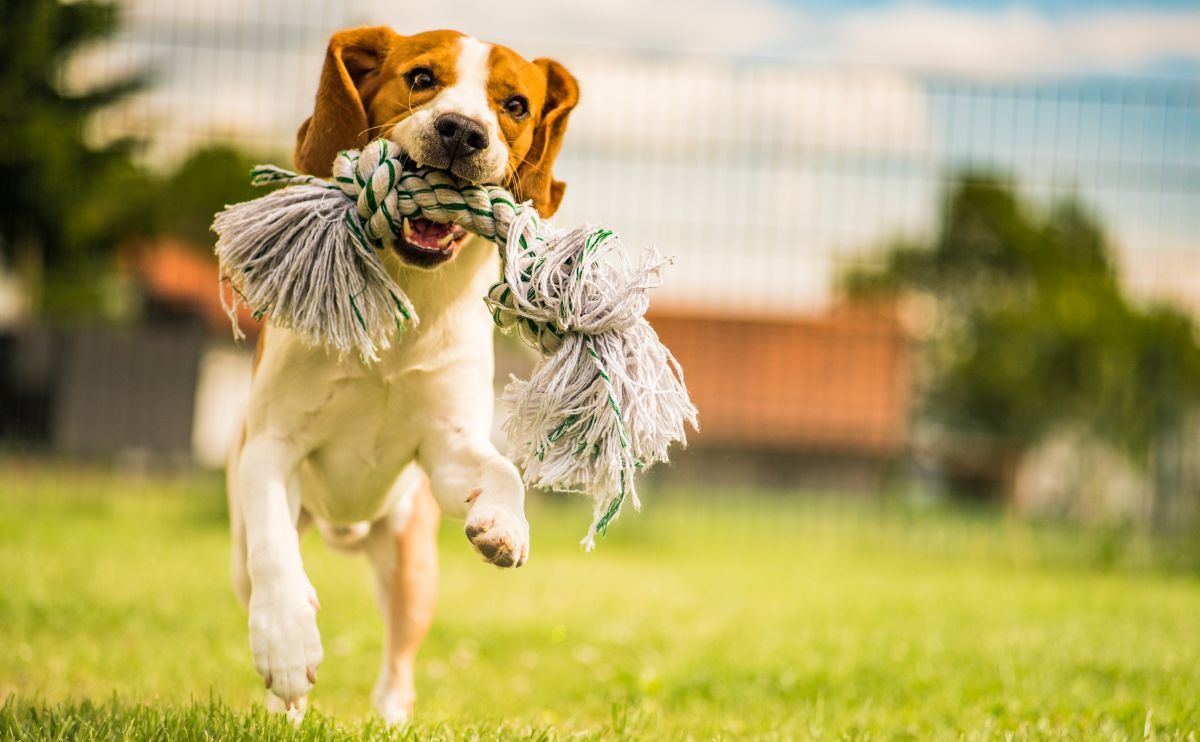
Letting your dog run in a secure space is one of the most beneficial — and often most appreciated — exercises. The recall game (calling, rewarding when they return) combines physical expenditure and obedience reinforcement.
⚠️ An Important Precaution: ensure the space is well-fenced. A dog running at full speed can cover several miles in a few minutes — and disappear from your sight very quickly.
It’s precisely in these moments that a GPS tracker for dogs can save the day!
Swimming #
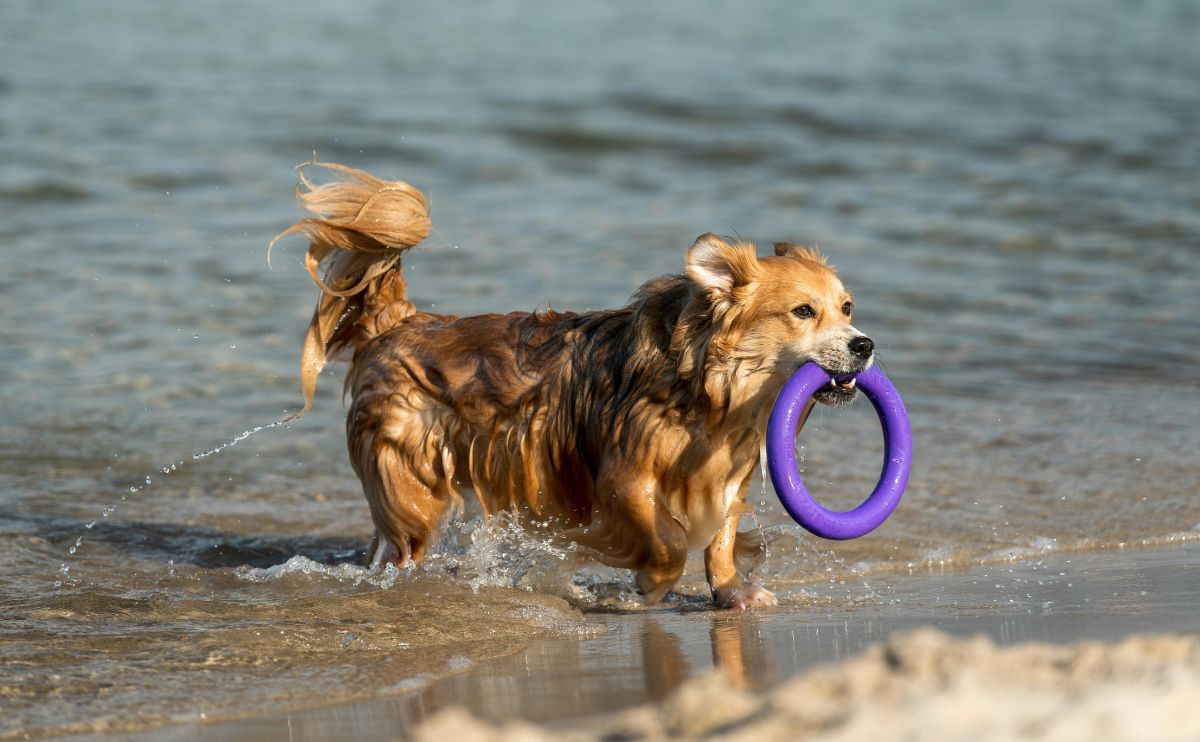
Ideal for dogs suffering from arthritis, dysplasia, or overweight. It engages the entire musculature without any joint impact.
It’s even better if you have a Labrador, a Golden Retriever, a Newfoundland, or a Spaniel. These breeds generally love water. For others, a gradual introduction often works wonders.
Fetch #
Simple, effective, popular. Ball throwing develops coordination, endurance, and natural recall. Some precautions to take, however: avoid repetitive throws uphill or on hard surfaces, and limit sessions to 15-20 minutes for puppies.
Agility #
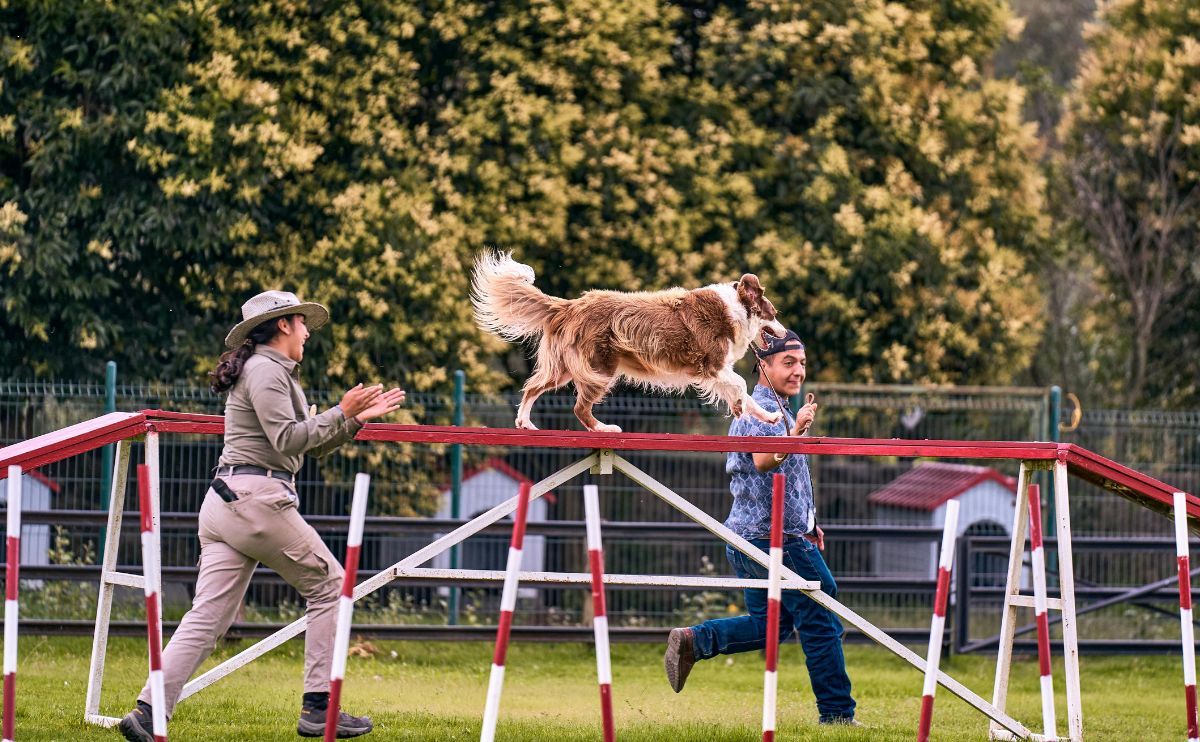
This is a guided obstacle course, practiced in clubs. Agility (as the name suggests) develops agility, reactivity, and self-confidence — and significantly strengthens the bond with the owner.
It’s accessible to beginners, with clubs all over France. It’s one of the activities we recommend primarily for high-energy breeds and dogs that need to channel their minds.
Canicross and Bikejoring #
Running or mountain biking attached to your dog. Ideal for Huskies, Malinois, Border Collies. The expenditure is considerable in a short time. A pulling harness and an appropriate elastic line are essential for the safety of both partners.
Discover our guide to canine sports to keep your dog fit 👉 Canine Sports: The Ultimate Guide for a Fit Master-Dog Duo
The Mental Fatigue of Dogs: The Forgotten Aspect of Canine Activity #
A dog can have run for two hours and still be restless. Because the body is tired, but not the mind.
Mental stimulation is as important as physical exercise. In a domestic environment, dogs are deprived of the cognitive challenges they would encounter in the wild — and this frustration often manifests as undesirable behaviors.
Good news: a few minutes a day can make a real difference!
- Olfactory Search: hide treats in the grass, use a snuffle mat, turn over boxes. Working the nose is mentally exhausting — and it’s the dog’s primary ability.
- Puzzles and Occupation Toys (Kong, intelligence games): they force the dog to think to access their reward.
- Obedience and Tricks: learning a new command, even 5 minutes a day, stimulates as much as it strengthens the bond.
- Tracking: following a scent trail laid on the ground. Natural, enriching, accessible without special equipment.
What to Absolutely Avoid for Your Dog #
High-Impact Exercises for Puppies #
Before the closure of growth plates — between 12 and 18 months depending on the breed size — repeated jumps, long runs, and frequent stairs can cause dysplasias and permanent joint injuries. The American Kennel Club recommends limiting imposed exercise in puppies and favoring free play at their pace.
Exercise in High Heat #
A dog can suffer from hyperthermia at just 77°F during sustained effort. And the situation deteriorates very quickly. If you want to adapt your dog’s summer routine, our article on the influence of heatwaves details the risks and precautions season by season.
💡 In practice: no sport between 11 am and 5 pm in summer. Only early in the morning or in the evening.
Signs of heatstroke — excessive panting, heavy salivation, pale or red gums, staggering — constitute a veterinary emergency.
Intense Exercise Right After Meals #
In large breeds (Great Dane, Saint Bernard, German Shepherd), exercise within an hour after a meal can promote gastric dilatation-volvulus syndrome — a deadly surgical emergency. Always wait at least 2 hours.
Overtraining #
Too much exercise can be as problematic as too little. Signs to watch for: limping, stiffness upon rising, disinterest in outings, unexplained weight loss. If these signals appear, reduce intensity and consult your veterinarian.
The 5 Most Common Mistakes #
1. Giving the Same Amount of Exercise All Year Round. #
Needs vary according to seasons, age, and health status. A convalescent or arthritic dog in winter does not have the same needs as one in full health in spring.
2. Counting Potty Breaks as Exercise. #
Three 5-minute leash outings do not constitute physical activity. Exercise is real energy expenditure — brisk walking, running, active play.
3. Believing the Garden Replaces Outings. #
A dog with access to a garden is not necessarily active. And that’s precisely the trap: increasingly, we consider that dogs in apartments expend more energy because their owners have no choice but to take them out.
Without stimulation, most remain sedentary in their space. The garden does not exempt from regular outings.
4. Ignoring Signs of Fatigue or Pain. #
A dog that refuses to move forward, limps slightly, or licks their paws after an outing is sending a message. These behaviors are too often interpreted as laziness, when they may indicate real pain.
5. Not Measuring Actual Activity. #
“My dog moves a lot” is often an impression. Without data, it’s hard to know if needs are truly met — or if your dog is overexerting.
How to Track Your Dog’s Activity Daily #
Observing your dog is good. Having data is better.
Measuring activity allows you to verify that needs are truly met, detect a decrease in activity or nocturnal restlessness that may signal a health problem, and gradually adjust effort if your dog is in rehabilitation or resuming after a sedentary period.
The Invoxia Biotracker: More Than Just a GPS #
The Invoxia Biotracker is the first dog tracker that combines GPS location and real-time biometric tracking.
What it measures:
- Real-time GPS location with customizable safety zones
- Daily activity: distance traveled, duration, calories burned, type of activity
- Resting heart rate and respiratory rate — two key health indicators
- Sleep quality: duration, phases, nocturnal restlessness
Unlike a simple step counter, it gives you a complete and long-term view. If you want to understand how to use this data daily, our guide on monitoring your dog’s health explains concretely which indicators to monitor and how often.
How to Integrate the Biotracker into Your Routine #
- Observe First: for the first two weeks, just look at the data without changing habits. You get a reference profile.
- Set a Goal: depending on breed and age, determine a target daily activity threshold.
- Adjust Gradually: if activity is regularly below, increase in stages.
- Share with Your Veterinarian: a history of heart rate and activity is valuable information during consultations.
In Summary #
Exercise is not a constraint. It’s what allows your dog to be balanced, healthy, and happy daily.
The key is adaptation: to the breed, age, season, health status. And sometimes, it’s simply having the right data to stop improvising.
A dog comfortable in their paws is often a dog comfortable in their mind!
FAQ: Exercises and Activities for Dogs #
How long should you walk your dog each day? #
It primarily depends on the breed. A Border Collie or a Husky needs 1.5 to 2 hours of intense activity per day. A Labrador or a Golden Retriever, between 1 and 1.5 hours. A French Bulldog or a Pug, 20 to 30 minutes is enough — and even too much effort is discouraged due to their airways. Age also matters: a puppy doesn’t have the same needs as an adult, and a senior dog requires reduced intensity.
What exercises can you do with your dog at home? #
Even without outdoor space, it’s possible to stimulate your dog. Olfactory search games (hiding treats, snuffle mats), puzzles and occupation toys, obedience or trick training sessions are very effective. Mental stimulation tires as much — sometimes more — than physical exercise.
At what age can you start running with your dog? #
Not before 12 to 18 months depending on the breed size. In large breeds, growth plates close later. Before this age, intensive running can cause permanent joint injuries. Always start with short distances and gradually increase.
My dog doesn’t want to walk — what should I do? #
A dog that refuses to walk may be sending a signal. It’s not necessarily laziness: paw pain, early arthritis, too high temperature, fatigue, stress — the causes are numerous. If the behavior is new or persistent, a veterinary consultation is necessary before interpreting it as a whim.
Does the garden replace outings for my dog? #
No. A dog with access to a garden is not automatically active. Without external stimulation — new environments, smells, interactions — most dogs remain sedentary in their familiar space. The garden is a complement, not a substitute for outings.
How do you know if your dog is getting enough exercise? #
The signs of a lack of activity are quite readable: destructive behaviors, hyperactivity at home, weight gain, restlessness at bedtime. Conversely, a dog that limps, is stiff in the morning, or shows disinterest in outings may be overworked. To go beyond impressions, an activity tracker like the Invoxia Biotracker allows you to objectively measure daily expenditure and detect variations over time.
Can you exercise with an overweight dog? #
Yes, but gently. Short walks at a brisk pace (20-30 min, twice a day) and swimming are the best options to start — they engage the body without overloading the joints. Avoid running and jumping.
This article is written for informational purposes. If in doubt about your dog’s health or activity level, consult your veterinarian.