

A Belgian Malinois will never tell you they are tired. In a law enforcement K9 unit, they will jump in the truck, pick up the track and go back into bitework with the same drive, even when it’s running on empty. That’s exactly what makes their fatigue so hard to spot, and so important to monitor.
So how do you know when a dog that “always wants more” actually needs a break? A young veterinarian, Dr. Alice Ruellan, looked for the answer where no one else was looking: in dogs’ hearts, while they sleep. Her thesis, conducted with the dogs of a French Gendarmerie K9 unit and the Biotracker, shows that a few extra beats per minute each night can signal poor recovery before any drop in performance or motivation is noticed.
A veterinary thesis inside a K9 unit #
In France, every veterinary student completes a research project to earn their Doctor of Veterinary Medicine degree: the doctoral thesis. Alice Ruellan chose an unusual setting: the K9 unit of the French Gendarmerie, France’s national police force. She defended her thesis on December 19, 2025, at the National Veterinary School of Alfort (near Paris), under the supervision of Professor Valérie Chetboul*, a veterinary cardiologist at the school. Her work has since received the Vet IN Tech thesis award at NUManima 2026, a trade show dedicated to connected animal health.
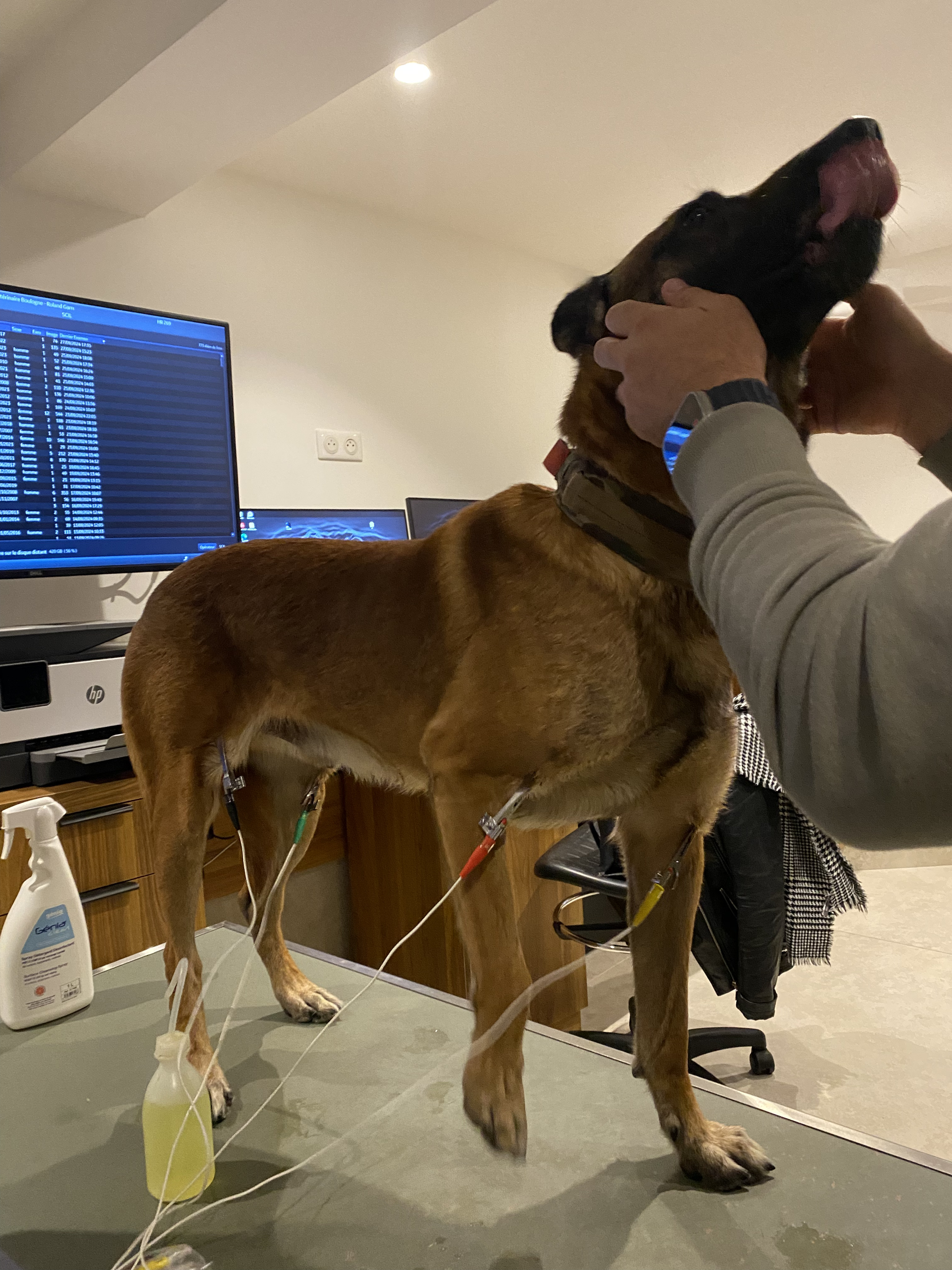
The study ran from 2023 to 2025 in partnership with Invoxia, which provided the collars and access to the data. Here’s how it worked:
- ten active-duty Malinois, aged 5 to 9, underwent a complete cardiac workup (medical history, heart auscultation and general physical exam, echocardiogram, electrocardiogram);
- they then wore the Biotracker for several days in a row, in their real working lives: training, missions, rest;
- their data was compared with that of pet Malinois and healthy large-breed dogs.
Why look at the heart at night? #
During the day, a dog’s heart rate changes constantly: they play, run, bark, get excited about a walk. It’s impossible to get a clear read. At night, though, the dog is calm. Their heart slows down and reveals their true fitness level, a bit like our own pulse when we wake up.
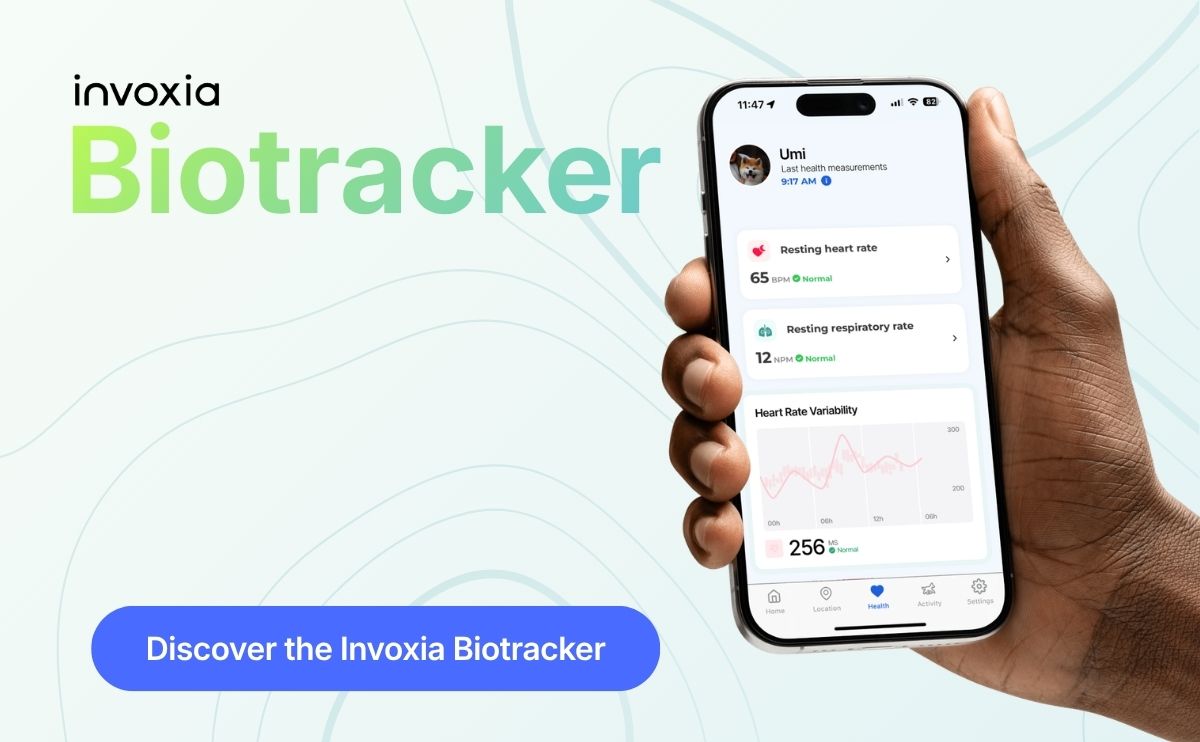
That’s what the Biotracker measures: every night, it records the dog’s resting heart rate and respiratory rate, with no electrodes, by picking up the tiny vibrations of the heart through its body. Day after day, it learns each dog’s personal baseline.
An athlete’s heart #
First finding: these police dogs have the hearts of athletes. While they slept, their median heart rate was around 59 beats per minute. That’s much slower than what’s measured at the vet, where the stress of the visit speeds the heart up.
In 7 out of 10 dogs, the electrocardiogram also showed a slight slowing of the heart’s electrical conduction. Nothing to worry about: it’s a classic sign of a well-trained athlete, also seen in human athletes. And unlike some human athletes, their hearts had not thickened or enlarged with training.
A heart is not a metronome #
Second finding, more subtle. A healthy heart doesn’t beat perfectly evenly: the time between two beats keeps changing slightly. This is called heart rate variability (HRV). The higher it is at rest, the more easily the body switches between effort and recovery. When it drops, the body is often under strain: fatigue, stress, not enough recovery. The unit’s dogs had lower heart rate variability than pet Malinois. According to Alice Ruellan, training itself isn’t the cause. It’s more likely their day-to-day life: stress, frequent changes of environment, recovery periods sometimes cut short by field demands, and the age of these dogs, most of them nearing the end of their careers.
Spotting overtraining: the story of a young dog #
The most striking part of the thesis is the story of a two-year-old Dutch Shepherd in training. After several weeks of training (more intense, with lots of new things to learn), his handler noticed changes: the dog bit less decisively, was less expressive, was a bit off his food and stayed unusually quiet in his transport crate. Yet at the physical exam and blood test, the dog seemed fine.
The collar, however, had picked something up. During the weeks when the dog was doing well, his heart beat on average around 65 beats per minute at night. During the period of fatigue, it climbed to around 75: about ten extra beats per minute, every night.
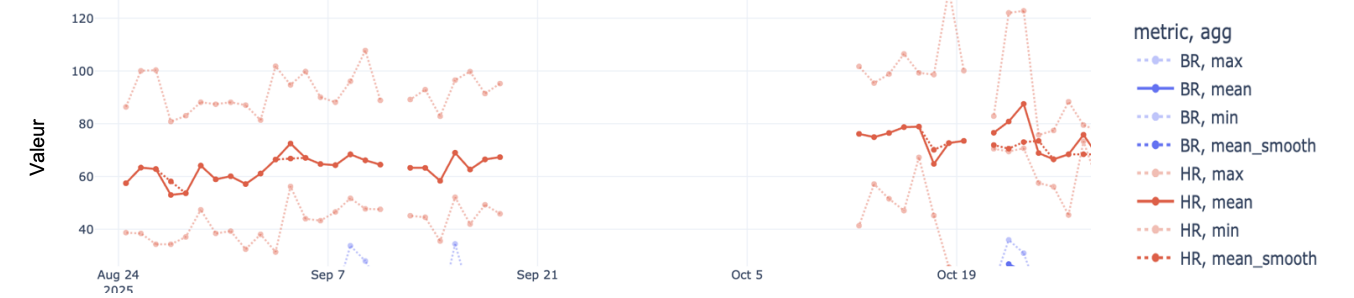
Each dot is one night: resting heart rate climbs as signs of fatigue appear. Source: Ruellan A. (2025). Étude pilote du Biotracker GPS Invoxia® chez le chien athlète d’unité d’élite (Pilot study of the Invoxia GPS Biotracker in elite-unit athlete dogs), veterinary doctoral thesis, Faculty of Medicine of Créteil (UPEC), figure 30, p. 82. HAL dumas-05507594, CC BY-NC-ND 4.0 license, reproduced with the author’s permission.
Interestingly, his respiratory rate barely moved. It really was the heart that raised the alarm.
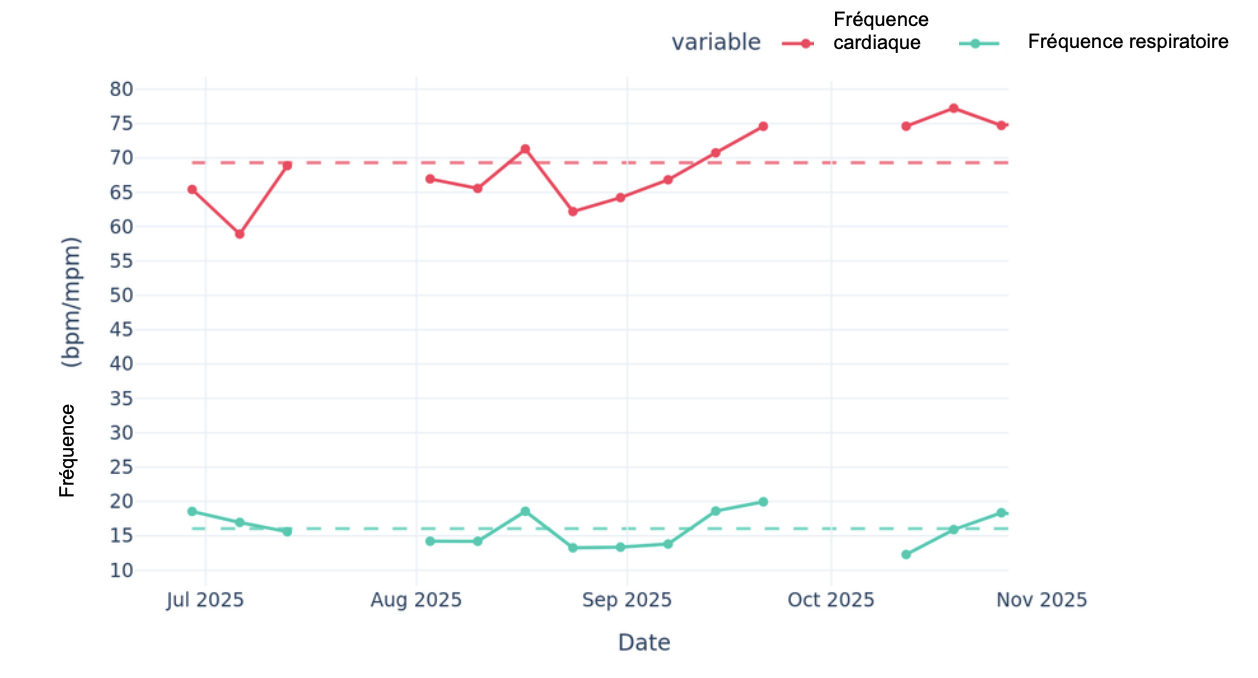
Week by week, the resting heart rate rises during the period of fatigue while breathing stays stable. Source: Ruellan A. (2025), veterinary doctoral thesis, Faculty of Medicine of Créteil (UPEC), figure 31, p. 82. HAL dumas-05507594, CC BY-NC-ND 4.0 license, reproduced with the author’s permission.
His heart rate variability had also dropped. You can see it clearly on a chart called a “Poincaré plot”: each dot compares the length of one heartbeat to the next. When the heart is relaxed and varies freely, the dots form a wide cloud. When the body is under strain, the cloud tightens.
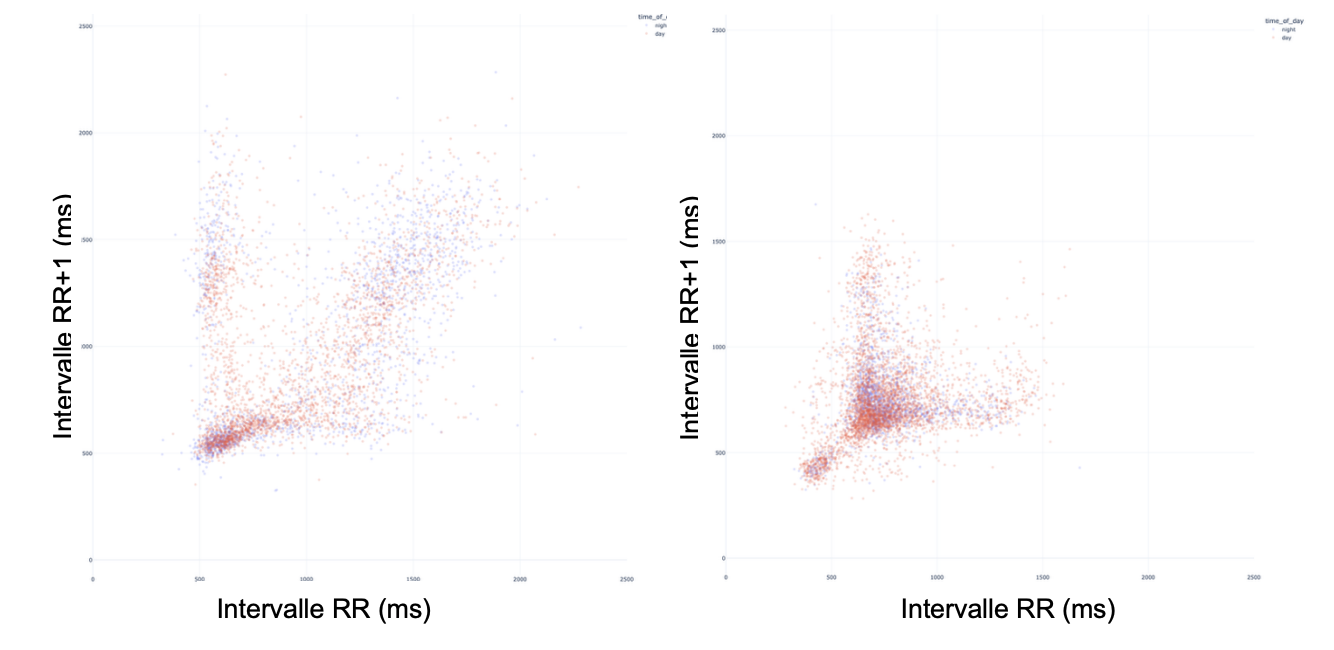
Left: a night in September when the dog is doing well. Right: a night in October during the period of fatigue: the cloud of dots tightens. Source: Ruellan A. (2025), veterinary doctoral thesis, Faculty of Medicine of Créteil (UPEC), figure 32, p. 83. HAL dumas-05507594, CC BY-NC-ND 4.0 license, reproduced with the author’s permission.
This profile, a faster and less variable heart at rest, matches what is described in human athletes suffering from overtraining. The dog was given an adjusted diet, better hydration after exercise and real rest periods.
What handlers think of daily monitoring and the Biotracker #
At the end of the study, nine of the unit’s handlers shared their feedback. Eight out of nine find it useful to monitor their dog’s heart and breathing. All of them would like to be alerted to a cardiac risk, and eight out of nine to overtraining. As one of them put it, it’s hard to dial in a dog’s training “because a Malinois always wants more.”
They also put the collar through its paces and flagged its limits in the field, especially attachments that don’t always hold up to bitework. Their feedback is now helping Invoxia design a collar built for working dogs.
What about your dog? #
Your dog probably isn’t a police K9, but their heart works the same way. And overtraining isn’t just a problem for police dogs: in the surveys conducted for the thesis, about 3 in 10 owners, whether they have a working dog or a sport dog (canicross, bikejoring…), say they’ve already noticed signs of overtraining in their dog.
Getting back into exercise too fast, a stressful stretch, a move, recovery from an illness or surgery: in all these situations, your dog’s resting heart says a lot about how well it’s recovering. The Biotracker tracks their resting heart rate, respiratory rate and heart rate variability every night, and shows you when something changes compared to their usual patterns. It’s not a diagnosis, but it’s a good signal to ease off, adjust walks and activity, or talk to your vet.
Your questions, answered #
What is a normal resting heart rate for a dog? #
During sleep, it’s much lower than at the vet. In the thesis, the median was about 53 beats per minute in pet Malinois and 59 in the K9 unit’s Malinois. Every dog has their own normal: what matters is how it changes compared to their usual patterns.
What is heart rate variability? #
Heart rate variability is the small variation in time between two heartbeats. At rest, high variability is generally a good sign: the body is recovering well. A lasting drop can reflect fatigue, stress, lack of recovery or a heart condition.
How can I tell if my dog is too tired? #
Less drive or lower performance, a smaller appetite, a dog that’s unusually quiet, wanting to sleep more than usual: these are signs to take seriously. A heart that beats faster than usual at night, several days in a row, can be another one. If in doubt, talk to your vet.
Can the Biotracker detect a health problem? #
The Biotracker is a monitoring tool: it spots changes in your dog’s data at rest, but it doesn’t make a diagnosis. It helps you know when to talk to your vet and can help catch certain conditions before they become truly serious. Only a veterinarian can then make a diagnosis.
Learn more #
Alice Ruellan’s full thesis (in French) is freely available on the HAL open archive: Étude pilote du Biotracker GPS Invoxia® (outil biométrique connecté) chez le chien athlète d’unité d’élite : faisabilité et analyse des marqueurs digitaux cardiorespiratoires et actimétriques. It’s a pilot study on a small number of dogs: its findings open up avenues that further research will need to confirm.
*Prof. Valérie Chetboul also led the AI-Collar study, conducted on more than 700 dogs worldwide with the Biotracker, which is redefining resting heart rate norms for dogs.