




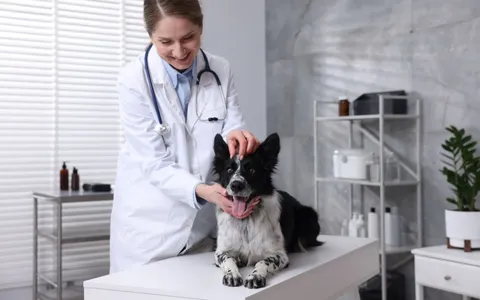

Canine mitral valve disease:get ahead of the symptoms
No heart condition is more common in dogs than myxomatous mitral valve degeneration (MMVD), and it moves forward quietly. Clipped to your dog's collar, the Invoxia Biotracker keeps a continuous eye on resting heart rate and breathing so you can catch a shift before anything shows.
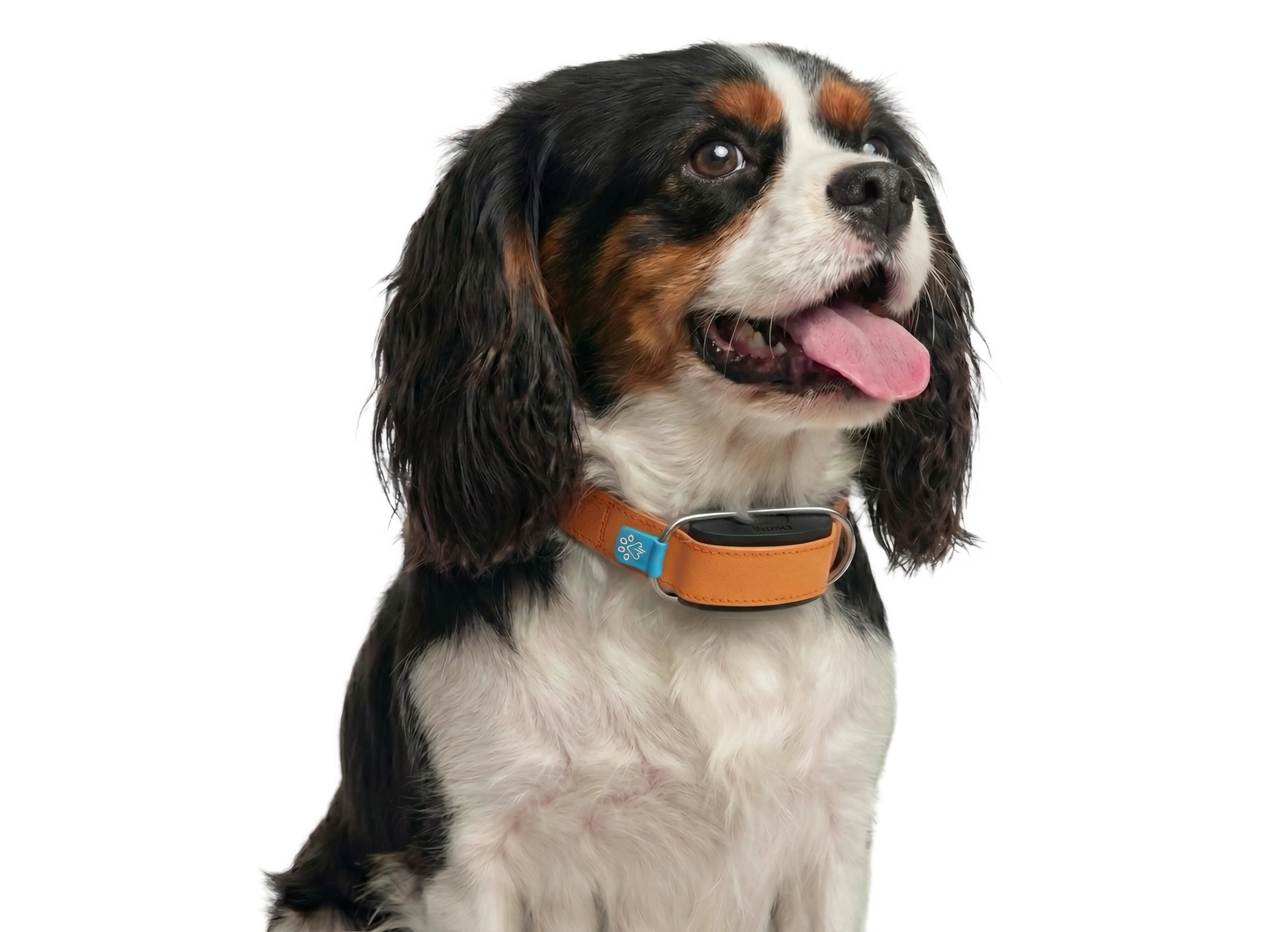




Biotracker:because every beat counts
Biotracker watches over your dog's heart health all day long. It follows their breathing rate, picks up irregular rhythms and lets you know about changes your vet should hear about. Peace of mind that rides along on their collar.
The Plus and Max GPS plans include alerts and the daily report.
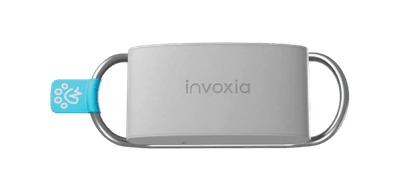
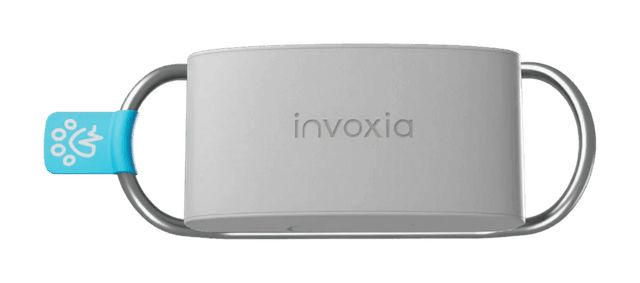
Biotracker
Daily heart tracking for your dog
- Heart rate and breathing rate at rest
- Screens for atrial fibrillation (AFib) risk
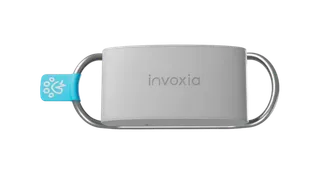
- 37 g (1.3 oz), fits any collar
- Shareable report for your vet
Starting at
Shop Biotracker
What daily trackinghelps you catch
Early, subtle changes slip right past manual checks. Biotracker fills in the months between vet visits with real data. Plus and Max GPS plans include the daily report.
 Breathing rate at rest
For dogs with mitral valve disease, this is the number the ACVIM advises checking daily. Biotracker logs it for you while your dog sleeps.
 Heart rhythm patterns
According to our data, changes in heart rhythm can show up weeks or even months ahead of breathing symptoms. Biotracker also gives an estimate of atrial fibrillation (AFib) risk.
 Rest and activity
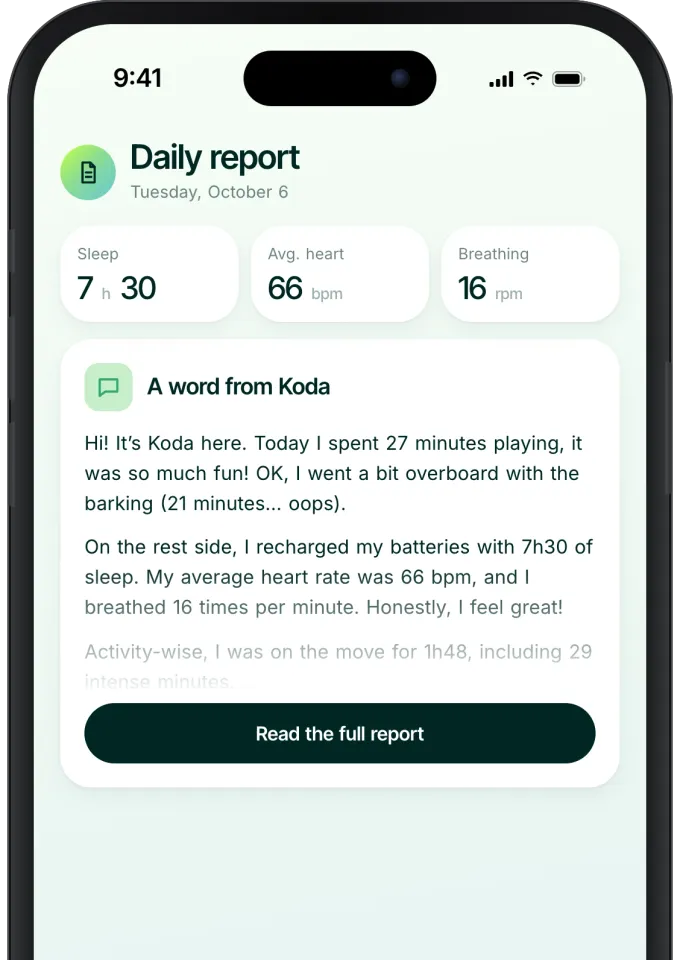
Fewer walks or more restless nights appear on the chart well before your dog looks visibly worn out.
 Report for your vet
Clinics on Biotrack can check charts and trends remotely. Otherwise, grab a complete PDF report ahead of the appointment.
From the first readingto your next vet visit
Biotracker is not a diagnostic tool. Its job is to record what goes on between checkups and point out anything that breaks from your dog's normal routine.
Readings at rest
As many as 30 readings a day, taken whenever your dog naturally settles down. When your dog is lying quietly next to you, you can also run a one-minute instant reading.
Learn what's normal
Over time, the readings build a set of reference values for your dog specifically, rather than for the breed as a whole.
Get notified of changes
If a trend drifts away from those reference values and stays there, you get a push notification and an email. Plus and Max GPS plans include alerts.
Loop in your vet
Share everything through the Biotrack platform, which opens up all health and activity data, or download a PDF from the app.
Track the treatment
After treatment begins, the charts let your vet or cardiologist see how your dog is responding and fine-tune the dosage.
Symptomsthat mean it's time to see the vet
Often the first clue isn't something you see but something your vet hears: a heart murmur found during a routine exam. Once symptoms show up (coughing, low energy, trouble breathing), the disease has frequently progressed to an advanced stage.
Treat it as an emergency if your dog is laboring to breathe at rest, panting with an open mouth for no clear reason, shows blue-tinged gums or tongue, or collapses. Head to your vet or an emergency animal hospital right away.

Breathing · Quicker than normal at rest
Noticed while your dog sleeps, several days in a row, when heat, exercise and stress are not a factor. This is often the earliest sign that pulmonary edema is building.

Coughing and fatigue · Slowing down
A persistent cough, especially at night or first thing in the morning, walks that get cut short, slower recovery or poor sleep.

Emergency · Fainting or collapse
Losing balance, passing out briefly, or a belly that visibly "works" with each breath all mean your dog needs to be seen immediately.
How mitral valve diseaseaffects the heart
Between the left atrium and the left ventricle sits the mitral valve. As the disease sets in, the valve leaflets get thicker and no longer seal, so blood leaks back the wrong way. The heart compensates by working harder, frequently for years with no outward sign.

Blood leaking back
Each heartbeat pushes some blood backward, which creates the murmur your vet picks up with a stethoscope. An echocardiogram, often paired with chest X-rays, confirms the diagnosis and the stage.

Linked to age, and partly to genes
Small dogs are mostly affected, typically as they get older. Cavalier King Charles Spaniels carry a strong inherited risk, so the disease shows up far earlier in them.

When the leak leads to pulmonary edema
As the left heart enlarges, pressure rises in the lungs and fluid may collect there. That is pulmonary edema, the leading complication of mitral valve disease.
ACVIM stagesof mitral valve disease
The ACVIM consensus statement breaks the course of the disease into stages. Dogs spend most of that time in stage B, while appearing completely healthy.
A · At-risk dog
A breed known to be predisposed, like the Cavalier King Charles, with no murmur and nothing abnormal found yet. Plan on a checkup once a year.
B1 · Murmur, normal heart size
The valve is leaking, yet the heart shows little or no enlargement. No medication is needed, just regular checkups.
B2 · Murmur, enlarged heart
The heart has grown larger but there are still no symptoms. At this point, your vet may recommend preventive treatment.
C · Congestive heart failure
Heart failure signs such as pulmonary edema have developed. From here on, medication is given every day for life.
D · End stage
Standard treatment no longer controls the heart failure, and a cardiologist takes over care.
According to the EPIC study, starting treatment at stage B2, while the dog still has no symptoms, pushes back the onset of heart failure by roughly 15 months. Catching the disease early therefore directly shapes the treatment plan your vet puts in place.
Sleeping breathing rate:the number to keep an eye on
To spot congestive heart failure before symptoms become visible, ACVIM (American College of Veterinary Internal Medicine) guidelines advise checking the resting breathing rate every day. A rise past 25 to 35 breaths per minute may be a warning that pulmonary edema is on the way.
| Group studied | Breathing rate |
|---|---|
| Dogs with mitral valve disease and no symptoms, asleep | Typically below 25/min, seldom over 30/min |
| Heart failure not yet under control | Most dogs go above 40/min |
| Heart failure under control, asleep | Median 20/min; staying below 30/min is a reasonable goal |
Don't treat these numbers as diagnostic cutoffs; your vet will let you know when to call. If you're counting yourself, watch your dog for one minute of deep sleep somewhere calm and not too warm, and count each inhale plus exhale as a single breath. Because Biotracker measures all the time, any upward drift appears on the chart and nobody has to stay up counting.
Sources: VetCompass, Royal Veterinary College; The Veterinary Journal; ACVIM consensus, 2019.

Before and after a diagnosis
Before: notice the changes
Maybe your dog is a predisposed breed, or the vet just found a murmur, and everything seems fine. Tracking now records what's normal for your dog while they're healthy.
- A reference breathing rate, taken during sleep
- A concrete reason to move up an echocardiogram
After: track how it evolves
Your dog has started treatment. Vet visits are months apart, but the disease keeps going, so tracking fills in that gap and gives your vet solid data to work from.
- Continuous history instead of occasional snapshots
- A report you can send ahead of every checkup
Related reading: pulmonary edema, dilated cardiomyopathy and canine arrhythmias.
Breedsat highest risk
Heart disease develops in 1 out of every 10 dogs. Among Cavalier King Charles Spaniels, that figure reaches 1 in 2 by age 5. Mitral valve disease mostly strikes dogs under 44 lb (20 kg) and becomes very common as they age: per the ACVIM, as many as 85% of small dogs have a valve lesion by age 13. Cardiologists advise screening Cavaliers, Dachshunds and toy and miniature Poodles every year.

The textbook example, since the disease shows up early in life. Read more about the Cavalier King Charles Spaniel.
Annual screening is recommended for the Dachshund.
Yearly screening makes sense, particularly as these dogs reach their senior years.
Among the breeds most at risk, along with the Pomeranian, Shih Tzu and Papillon.
These breeds are at risk too, as are the Boston Terrier and Whippet.
Whatever the breed, a small dog moving into its senior years should get the same level of attention.
Recommendedby vets
When it comes to your dog's health, a gadget isn't good enough. Vets rely on Invoxia for its clinical-grade accuracy and proven dependability. Biotracker covers two key needs:
- Catching problems early, such as arrhythmias or breathing issues, before they turn into emergencies.
- Following treatment, with clear trends that guide medication and protocol changes over time.
It reaches 99.6% accuracy for heart rate, 98.6% for breathing rate and 92% sensitivity for AFib detection, bringing clinic-level precision home (validation study).
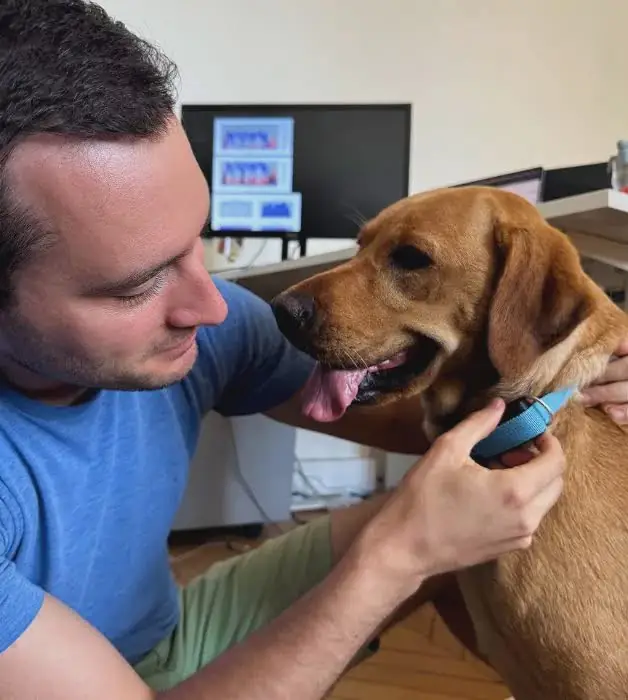
Keep tabs on cardiac patients from a distance
Biotrack is the professional platform from Invoxia. It gathers data from every patient wearing a Biotracker, so you can follow the dogs you consider at risk in between visits.
HeartPrint™:a picture of every heartbeat
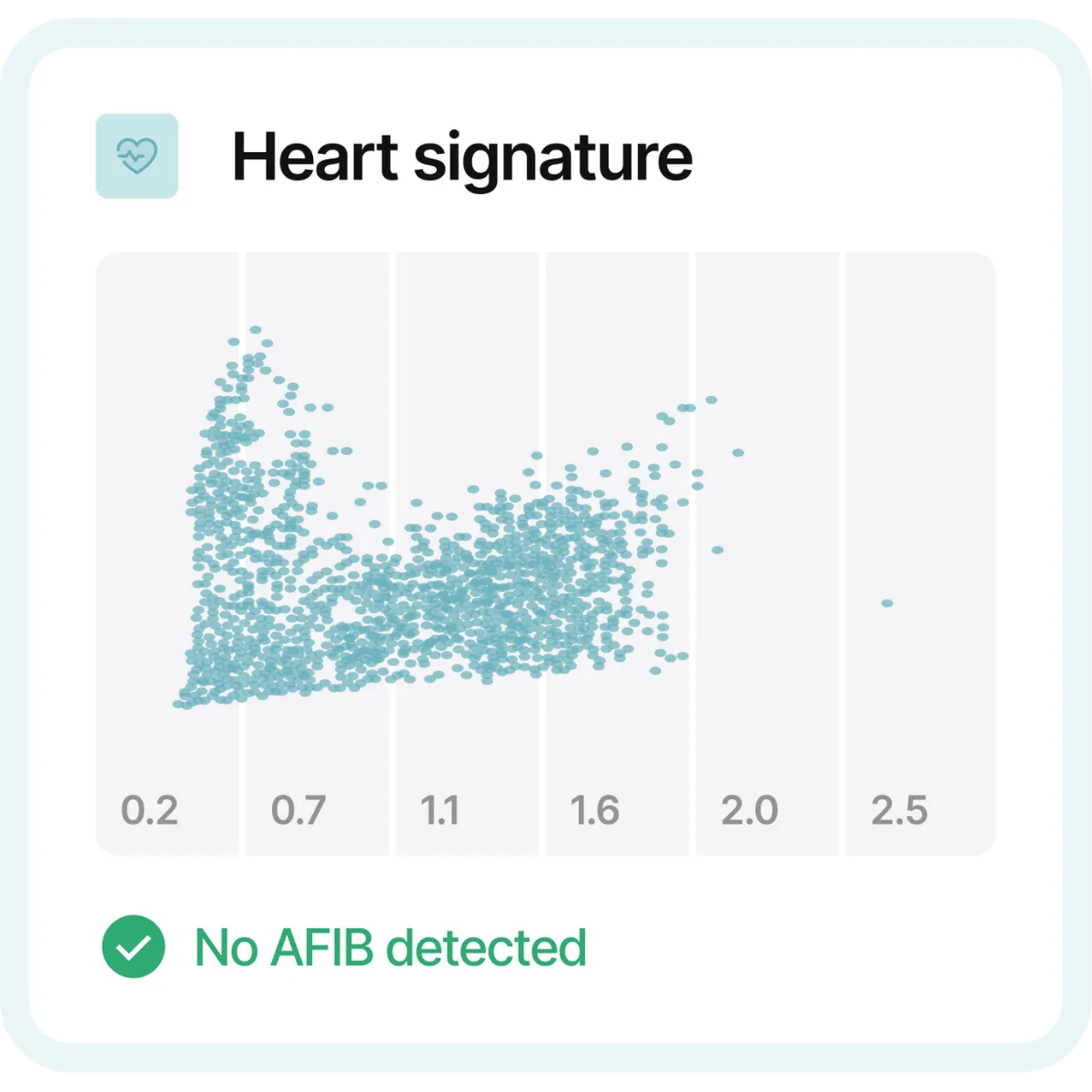
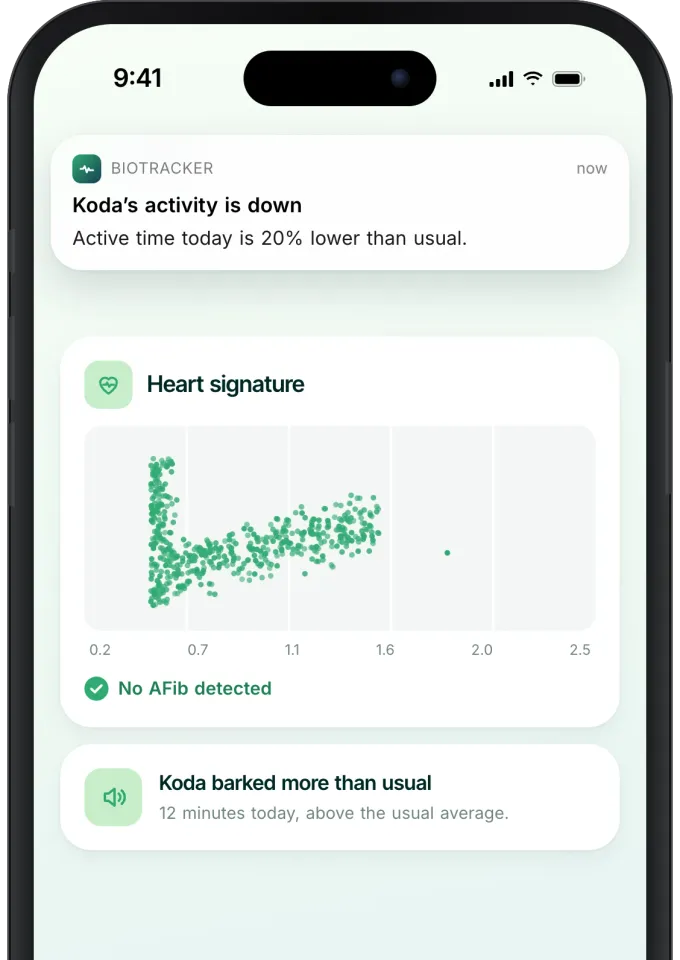
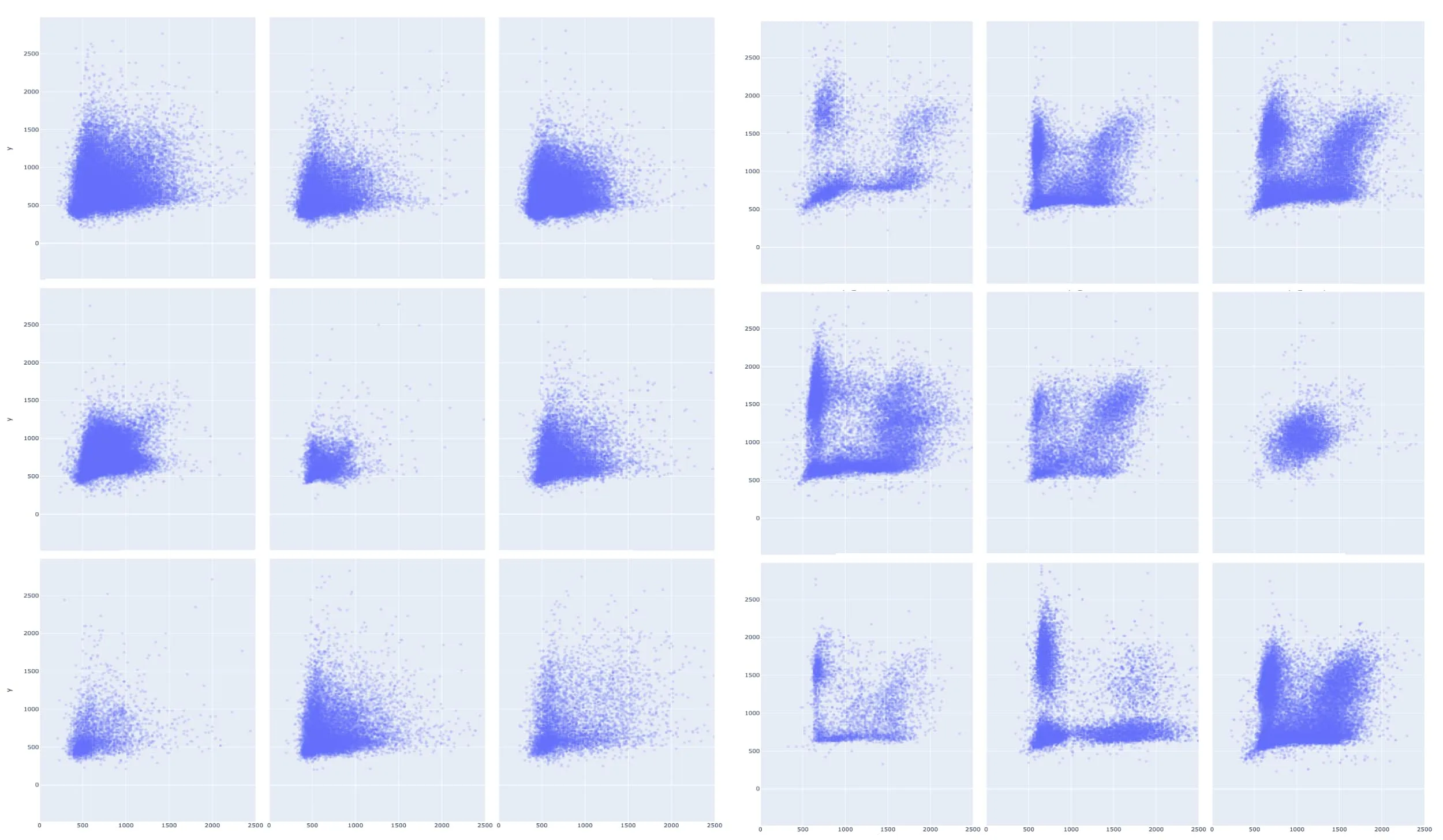
Biotracker is built around HeartPrint™, a technology based on research by The Next Heartbeat. Instead of reporting an average heart rate, HeartPrint™ picks out each individual heartbeat while your dog rests and plots it on a Poincaré (or Lorenz) plot, creating a visual fingerprint of the heart's rhythm across hours or days.
One dot equals one beat. Cardiologists use this 2D signature to recognize patterns like sinus arrhythmia or extrasystoles that are hard to see in a raw stream of data. How does that help with mitral valve disease? When the left atrium becomes very enlarged, rhythm problems are more likely, and AFib alerts point to a risk your vet can confirm with an ECG.
Smart tech that looks aftertheir heart
Hands-free health tracking
Heart rate and breathing measured at rest, around the clock.
Intelligent health alerts as soon as early breathing or heart irregularities appear.
The world's first AFib detection for dogs, flagging dangerous arrhythmias automatically.
Made for everyday life
Featherlight at 37 g (1.3 oz), it clips onto any collar and stays comfortable on even the tiniest breeds.
Clip it on and forget it: waterproof, with up to 15 days per charge.
No skin contact needed: no shaving and no tight collar, so your dog stays relaxed.
Proof of whatearly detection can do
"My dog Oliver was my initial reason for purchasing the Invoxia Biotracker. Oliver had diabetes and a congenital heart defect (tricuspid valve dysplasia). As a result he was in congestive heart failure at a year old. However, with medication management and lifestyle consistency, Oliver lived to be 9 years old!!
Around 7 or 8 though he started getting sicker and showing some varieties of symptoms. While I had already been using continuous glucose monitors on him for years, I had not been able to reliably track his heart rates and respiratory rates. The Biotracker provided that metric for us and allowed me to monitor and adjust Oliver's heart medications in crucial ways.
I fundamentally believe the metrics gave us at least a year more of his life. Unfortunately he passed away in January this year from cancer, which is crazy because it ultimately wasn't his heart or his diabetes! I still use the tracker on my remaining senior dog Vincent but he's in near perfect health so it's fun to see what "normal dog" rates look like and track his optimal health metrics.
I love it and if (or when) I get another dog, regardless of age or health, I'm pretty sure I'll get another Invoxia Biotracker. Thank you!"
- Mrs. Johnson, Oliver's devoted parent

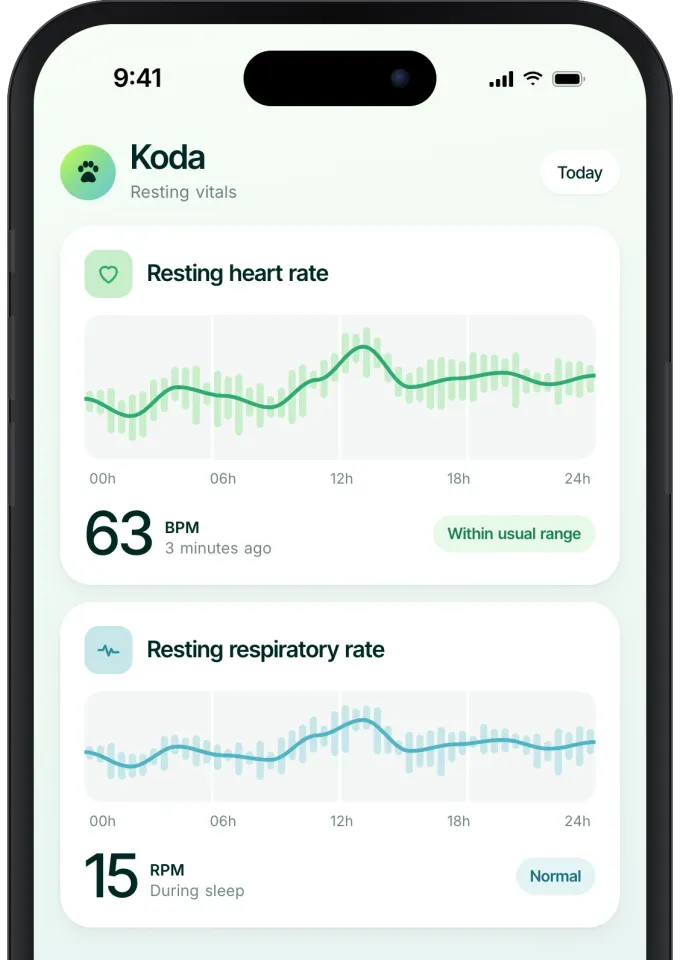
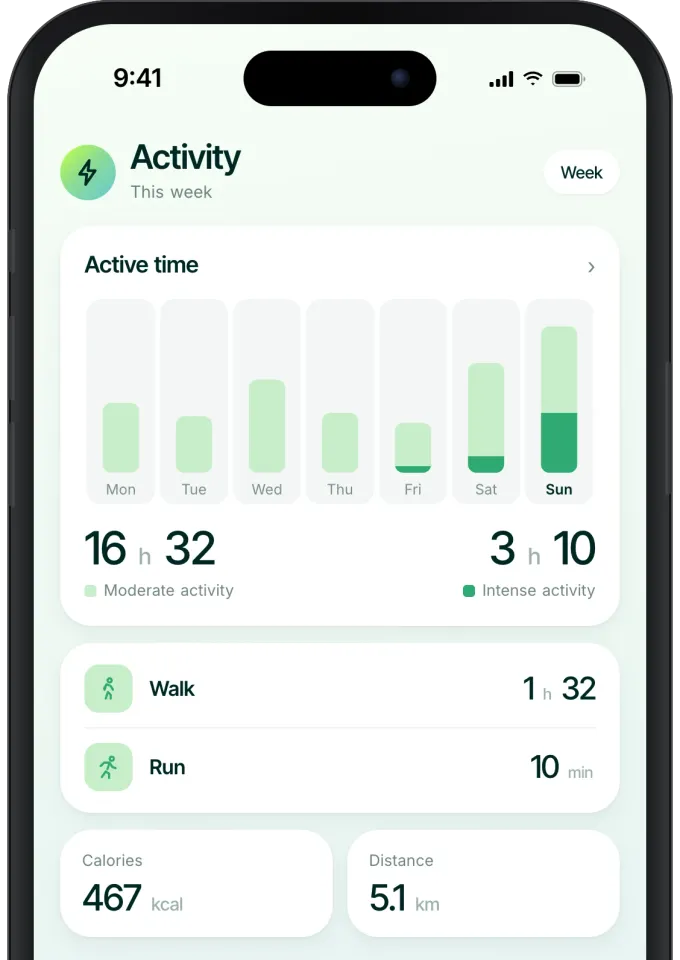
Their heart, on your phone,all in one app.
Check trends, get alerts and send reports to your vet team without leaving your phone. The Plus and Max GPS plans include alerts and the daily report.


More reading onyour dog's heart
Mitral Valve Disease in Dogs: Everything You Need to Know About This Heart Disease

Mitral Valve Disease in Cavalier King Charles: Everything You Need to Know!
Minitailz Biotracker GPS Enhances Atrial Fibrillation Detection in Dogs: A Leap Forward for Canine Heart Health
Senior Cardiac Dog: How to Effectively Monitor Its Heart
Your questions about mitral valve disease in dogs
Questions we often hear from Cavalier parents and other small-breed owners before they get started.
Get in touch
It's the heart condition vets see most often in dogs. The mitral valve thickens and stops sealing, letting blood flow backward, so the heart has to work harder, sometimes for years, before any symptoms appear. Heart disease affects 1 in 10 dogs, and among Cavalier King Charles Spaniels the figure is 1 in 2 by age 5.
Usually nothing you can see at first; the vet picks up a heart murmur. Later on, you may notice faster breathing at rest (easiest to spot while your dog sleeps), coughing, often at night, and tiring quickly with exercise. If your dog struggles to breathe at rest, has bluish gums or collapses, get emergency care.
For a small adult dog, a murmur is very often the first sign of mitral valve disease. The murmur alone can't tell you the stage, though. An echocardiogram is the only way to find out whether the heart is enlarged and whether treatment would help, so ask your vet when to book one.
Stage A covers at-risk dogs with no abnormality. Stage B1 means a murmur without heart enlargement, and no treatment. In stage B2, the murmur comes with enlargement and preventive treatment may be offered. Stage C is established heart failure, such as pulmonary edema. Stage D is heart failure that standard treatment no longer controls.
Any small dog entering its senior years deserves close attention, and certain breeds even more so. The Cavalier is the classic case, along with the Dachshund, toy and miniature Poodle, Chihuahua, Maltese, Pomeranian, Yorkshire Terrier, Shih Tzu, Papillon, Miniature Schnauzer, Cocker Spaniel, Jack Russell Terrier, Boston Terrier and Whippet.
Medication can't repair a damaged valve, but the disease is treatable. According to the EPIC study, preventive treatment at stage B2 holds off heart failure by about 15 months. From stage C on, medication is daily and lifelong, and tracking breathing rate gives your vet what they need to adjust it.
For dogs with heart disease, ACVIM guidelines call for checking the resting breathing rate every day. If it climbs past 25 to 35 breaths per minute, pulmonary edema may be developing, and you should call your vet promptly. Since Biotracker measures continuously, that change appears on the chart without anyone counting breaths overnight.
It automatically measures heart rate and breathing rate whenever your dog is resting, day or night. It also tracks sleep and activity and detects atrial fibrillation, a world first for dogs. Each reading adds to a trend line unique to your dog, and with a Plus or Max GPS plan you get a notification and an email the moment a trend drifts. One tap exports a PDF report for your vet.
Alerts are included with Plus and Max GPS plans. They fire when your dog's readings move away from their own trends for a sustained period. Those trends come from your dog's measurements, not from one threshold applied to every dog.
No. Biotracker monitors; it doesn't diagnose. It alerts you and your vet when something starts to change, sooner and more reliably than counting by hand, while diagnosis, echocardiograms and treatment remain your vet's job. In the EPIC study, treating mitral valve disease before symptoms appeared delayed heart failure by about 15 months, and that's exactly the head start early detection can give you.
Yes. At 37 g (1.3 oz), it clips onto any collar with no need to tighten it, and it measures without touching the skin, so there's no shaving or careful strap adjustment. It's waterproof and lasts up to 15 days on a charge.
Peace of mindstarts with one click
Give your dog round-the-clock heart tracking, and give yourself the confidence to act at the right moment. The Plus and Max GPS plans include alerts and the daily report.
Biotracker is a monitoring device and does not diagnose. It is no substitute for a physical exam or an echocardiogram.