

Police K9, military icon, TikTok star — the Belgian Malinois has a level of fame that goes far beyond the working-dog world. But behind that image lies a harder reality: rescues on both sides of the Atlantic are increasingly stretched thin. In the US, American Belgian Malinois Rescue says it once took in just 10 to 12 dogs a year, back when the breed was still relatively obscure — a volume it has far outgrown since. In Europe, France’s SPA shelter network has recorded a 150% rise in Malinois surrenders over five years, with up to 70% of the dogs given up under 3 years old. This is a demanding working breed, not built for every household. Here’s what you actually need to know before committing.
Belgian Malinois Origins #
The Malinois takes its name from Malines (Mechelen), the Belgian city where the short-haired variety was developed in the late 19th century by breeders looking for a hardy, tireless working sheepdog. In the US, the AKC recognizes the Malinois as one of four separate Belgian Shepherd breeds — alongside the Belgian Sheepdog (Groenendael), Tervuren, and Laekenois — while most other kennel clubs treat them as varieties of a single breed. That working heritage explains everything else: the Malinois was bred for over a century for intelligence, obedience, and stamina on the job, long before becoming the breed of choice for police and military K9 units worldwide.
Belgian Malinois Physical Characteristics #
Belgian Malinois Size and Weight #
The Malinois has a shepherd’s build, but lighter and more athletic than the German Shepherd, with which it’s often confused:
| Height at withers | Average weight | |
|---|---|---|
| Female | 22 to 24 in (56–62 cm) | 44 to 55 lb (20–25 kg) |
| Male | 24 to 26 in (60–66 cm) | 62 to 75 lb (28–34 kg) |
Belgian Malinois Coat Color #
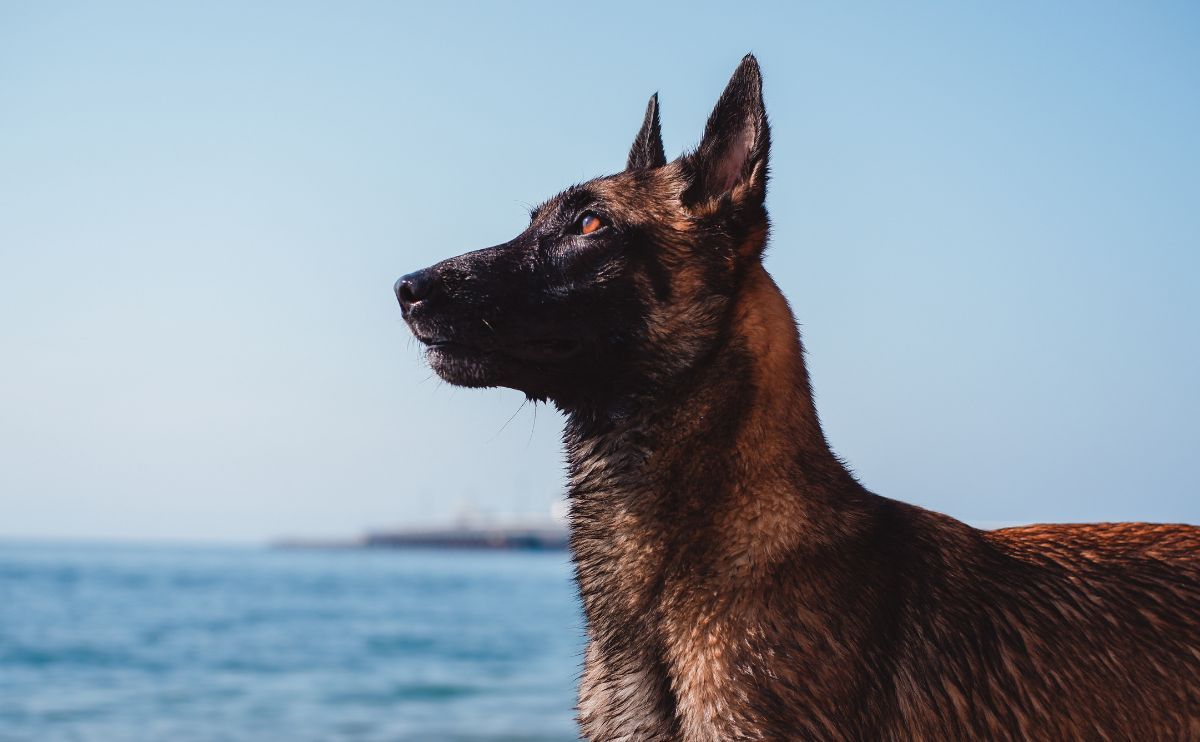
The coat is short over the whole body, slightly longer around the neck and thighs. It’s a rich fawn with black overlay (“fawn charcoal”): fawn hairs that darken toward the tip, with a signature black mask on the muzzle and sometimes small white markings on the chest. The eyes are dark brown.
Belgian Malinois Physical Traits #
The short, dense coat offers little protection against cold compared to the long-haired Belgian Shepherd varieties, but gives the Malinois a leaner, faster silhouette in return. The upright, triangular ears and high head carriage give it that sharp, alert expression that’s become its visual signature — instantly recognizable.
Belgian Malinois Behavior #
Belgian Malinois Behavior With Children #
The Malinois can be an excellent companion for children in a household where mutual respect is clearly established from the start: not disturbing the dog during rest, respecting its space, avoiding rough play. When well socialized, it’s patient and protective, but its energy level and size call for supervision, especially around very young children.
Belgian Malinois Behavior With Other Animals #
Sociable with other herding breeds when properly socialized early on, the Malinois can still retain a strong prey drive toward smaller animals (cats, rodents, poultry) — a direct legacy of its history as a herding and later working dog. Early, gradual socialization remains the best way to keep that instinct in check.
Belgian Malinois Health #
Belgian Malinois Life Expectancy #
The average life expectancy of a Belgian Malinois is 10 to 14 years.
Common Health Issues in Belgian Malinois #
| Condition | Description | Frequency |
|---|---|---|
| Hip and elbow dysplasia | A joint malformation that can appear during growth, causing pain and lameness | Moderate |
| Chronic superficial keratitis | A progressive inflammatory disease of the cornea, more common in Belgian and German Shepherd breeds than average | Moderate |
| Idiopathic epilepsy | Recurring seizures of genetic origin, with no other identifiable cause | Low to moderate |
| Cerebellar ataxia | A hereditary neurological disorder affecting movement coordination | Low |
| Sensitivity to general anesthesia | Generally lower tolerance than the breed average — always worth flagging to your vet before any procedure | Occasional |
A dog this active can also make it harder to notice unusual drops in energy or changes in resting behavior — two signals that often point to an early health issue, but that go unnoticed in a dog used to burning off huge amounts of energy.
Belgian Malinois Training #
Positive Training Methods for the Belgian Malinois #
✔️ Despite its “tough dog” reputation, the Malinois responds far better to consistent, positive training than to raw firmness:
- positive reinforcement (treats, play, praise) rather than punishment;
- short, varied, frequent sessions rather than long repetitive ones;
- channeling its need to burn energy as a motivator for learning.
Why Early Socialization Matters for the Belgian Malinois #
✔️ Socialization started in the first few weeks helps to:
- build good relationships with other dogs and people;
- keep its natural wariness of strangers from turning into reactivity;
- reduce the risk of escape or destructive behavior linked to anxiety.
House-Training a Belgian Malinois #
Malinois generally house-train quickly once a clear, consistent routine is in place — set potty breaks, immediate praise for success.
Basic Commands for the Belgian Malinois #
✔️ Essential commands to work on from a young age:
- sit;
- down;
- loose-leash walking;
- recall — especially important for a breed capable of covering long distances very fast if it runs off.
❌ Managing Unwanted Behaviors in the Belgian Malinois #
Three behaviors to plan for in a breed bred to work:
- Running off: an under-stimulated Malinois will look to explore, sometimes far and fast. Securing the yard and genuinely meeting its need for exploration reduces the risk, but never eliminates it entirely. A GPS dog tracker like the Invoxia Biotracker makes it possible to locate them quickly if they do get out.
- Destructive behavior: often linked to boredom or separation anxiety, it’s reduced by increasing daily physical activity, offering enrichment toys, and keeping a stable routine.
- Excessive barking: rarer than in other guard breeds, it usually signals an unmet need (boredom, frustration, over-vigilance) rather than a trait to correct directly.
Training Exercise Ideas for the Belgian Malinois #
- ring sport, mondioring, or rally obedience;
- tracking and scent work;
- agility;
- long hikes or canicross.
Belgian Malinois Temperament and Lifestyle #
Exercise Needs of the Belgian Malinois #
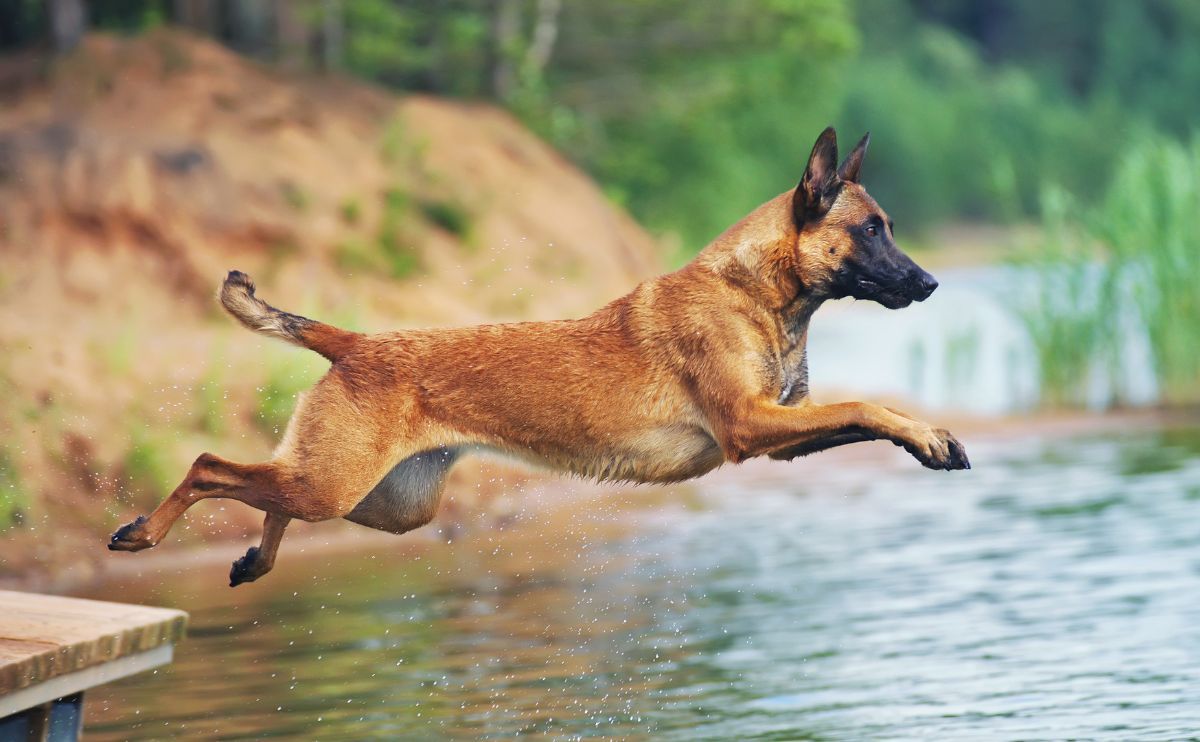
The Malinois needs a minimum of 1.5 to 2 hours of activity a day, ideally outdoors and combining walking, play, and mental work — a dog with this much energy that doesn’t get to burn it off will almost always develop compensatory behaviors.
Belgian Malinois Temperament at Home #
Once its activity needs are met, the Malinois can be surprisingly calm at home, while staying alert to its surroundings and quick to react to anything unusual.
Belgian Malinois Temperament With Family and Other Pets #
Affectionate and deeply attached to its family, it can nonetheless form a strong preference for one particular person. How well it gets along with other pets depends largely on the quality of its early socialization.
Ideal Living Environment for a Belgian Malinois #
- a house with a securely fenced yard (the Malinois is an excellent jumper);
- failing that, an apartment paired with several genuinely active outings a day — a lack of space is never really the issue, a lack of activity is;
- an experienced, available, active household able to structure its daily routine.
Belgian Malinois Grooming and Hygiene #
Coat Care for the Belgian Malinois #
The Malinois’s short coat needs minimal upkeep: brushing once or twice a week is enough most of the year, going daily during the two seasonal sheds (spring and fall), when the undercoat comes out in large amounts. Baths should stay occasional, only when truly needed.
General Hygiene for the Belgian Malinois #
- regular ear checks;
- eye monitoring, given the breed’s tendency toward eye sensitivity;
- nail trims as needed based on natural wear;
- tooth brushing recommended to limit plaque buildup.
Feeding a Belgian Malinois #
An athletic dog with an active metabolism, the Malinois needs a diet rich in high-quality protein, adjusted to its actual activity level rather than weight alone — needs vary significantly between a moderately active companion Malinois and one working in dog sports or a service unit. A premium or veterinary-quality diet, split into two daily meals rather than one to reduce the risk of bloat (gastric dilatation-volvulus), is generally recommended for this medium-sized but high-energy breed. Extra care is needed during periods of lower activity (injury, recovery), when intake should be scaled back accordingly to avoid weight gain.
Adopting a Belgian Malinois and What It Costs #
Belgian Malinois Adoption Price #
- From a breeder: $1,500 to $3,500+, depending on bloodline (dogs from working, sport, or protection lines are often pricier than companion/show lines) and breeder.
- Rescue or shelter: typically $150 to $400 — adult Malinois are unfortunately among the breeds most frequently surrendered or rehomed in the US, often because their real needs weren’t anticipated.
Annual Cost of Owning a Belgian Malinois #
| Expense | Estimated annual cost |
|---|---|
| Food | $500 to $850 |
| Routine veterinary care | $250 to $500 |
| Pet insurance (optional) | $300 to $700 |
| Grooming and supplies | $100 to $300 |
| Total | $1,150 to $2,350 |
Before adopting, it’s worth spending time with the breed — through a dog club, breeder, or Malinois rescue — to check that your lifestyle genuinely matches what this dog needs, rather than falling for the image alone. The Belgian Malinois is an exceptionally intelligent, loyal dog, but it doesn’t forgive boredom: well-managed, it’s a devoted, athletic companion; left to its own devices, it becomes unmanageable fast. The right home isn’t the biggest one — it’s the most active and the most present.
FAQ #
Is the Belgian Malinois a good family dog? It can be, in an experienced, active, available household that can meet its daily exercise and mental stimulation needs. It’s not, however, a breed recommended as a first dog or for a household that’s away most of the time.
What’s the difference between a Belgian Malinois and a German Shepherd? The Malinois is lighter, faster, and generally more intense in energy and alertness than the German Shepherd, which is heavier and calmer day to day. Both are excellent working breeds, but the Malinois typically demands a higher level of activity and owner experience.
How much does a Belgian Malinois cost? A puppy from a breeder typically costs $1,500 to $3,500 or more. Annual upkeep (food, health care, insurance, grooming) generally runs $1,150 to $2,350 depending on the dog’s lifestyle.
Can a Belgian Malinois live in an apartment? Yes, provided it gets several active outings a day plus dog-sport-type activities — an apartment is never really the problem for this breed, a lack of exercise is.
What are the main health issues in Belgian Malinois? Hip and elbow dysplasia, chronic superficial keratitis, idiopathic epilepsy, and increased sensitivity to general anesthesia are the most commonly cited concerns for this breed.
Why is the Belgian Malinois so popular on social media? Its fame mostly comes from its role in police and military work and its strong presence on platforms like TikTok. That popularity doesn’t always reflect what life with this breed is actually like — and it’s even contributing to a rise in surrenders among households that weren’t prepared for its needs.