

Hair on the couch, on clothes, in the corners of the house: dog shedding is an inevitable event, twice a year, for the vast majority of breeds. It’s a natural phenomenon, not a health problem in itself — but it raises real practical questions: how long does it last, how to limit hair everywhere in the house, and above all, when should you worry rather than just bring out the vacuum cleaner.
Why Dogs Shed: A Mechanism Driven by Light #
A dog’s coat follows a four-phase cycle: a growth phase (anagen), a transition phase (catagen), a resting phase (telogen), then a shedding phase (exogen) where the hair detaches to make way for a new hair. This cycle is not triggered by temperature, contrary to popular belief, but by the length of the day. Variations in light affect the pineal gland and melatonin production, which in turn regulates the coat renewal rhythm.
This mechanism explains why shedding follows such a regular schedule: in spring (around March to May), the dog loses its dense winter undercoat to lighten up before summer. In autumn (around September to November), it does the opposite and rebuilds an insulating undercoat in anticipation of the cold. Shedding generally lasts between 3 and 6 weeks and can extend up to 2 months in double-coated breeds.
Dogs that live mainly indoors, under artificial light and stable temperature year-round, may lose this seasonal cue and shed more continuously, with hair loss spread throughout the year rather than concentrated over a few weeks. This same light/melatonin mechanism also explains why some Nordic breeds need enhanced coat care in winter.
Not All Breeds Shed the Same Way #
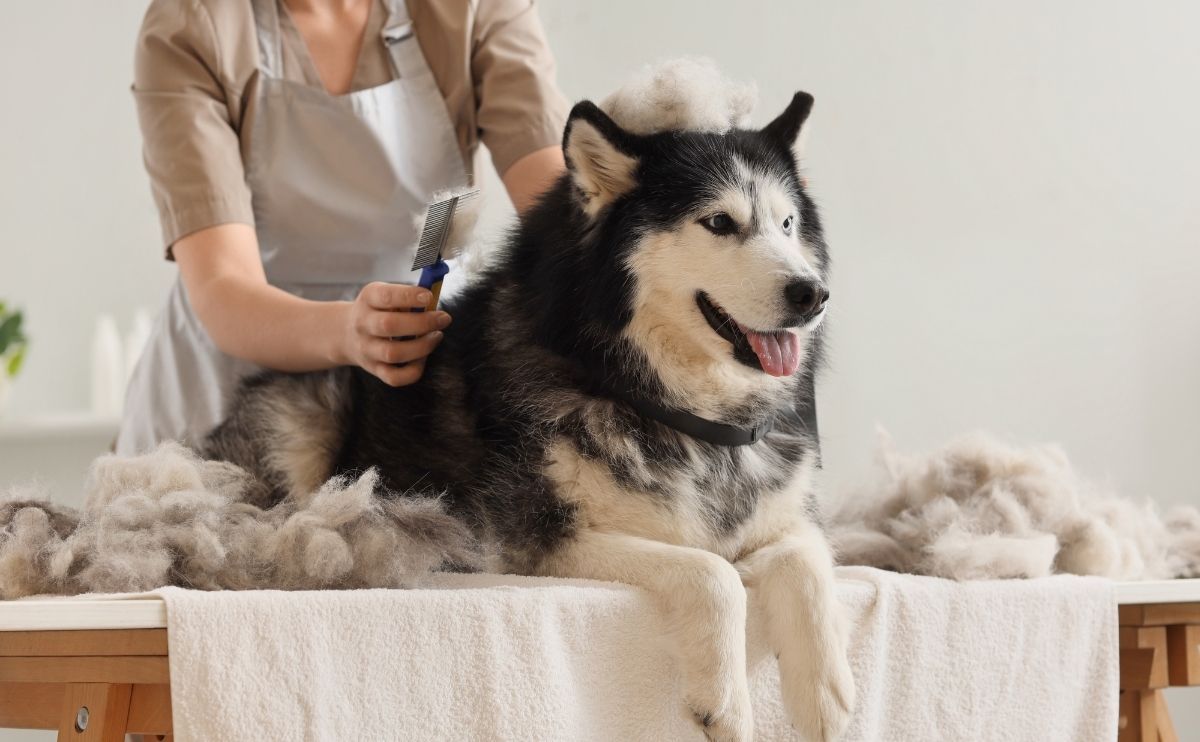
The intensity of shedding directly depends on the type of coat. Double-coated breeds have a dense undercoat that renews massively with each shedding, with particularly visible hair loss:
- the Siberian Husky, whose double coat provides thermal insulation and for which shaving is strongly discouraged, even during shedding;
- the German Shepherd and other shepherd dog breeds (Malinois, Beauceron…), known for their dense undercoat;
- the Samoyed, with its particularly voluminous white coat;
- the Golden Retriever, whose dense undercoat is very noticeable once detached.
Conversely, breeds with curly hair or no undercoat (Poodle, Bichon, some terriers) shed very little, as their hair grows continuously rather than in marked seasonal cycles.
In between, most short or medium-haired breeds have a more discreet but real shedding, often underestimated because short hairs are less noticeable in the house than a mass of undercoat.
How to Support Your Dog During Shedding #
A few simple actions can significantly reduce the amount of hair in the house and help the dog get rid of its dead undercoat more comfortably.
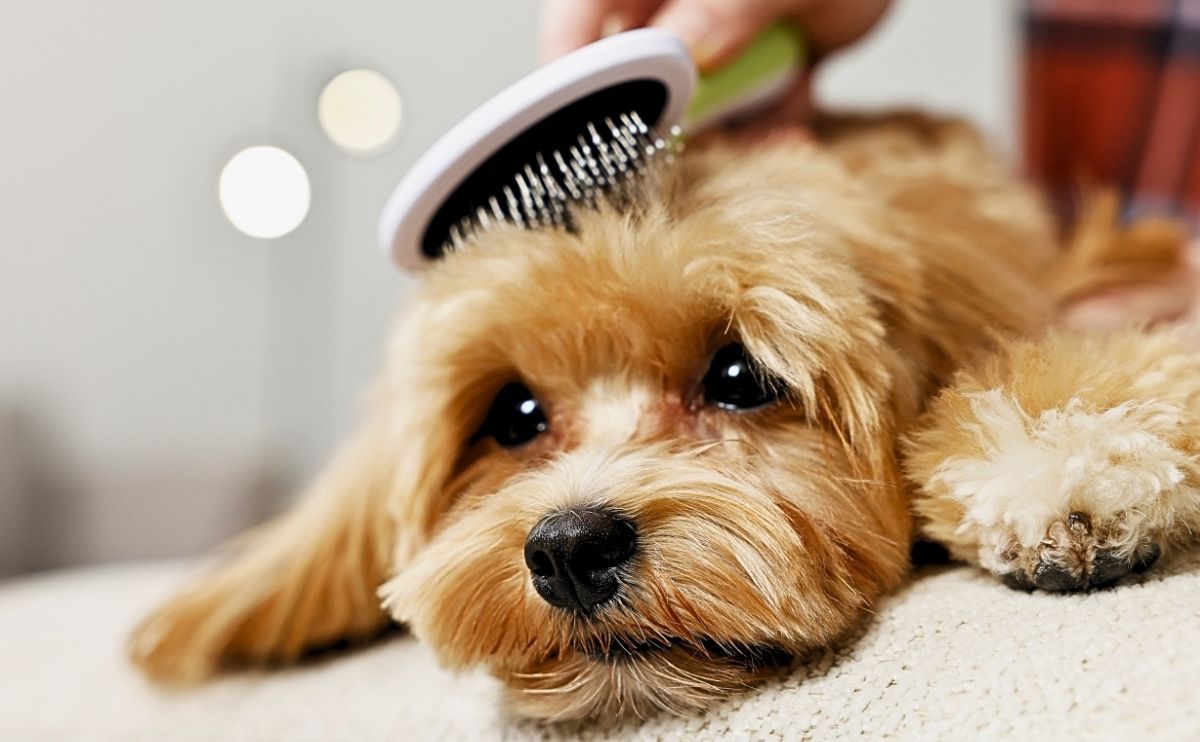
- Brush more regularly during the shedding period: daily for dense undercoat breeds, 2 to 3 times a week for others. A slicker brush or undercoat rake removes dead hair directly before it deposits everywhere.
- Adjust the frequency of baths: a bath every 4 to 6 weeks with an appropriate shampoo can help detach dead undercoat, without excess to avoid drying out the skin.
- Vacuum more often on fabrics (couch, carpet, bed) during peak shedding times.
- Consult a professional groomer in case of very thick undercoat or tangles, especially in long-haired breeds.
The Role of Diet in Coat Quality #
Hair is largely composed of keratin, a protein whose synthesis directly depends on what the dog eats. A quality diet, with sufficient protein and essential omega-3 and omega-6 fatty acids, supports hair renewal during shedding and limits excessive loss due to deficiency.
In practice, some guidelines:
- Omega-3 (fish oil, salmon oil) have a soothing effect on the skin and help limit skin inflammations that can worsen hair loss;
- Omega-6 (sunflower oil, borage oil) directly contribute to the suppleness and shine of the coat;
- a good quality protein intake is essential, as keratin itself is a protein;
- some supplements (biotin, zinc) are sometimes recommended during intense shedding periods, but always on veterinary advice rather than self-medication.
Abnormally abundant shedding, dull or accompanied by dry coat can also be the first sign of a nutritional imbalance rather than just a simple seasonal shedding — a point to discuss with your veterinarian if doubt persists beyond a few weeks.
When Shedding Should Raise Concern #
Seasonal shedding is normally not accompanied by any other symptoms: the dog loses its hair, but its skin remains healthy. However, certain signs should prompt a visit to the veterinarian:
- visible skin patches or localized hairless areas;
- redness, scabs, or pustules;
- marked itching or excessive licking;
- hair loss outside usual shedding periods, or that lasts abnormally long;
- a dull coat associated with other changes (fatigue, altered appetite).
These signs can suggest very different causes from natural shedding: parasites, allergy, dermatological problem, stress, nutritional imbalance, or even hormonal disorder like hypothyroidism. It’s precisely because these variations are difficult to distinguish from simple shedding at first glance that daily health monitoring helps identify what truly stands out rather than guessing.
Shedding and Season: Two Periods to Distinguish #
Spring shedding and autumn shedding do not have quite the same role, and it’s worth distinguishing them to know what to expect.
In spring, the dog gets rid of its thick winter undercoat to lighten up before the warm days — it’s often the most spectacular shedding, the one that leaves entire tufts on the coat. It also occurs at the same time as the return of ticks and other season-specific risks: without paying attention, it’s difficult to distinguish a normally renewing coat from a dog scratching for a completely different reason. A dog scratching more than usual during spring outings deserves a check, between hair regrowth and seasonal parasites.
In autumn, shedding is generally more gradual: the dog loses its summer coat to rebuild a dense undercoat in anticipation of the cold. It often goes more unnoticed than spring shedding, even though it involves just as much coat renewal — it’s the time when regular brushing makes the most difference, before the new winter undercoat fully settles.
FAQ — Dog Shedding #
How long does shedding last in dogs? Generally between 3 and 6 weeks, twice a year (spring and autumn). In double-coated breeds, shedding can extend up to 2 months.
Why does my dog shed all year round? It’s common in indoor dogs, exposed to artificial light and stable temperature year-round: the seasonal signal that normally triggers shedding is less marked, spreading hair loss throughout the year rather than concentrating it over a few weeks.
Should I bathe my dog more often during shedding? A bath every 4 to 6 weeks with an appropriate shampoo can help detach dead undercoat, but do not exceed this frequency to avoid drying out the skin.
When to consult a veterinarian about hair loss? As soon as patches, redness, scabs, marked itching appear, or if hair loss occurs outside usual shedding periods or lasts abnormally long.
Does diet influence shedding? Yes, sufficient omega-3 and omega-6 intake contributes to coat quality. An unbalanced diet can worsen hair loss beyond what normal seasonal shedding causes.
In Summary #
Shedding is a natural phenomenon, driven by light rather than temperature, affecting the vast majority of dogs twice a year. Regular brushing, appropriate diet, and vigilance on signs that stand out are usually enough to handle it well — for both the dog and the home.