

Your dog shivers after the walk, curls up against the radiator or refuses to go out in the rain. Are they simply cold, or should you be worried? And do they need a coat?
A dog who is cold shivers, slows down, looks for a warm spot or seems anxious. Most of the time, all you need to do is head home and dry them off. But some dogs cope poorly with the cold, and shivering that lasts, pale gums or extreme drowsiness are emergency signs.
How to tell if your dog is cold #
The first signs are behavioral. During or after a walk, a dog who is cold may:
- shiver or tremble;
- slow down, lag behind or want to turn back;
- seem anxious or restless;
- look for shelter, huddle against you or head for a source of heat.
These are the signs the American Veterinary Medical Association (AVMA) recommends watching for: shivering, anxiety, slowing down, weakness and seeking warmth. If you notice them, take your dog inside and dry them. If they keep shivering once they are warm, or seem very tired, call your vet.
Sudden limping on a walk sometimes has a simpler cause: ice packed between the toes. Check their paws before assuming they are in pain.
Not all dogs handle the cold the same way #
Cold tolerance depends mainly on coat, body type, age and health. A long or thick coat offers better protection, but it does not make a dog immune to the cold: they can still suffer from hypothermia or frostbite.
Dogs more sensitive to the cold include:
- dogs with short or thin coats;
- small dogs and short-legged dogs, who are closer to the ground and the snow;
- puppies and senior dogs;
- dogs with a chronic condition: diabetes, heart or kidney disease, hormonal disorder;
- wet dogs, whatever their coat.
Contrary to a common belief, a few extra pounds do not protect against the cold. The AVMA considers that the health risks of excess weight far outweigh this supposed benefit.
Should your dog wear a coat? #
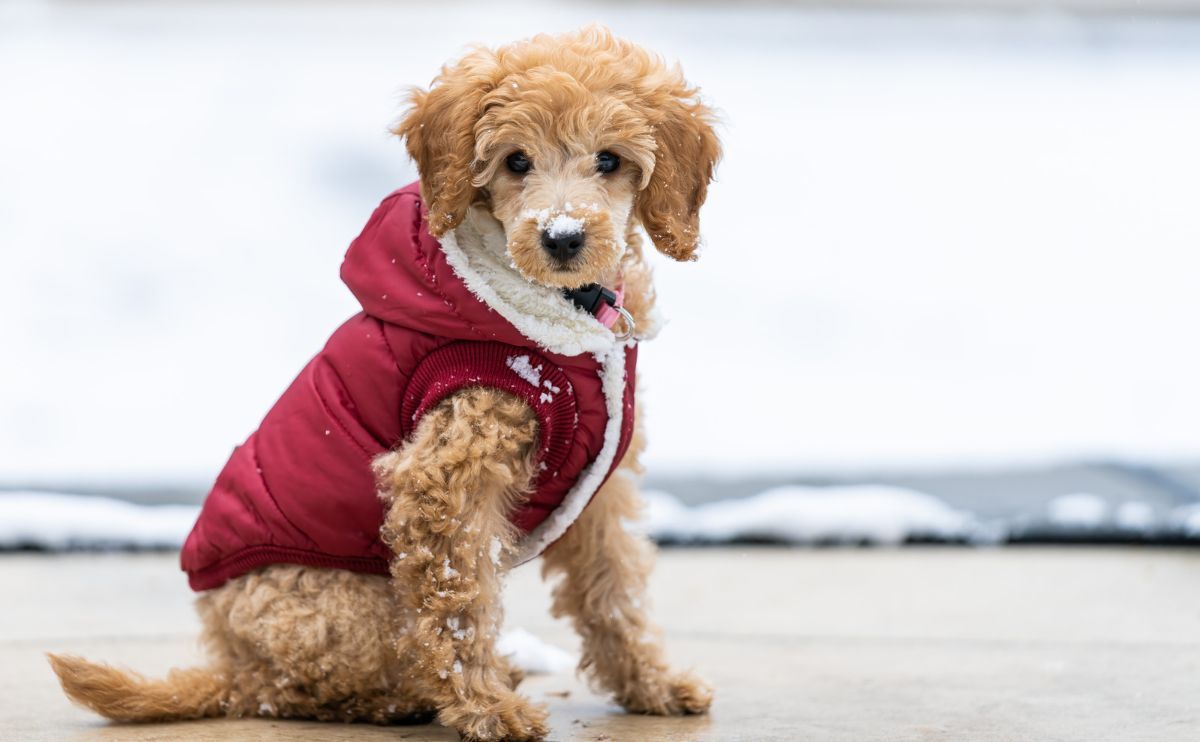
Not every dog needs a coat, but it helps those who lose heat quickly. The RSPCA, the UK’s leading animal welfare charity, recommends one for dogs with short or thin coats, small dogs, senior dogs, young dogs and dogs with a health condition.
To really protect your dog, a coat should:
- fit well, without being tight or restricting movement;
- let your dog relieve themselves easily;
- stay dry: a wet coat chills more than it protects, so it helps to have a spare.
When you get home, towel your dog dry, paying special attention to the belly and paws: a wet dog is more exposed to the cold and to frostbite.
Ears, tail and paws: the most exposed areas #
In extreme cold, the body protects its vital organs first and sends less blood to the extremities. The ears, tail and paw pads are therefore the first areas affected by frostbite, especially if the dog is wet or has a condition that reduces circulation, such as heart disease or diabetes.
Signs to look out for, as described by VCA Animal Hospitals:
- pale, gray or bluish skin;
- an area that is cold and hard to the touch, painful or swollen;
- a dog who keeps licking or chewing an ear, the tail or a paw;
- later on, blisters or skin that turns black.
These signs may only appear several days after exposure. If you suspect frostbite, bring your dog somewhere warm, do not rub the area, do not use a hair dryer or heating pad, and call your vet. Never give them human pain relievers: acetaminophen (paracetamol) and aspirin are toxic to dogs.
Hypothermia: when the cold becomes an emergency #
Hypothermia occurs when body temperature drops too low. It mainly threatens a dog who has stayed outside for a long time, a wet dog, or a vulnerable dog exposed to the cold.
The signs described by the RSPCA call for immediate action:
- severe shivering, which may stop in extreme cold, a sign that things are getting worse;
- drowsiness or confusion;
- pale gums;
- unsteady walking, loss of coordination;
- collapse.
While waiting for the vet, warm your dog up gradually: dry blankets, a lukewarm hot-water bottle wrapped in a cloth, never a heat source directly against the skin. Then get to the vet without delay.
Day to day: good habits in cold weather #
A few habits are enough to get through winter with peace of mind:
- shorten walks in very cold weather, even if it means going out more often;
- wipe the paws, belly and lower legs when you get back, to remove snow, salt and de-icing products;
- set up their bed away from drafts and cold floors;
- keep a comfortable indoor temperature: the RSPCA recommends between 10 and 25 °C (50 to 77 °F);
- never leave them alone in the car: in winter, the AVMA compares a cold car to a refrigerator;
- stay away from frozen ponds and lakes, as the ice can give way.
The cold is only one of the season’s risks. To protect their paw pads, ease joint pain, watch out for coughs, holiday food hazards and New Year’s Eve escapes, follow our winter care routine for dogs.
What daily monitoring helps you notice #
A dog who is cold shows it right away. A dog who struggles with winter often changes more quietly: they move less, sleep more, are reluctant to go out. It is hard to tell whether it is the weather or a real problem.
Because these changes set in gradually, daily monitoring helps spot them. The Biotracker continuously tracks your dog’s activity, sleep, and resting heart and breathing rates, and compares each day to their own usual patterns. A drop in activity that lasts longer than the bad weather, or a resting breathing rate that rises over several nights, are concrete markers to show your vet. The Biotracker does not make any diagnosis: it helps you know when to ask for your vet’s advice.
💡 Good to know
Senior dogs and dogs with heart disease often cope less well with the cold. For a dog with known heart disease, the RSPCA advises limiting time outdoors in cold weather to 20 minutes at most. Ask your vet how long your dog's outings should be.
FAQ — dogs and cold weather #
At what temperature does a dog get cold? #
There is no single threshold: it all depends on the dog’s coat, size, age and health, and on whether they are wet. A small, short-haired dog can get cold long before a dog with a thick coat. Watch your dog’s behavior rather than the thermometer.
Is a shivering dog always cold? #
Not necessarily: cold is not the only possible cause of shivering. If it continues once your dog is warm and dry, or comes with other signs, see your vet.
Does my dog need a coat? #
Only if they lose heat quickly: short or thin coat, small size, puppy, senior or sick dog. Choose a well-fitting coat that does not restrict movement, and change it if it gets wet.
Can a long-haired dog get cold? #
Yes. A thick coat offers better protection, but it does not prevent hypothermia or frostbite, especially if the dog is wet or stays still in the cold for a long time.
What should I do if my dog’s paws are frostbitten? #
Bring them somewhere warm, pat their paws dry without rubbing and warm them gently, without direct heat. If the skin is pale, gray, bluish or painful, call your vet.
In short #
A dog who is cold shivers, slows down and looks for warmth: head home, dry them off and things usually return to normal. Short-haired dogs, small breeds, puppies, seniors and sick dogs need extra attention, and a dry, well-fitting coat can help them. Shivering that lasts, pale gums, extreme drowsiness or pale skin on the extremities are emergencies: warm your dog up gradually and call your vet.