




Clinical cases
Real patients, followed at home with the Biotracker and the Biotrack platform: their curves, the alerts, and what the clinic did with them.
Cardiology · chronic follow-up
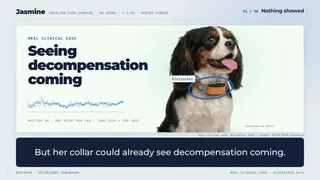
Jasmine, seeing heart failure coming
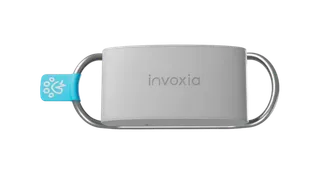
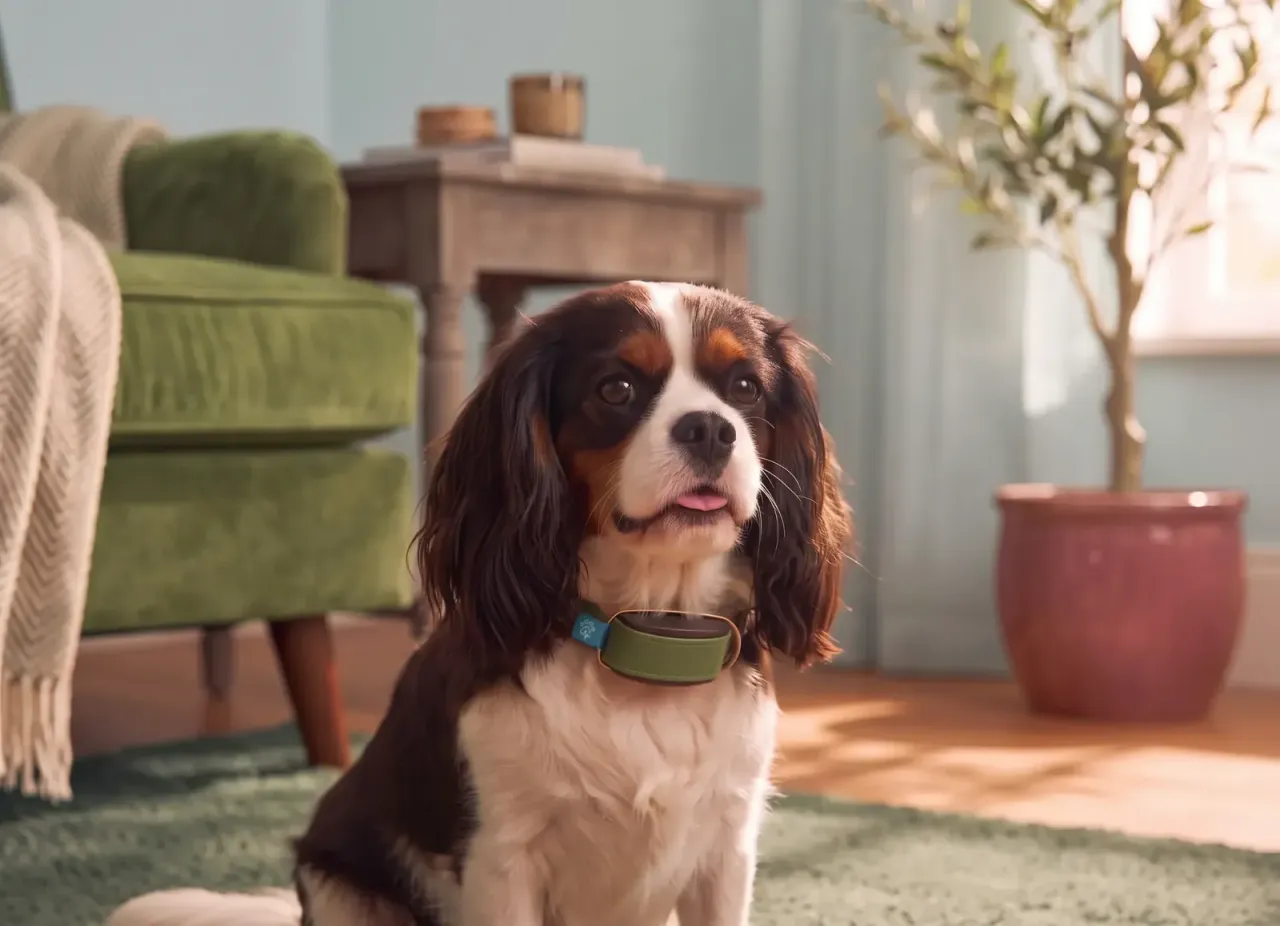
A 10-year-old Cavalier King Charles with stage B2 mitral valve disease. Fitted with a Biotracker in June 2024, she is followed at home for a year: her resting heart rate and respiratory rate are measured every day, with nothing asked of the pet parent.
In spring 2025, her heart rate and then her respiratory rate leave their corridor. Biotrack raises two automatic alerts, on April 5 and April 17, while nothing is visible at home yet and her RR is far from 30/min, the classic heart-failure threshold.
Her RR reaches 30/min on April 27. Treatment is stepped up on May 9: by early June, her RR is back below 20/min. The case shows what continuous monitoring adds between two check-ups.
- head start of the heart alert on the classic threshold
- 22 days
- head start of the respiratory alert
- 10 days
- of home monitoring
- 1 year
 Video · 63 sJasmine's case, on video

Surgery · post-operative follow-up
Takoda, putting figures on pain after surgery
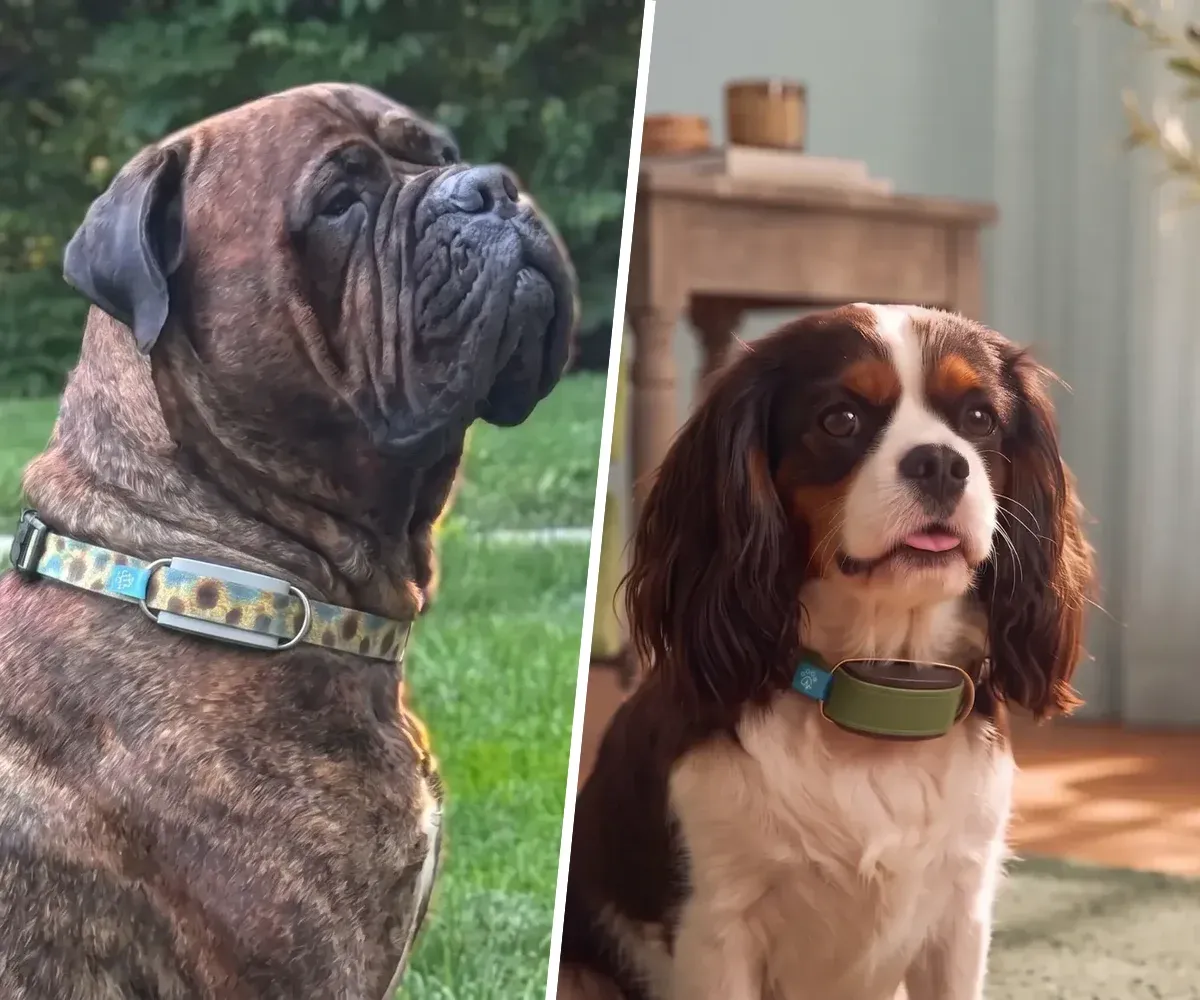
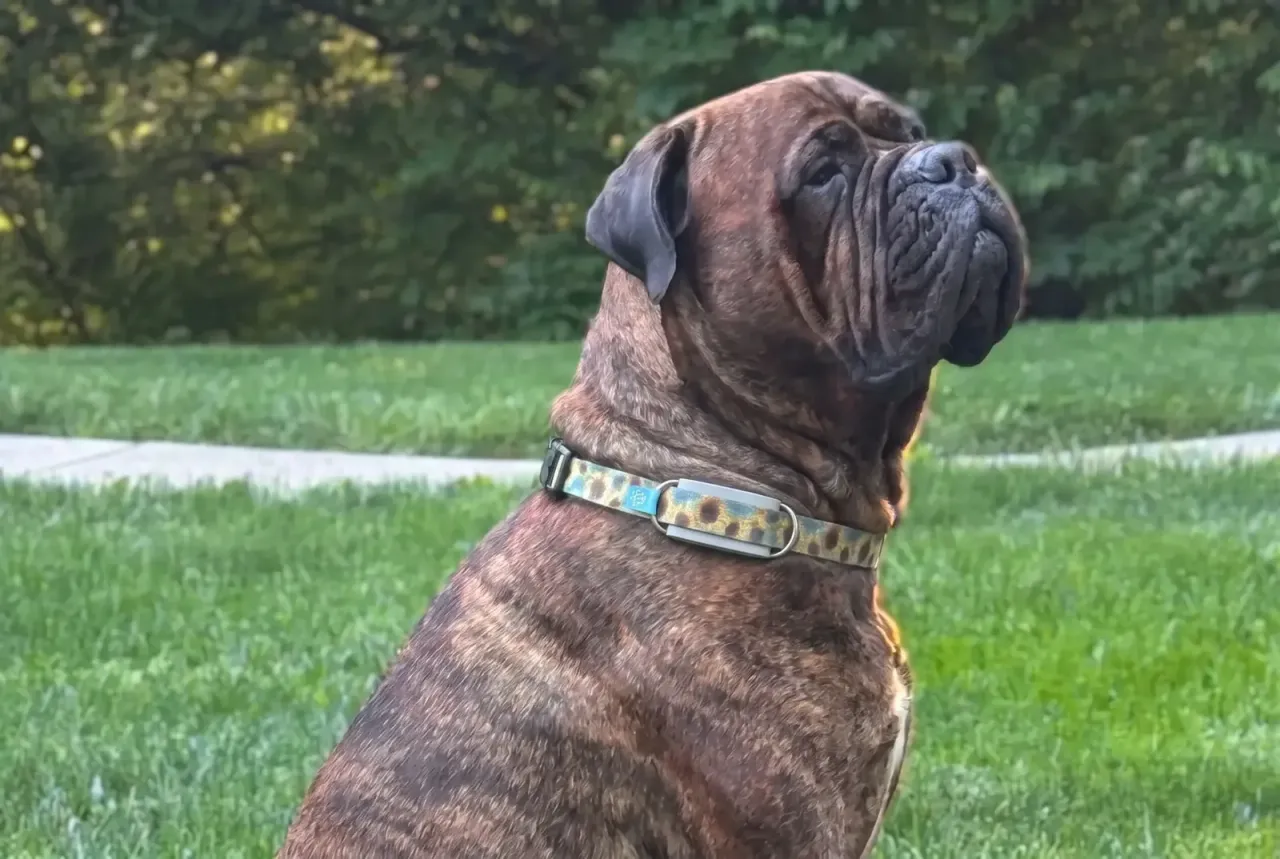
A 5-year-old Bullmastiff with a left elbow malformation and osteoarthritis. Like many guarding breeds, he does not whine and never skips a meal: his owner cannot rely on his behaviour. He has worn a Biotracker since January 2024.
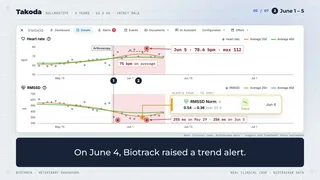
After an elbow arthroscopy, a digestive reaction forces his pain medication to be stopped. His resting heart rate climbs to 75 bpm on average, his heart rate variability drops by nearly half. With the figures in hand, his owner calls the clinic and the pain medication is resumed sooner.
On June 10, heart rate and variability come back in a single day; by July, he is back to his values of the previous summer. The case shows how to assess analgesia remotely, in a dog who shows nothing.
- resting HR at the peak of pain
- +22%
- heart rate variability (RMSSD)
- −46%
- to return towards his usual values
- 1 day
 Video · 84 sTakoda's case, on video
Create your Biotrack demo account
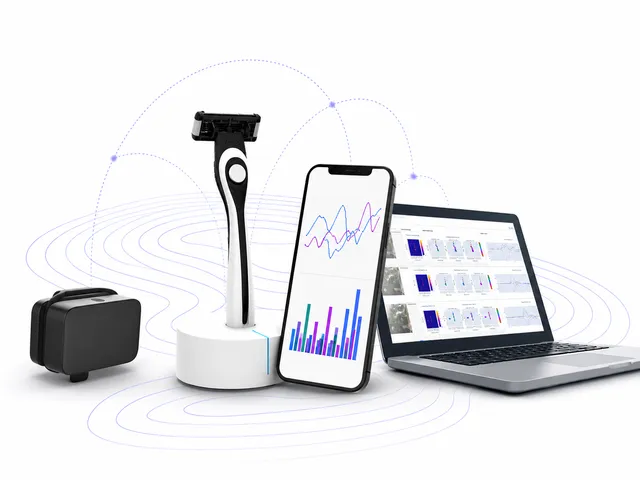
In under a minute, with no commitment and no credit card: a clinic's dashboard, pre-filled, with its patients sorted by alert.